

Build your stack.Keep only what is useful.
Six questions to narrow your routine down to the supplements best suited to your goal, your budget and what you already take.
Let's start with the essentials
Question 1 of 6
What is your main goal?
Choose the outcome you want to prioritize now.
Your plan is ready
Here's where to start
What if I changed...
Try a stricter version of your stack. The result recalculates immediately.
Already covered in your routine
What I recommend leaving out
Some links are affiliate links. Le Biohacker may receive a commission at no extra cost to you. This does not influence the categories selected by Stacky.
Test one thing at a time.
Copy this plan, keep your routine stable, then observe what changes.
I prefer to stop here.
In your situation, a general recommendation would not be reliable enough. Some supplements may require specific precautions.
Understand what you're taking.
These readings explore your stack choices, their use and their limitations in more depth.






By goal
Which supplement for which goal?
The options Stacky may select, ranked by strength of evidence. For every goal, the first step is not a supplement.
Which supplement for sleep?
Before a supplement: a regular schedule. A fixed wake-up time, morning daylight and an early caffeine cutoff do more than any capsule. If you have been sleeping poorly three nights a week for three months, talk to your doctor.
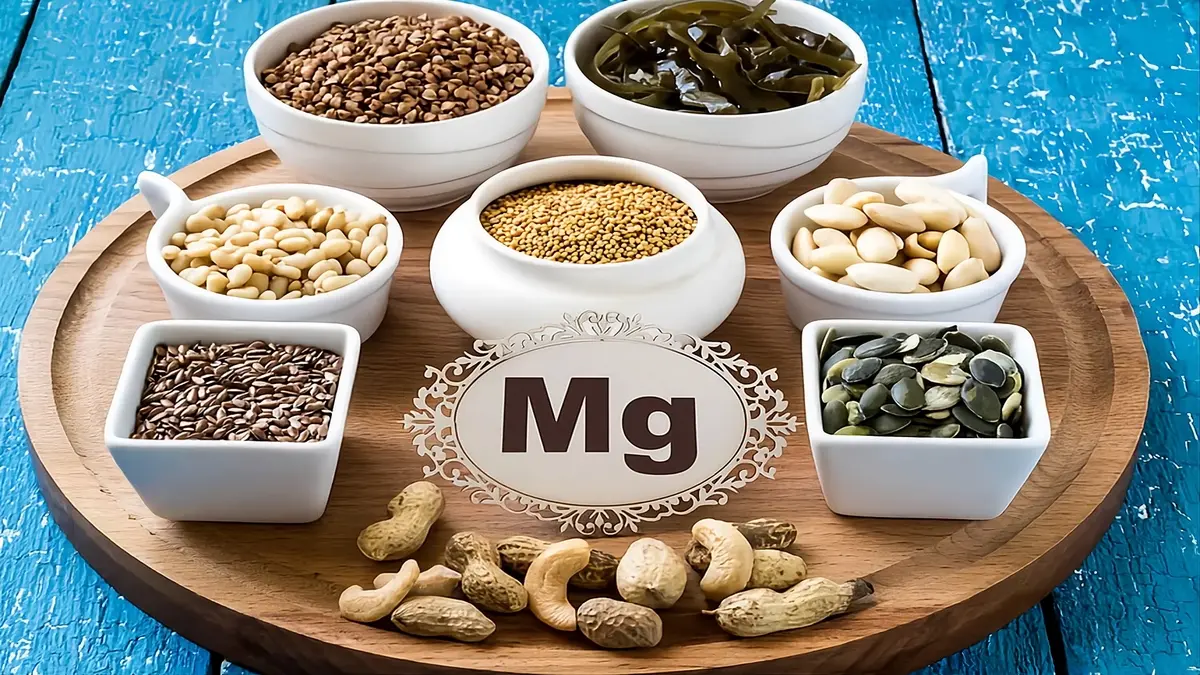
- Limited evidenceMagnesiumA 2021 review finds a possible effect on falling asleep in older adults, based on low-quality studies. Source
- Limited evidenceL-theanineLittle evidence on sleep itself. Source
- Limited evidenceGlycineA few small trials, partly funded by a manufacturer, suggest an effect on perceived sleep quality. Source
- Limited evidenceAshwagandhaA small effect on sleep in 5 trials, especially in people with insomnia and after 8 weeks. Liver injury has been reported. Source
Which supplement for fatigue?
Before a supplement: your sleep and caffeine. Fatigue most often comes from too little or irregular sleep, or poorly timed caffeine. If it lasts more than a month without explanation, a medical assessment can check for anaemia or a thyroid disorder.
Which supplement for concentration?
Before a supplement: sleep and managing interruptions. Concentration depends first on getting enough sleep and working in notification-free blocks. Caffeine at the right dose remains the best-supported aid.
- Strong evidenceCaffeineImproves attention and alertness, especially when tired. Source
- Moderate evidenceL-theanineCombined with a small dose of caffeine, it improves accuracy and alertness in a few trials. Source
- Limited evidenceCreatineA possible effect on short-term memory, especially in vegetarians. No clear effect in young adults. Source
- Limited evidenceOmega-3No demonstrated effect on concentration in healthy adults. Mainly worth considering if you rarely eat oily fish. Source
Which supplement for stress?
Before a supplement: slow breathing. A few minutes of breathing at 6 cycles per minute, physical activity and time with loved ones reduce perceived stress. If anxiety interferes with your daily life, talk to a professional.
- Moderate evidenceAshwagandhaA meta-analysis of 9 trials finds a reduction in perceived stress and anxiety. Liver injury has been reported. Source
- Limited evidenceMagnesiumA review of 18 studies suggests an effect on perceived anxiety in vulnerable people, with low-quality evidence. Source
- Limited evidenceL-theanine200 to 400 mg per day may reduce perceived stress in stressful situations, according to small trials. Source
Which supplement for sport?
Before a supplement: protein on your plate. Training and enough protein account for most of your progress. The supplements below add a small boost once that foundation is in place.
- Strong evidenceCreatineThe best-studied supplement for strength and power in resistance training, with a good safety profile. Source
- Strong evidenceProteinAdditional protein increases strength and muscle mass with resistance training, with a plateau at around 1.6 g/kg per day. Source
- Strong evidenceCaffeineImproves performance in most sports at 3 to 6 mg/kg, taken about an hour beforehand. Source
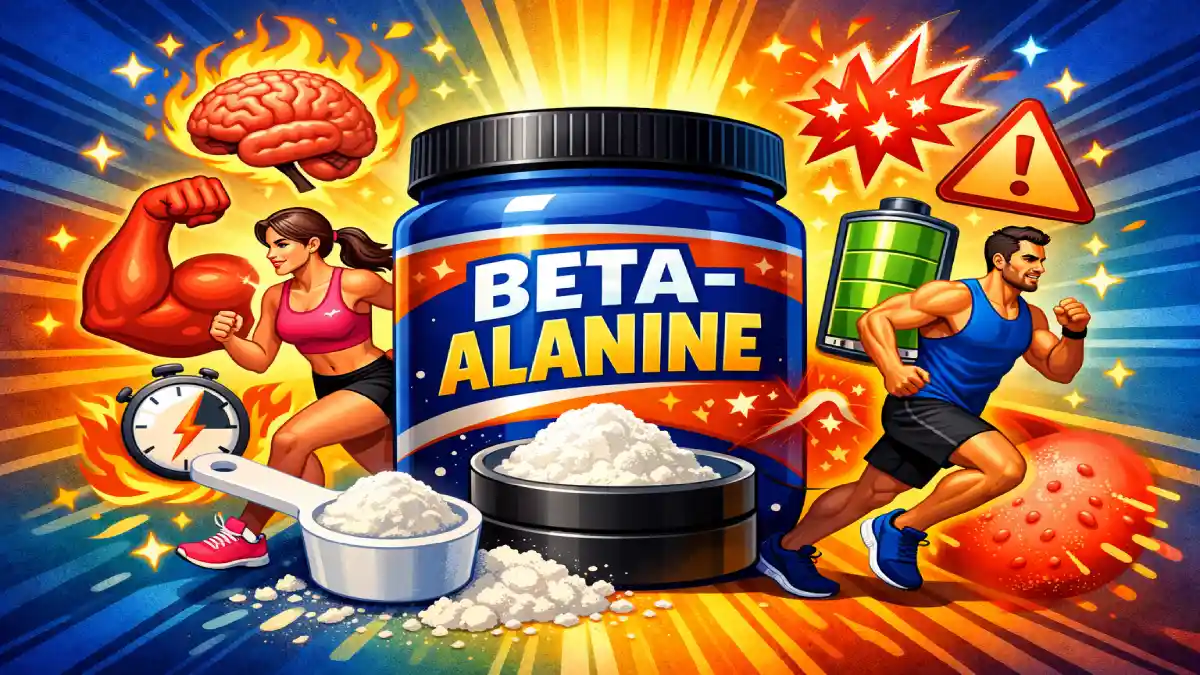
- Strong evidenceBeta-alanineImproves performance during intense efforts lasting 1 to 4 minutes after a few weeks of use. Little benefit for maximal strength. Source
- Moderate evidenceElectrolytesUseful for exercise lasting more than an hour, in hot conditions or with heavy sweating, to replace lost sodium. Source
- Limited evidenceVitamin DNo demonstrated effect on performance in athletes without a deficiency. Source
- Limited evidenceCitrullineA meta-analysis of 30 trials finds a small effect that varies by context and is not very robust. Source
Which supplement for digestion?
Before a supplement: fibre and water. Most adults eat about 20 g of fibre per day, compared with the recommended 30 g. Increase your intake gradually with vegetables, pulses and whole grains. Persistent symptoms or blood in your stool require a medical consultation.
The method
How Stacky decides.
Stacky builds a short routine using public rules. It is not trying to fill your cart. It filters, ranks, then explains what it keeps and what it rules out.
What a stack looks like in practice
A stack is a limited set of supplements used in the same routine to serve a specific goal. A good stack stays clear: each element has a purpose, a selection criterion and a point at which its usefulness must be reassessed.
- 01
Filter before ranking
Stacky removes categories that are already included, over budget, unrelated to your goal or incompatible with high stimulant sensitivity.
- 02
Rank by strength of evidence
The remaining options are ranked first by the strength of the studies for your goal, then by budget and, for stimulants, your sensitivity. An option with limited evidence never ranks above one with strong evidence, and a stack never contains more than one option with limited evidence.
- 03
Limit and explain
The results include one to three categories. For each, Stacky shows the strength of evidence, the reference study, buying criteria and when to reassess your choice, after the non-supplement approach.
The criteria used
Main goal, monthly budget, desired maximum number, sensitivity to stimulants and categories already used. Category-specific criteria also cover form, stated dose, traceability, formula simplicity and common usage errors.
What Stacky cannot determine
The tool does not know your full diet, lab results, medical history, allergies, symptoms, the exact doses in your routine or all possible interactions. It therefore cannot diagnose a deficiency, choose a personal dose or predict your response.
Why a maximum of three supplements
A short routine costs less, is easier to follow and makes it easier to attribute a benefit or an adverse effect. With a budget below €20, Stacky keeps just one priority.
Independence and affiliation
Categories are filtered and ranked before any product is selected. An affiliate link may generate a commission at no extra cost to you, but it cannot add a category to the result or improve its ranking.
Frequently asked questions
Before you start.
What is a supplement stack?
A stack is a small set of supplements used in the same routine to serve a specific goal. Its value comes not from the number of products, but from the coherence of each choice and the ability to observe its effect.
How does Stacky choose the categories?
Stacky first rules out anything already in your routine, over budget or poorly suited to your sensitivity to stimulants. It then ranks the remaining options by the strength of the studies for your goal: strong, moderate or limited evidence. A stack never contains more than one option with limited evidence.
Why is the result limited to three supplements?
A short routine is easier to follow, less expensive and easier to evaluate. If several products are added at once, it becomes difficult to know which one helps, which does nothing or which causes an adverse effect.
Which supplement should you take for sleep?
No supplement has strong evidence for sleep. Evidence for magnesium, glycine and ashwagandha is limited. A regular schedule and morning light matter more. If insomnia lasts more than three months, cognitive behavioural therapy is the first-line treatment.
Which supplement should you take for fatigue?
Caffeine reliably improves alertness at moderate doses. Other supplements, such as vitamin D, only help if you have a deficiency. Fatigue lasting more than a month warrants a medical assessment.
Which supplements have the strongest evidence for sport?
Creatine, protein when your diet does not provide enough, caffeine, and beta-alanine for intense efforts lasting 1 to 4 minutes. These are the best-studied options.
Does Stacky replace a doctor or pharmacist?
No. Stacky provides general guidance and does not make any diagnosis. If you are receiving treatment, are pregnant or breastfeeding, have a known medical condition, or are under 18, the tool stops and recommends professional advice.
Can Stacky determine the right dose for me?
No. Stacky does not know your lab results, full diet, medical history or the exact doses you take. It provides selection criteria and limitations, not a personalized prescription.
Do affiliate links influence the results?
No. Categories are ranked before any product is selected. When an affiliate link is provided, Le Biohacker may earn a commission at no extra cost to you, but that link does not change category eligibility or ranking.