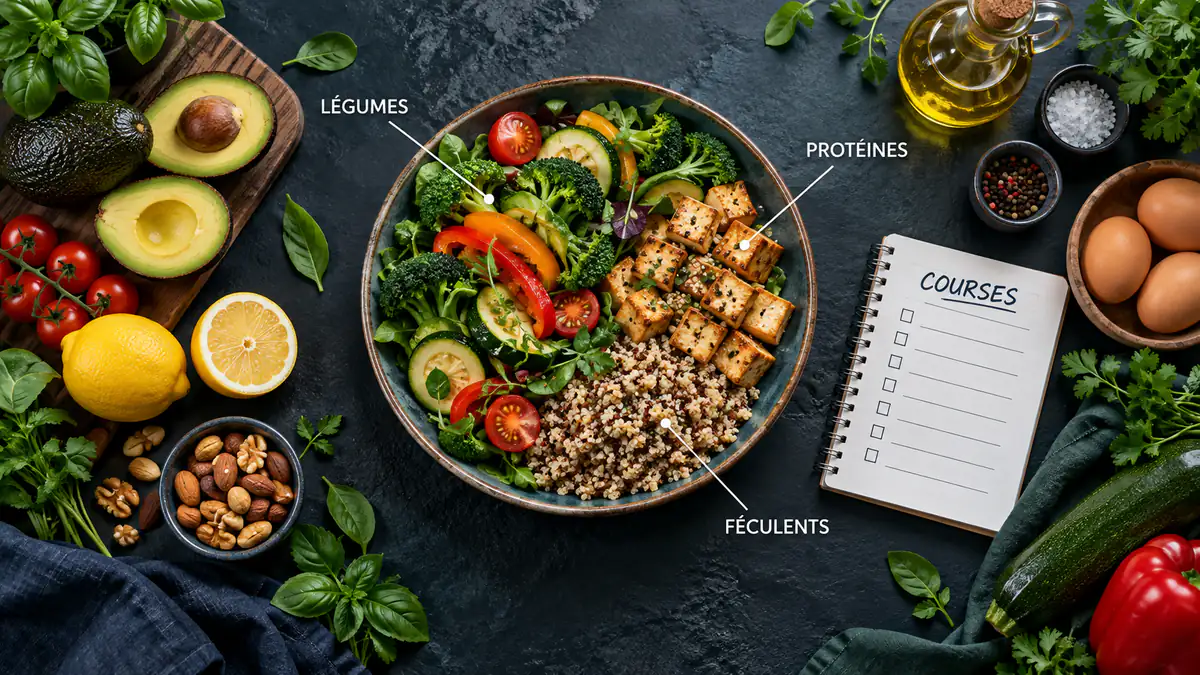
A low-carb menu can still include bread, fruit and lentils. The proposed week provides around 140 to 167 g of carbs per day, without aiming for ketosis or promising weight loss. The idea: adjust portions of starchy foods, keep the fibre and vary your protein sources.
This plan is an example for an adult, not a prescription tailored to your weight, activity or a medical condition. Calculated energy intake is around 1,950 to 2,110 kcal per day. That may be too little or too much for you. No clinical trial has evaluated this week of meals.
Download the menu and shopping list as a PDF, or use the HTML version to view and print. Both use the portions in this article.
Defining the menu’s carb level
A moderate reduction, with no keto goal
“Low carb” has no universal definition. In its overview of eating patterns, the American Diabetes Association describes a category with 26–45 % of energy coming from carbs. Very restrictive approaches may target 20 to 50 g of carbs excluding fibre per day.
Our week provides around 27 to 34 % of calculated energy from carbs. This editorial choice allows several food groups to remain on the menu. It does not define an optimal amount for every adult or guarantee a specific metabolic state. The comparison of ketogenic and low-carb diets · FR explains this distinction in detail.
Digestible carbs provide glucose, among other things, which is used as fuel and stored as glycogen. A demanding workout may make having it available more useful. Fibre works differently: it supports bowel function, and some types are fermented by the gut microbiota. Cutting carbs therefore does not mean removing everything that contains fibre.
How the figures were calculated
The calculations use the ANSES Ciqual 2025 food composition table, the French file dated 3 November 2025, downloaded on 16 October 2026. Each portion is multiplied by the content per 100 g, then added up for each meal and day. The breakdown of ingredients, Ciqual codes and calculations lets you trace the assumptions.
The conventions matter:
- Starchy foods, pulses, vegetables served hot, chicken, fish and eggs are weighed cooked, using the edible portion. Pulses are drained.
- Fruit and raw vegetables are weighed raw, with any uneaten parts removed. Tofu and dairy products are weighed as sold. Oats are dry.
- Oils are included. Drink water, tea or coffee without sugar. Sauces, sugary drinks and any extras require a new calculation.
- Trace amounts are treated as zero. A value below a quantification limit is replaced with half that limit. No missing data have been silently replaced with zero.
Ciqual carbs are already listed separately from fibre: do not subtract fibre a second time. Displayed amounts are rounded to the nearest gram, and calories to the nearest ten. A daily total may therefore differ slightly from the sum of the rounded rows.
These figures remain estimates. Variety, brand and water absorption during cooking change the nutrient content. A portion of rice weighed dry is certainly not equivalent to the same weight of cooked rice. For therapeutic carb counting, use the actual products with your healthcare team.
Seven days with portions, carbs and fibre
Dairy products are plain, with no added sugar. The oils represent the total used for cooking and dressing each meal: do not add them again “by eye”. Rapeseed oil is particularly suitable for dressing food after cooking. Herbs, lemon and sugar-free spices can vary the flavours, with small contributions not quantified here.
The snack is included in the totals, but can be moved into meals. If you remove it or change a portion, the total changes. Eggs are counted by weight without shells: 100 g is approximately two medium eggs.
Day 1
| Meal | Portions for one person | Carbohydrates | Fibre |
|---|---|---|---|
| Breakfast | wholemeal bread 70 g, plain fromage blanc with 2–3% fat 200 g, apple with skin 150 g, walnut kernels 20 g | 55 g | 9 g |
| Lunch | chicken breast 100 g, green lentils 100 g, steamed broccoli 200 g, olive oil 20 g, wholemeal bread 30 g | 34 g | 15 g |
| Dinner | plain tofu 180 g, quinoa 130 g, courgettes 250 g, rapeseed oil 20 g, plain unsweetened yoghurt 125 g | 50 g | 9 g |
| Included snack | orange 150 g, unsalted almonds 25 g | 14 g | 7 g |
Calculated total: 154 g of carbohydrates, 40 g of fibre, 118 g of protein and approximately 2090 kcal.
Day 2
| Meal | Portions for one person | Carbohydrates | Fibre |
|---|---|---|---|
| Breakfast | dry rolled oats 45 g, plain fromage blanc with 2–3% fat 200 g, raspberries 125 g, unsalted almonds 25 g | 43 g | 14 g |
| Lunch | steamed salmon 130 g, steamed potatoes 180 g, green beans 200 g, olive oil 15 g | 36 g | 12 g |
| Dinner | chickpeas 100 g, shelled hard-boiled eggs 100 g, raw tomato 150 g, cucumber with skin 150 g, wholemeal bread 40 g, rapeseed oil 20 g, plain unsweetened yoghurt 125 g | 50 g | 13 g |
| Included snack | apple with skin 150 g, walnut kernels 25 g | 19 g | 4 g |
Calculated total: 148 g of carbohydrates, 42 g of fibre, 98 g of protein and approximately 2050 kcal.
Day 3
| Meal | Portions for one person | Carbohydrates | Fibre |
|---|---|---|---|
| Breakfast | wholemeal bread 70 g, shelled hard-boiled eggs 100 g, kiwi 100 g, plain unsweetened yoghurt 125 g, unsalted almonds 15 g | 47 g | 9 g |
| Lunch | plain tofu 180 g, brown rice 100 g, spinach 200 g, olive oil 20 g | 43 g | 8 g |
| Dinner | green lentils 120 g, courgettes 250 g, wholemeal bread 50 g, rapeseed oil 20 g, plain fromage blanc with 2–3% fat 150 g | 49 g | 18 g |
| Included snack | orange 150 g, unsalted almonds 25 g | 14 g | 7 g |
Calculated total: 154 g of carbohydrates, 42 g of fibre, 98 g of protein and approximately 2000 kcal.
Day 4
| Meal | Portions for one person | Carbohydrates | Fibre |
|---|---|---|---|
| Breakfast | wholemeal bread 70 g, plain fromage blanc with 2–3% fat 200 g, apple with skin 150 g, walnut kernels 20 g | 55 g | 9 g |
| Lunch | wholemeal pasta 120 g, red kidney beans 80 g, raw tomato 200 g, olive oil 20 g | 55 g | 17 g |
| Dinner | chicken breast 120 g, steamed broccoli 200 g, quinoa 100 g, rapeseed oil 20 g, plain unsweetened yoghurt 125 g | 38 g | 8 g |
| Included snack | kiwi 150 g, unsalted almonds 25 g | 19 g | 7 g |
Calculated total: 167 g of carbohydrates, 41 g of fibre, 101 g of protein and approximately 1950 kcal.
Day 5
| Meal | Portions for one person | Carbohydrates | Fibre |
|---|---|---|---|
| Breakfast | dry rolled oats 45 g, plain fromage blanc with 2–3% fat 200 g, raspberries 125 g, unsalted almonds 25 g | 43 g | 14 g |
| Lunch | steamed cod 130 g, chickpeas 100 g, courgettes 250 g, olive oil 20 g, wholemeal bread 40 g | 38 g | 15 g |
| Dinner | plain tofu 180 g, steamed potatoes 150 g, green beans 200 g, rapeseed oil 20 g, plain unsweetened yoghurt 125 g | 40 g | 11 g |
| Included snack | apple with skin 150 g, walnut kernels 25 g | 19 g | 4 g |
Calculated total: 140 g of carbohydrates, 44 g of fibre, 111 g of protein and approximately 2070 kcal.
Day 6
| Meal | Portions for one person | Carbohydrates | Fibre |
|---|---|---|---|
| Breakfast | wholemeal bread 70 g, shelled hard-boiled eggs 100 g, kiwi 100 g, plain unsweetened yoghurt 125 g, unsalted almonds 15 g | 47 g | 9 g |
| Lunch | green lentils 100 g, raw carrot 100 g, shelled hard-boiled eggs 100 g, wholemeal bread 40 g, rapeseed oil 20 g | 38 g | 14 g |
| Dinner | chickpeas 100 g, spinach 200 g, brown rice 80 g, olive oil 20 g, plain fromage blanc with 2–3% fat 150 g | 54 g | 15 g |
| Included snack | apple with skin 150 g, walnut kernels 25 g | 19 g | 4 g |
Calculated total: 159 g of carbohydrates, 43 g of fibre, 88 g of protein and approximately 1960 kcal.
Day 7
| Meal | Portions for one person | Carbohydrates | Fibre |
|---|---|---|---|
| Breakfast | wholemeal bread 70 g, plain fromage blanc with 2–3% fat 200 g, apple with skin 150 g, walnut kernels 20 g | 55 g | 9 g |
| Lunch | chicken breast 120 g, quinoa 130 g, green beans 200 g, olive oil 20 g | 42 g | 13 g |
| Dinner | wholemeal pasta 100 g, plain tofu 180 g, raw tomato 200 g, rapeseed oil 20 g, plain unsweetened yoghurt 125 g | 49 g | 8 g |
| Included snack | kiwi 150 g, unsalted almonds 25 g | 19 g | 7 g |
Calculated total: 166 g of carbohydrates, 36 g of fibre, 113 g of protein and approximately 2110 kcal.
Vegetarian substitutions and budget
Days 3 and 6 are already vegetarian, with eggs and dairy. On the other days, replacing meat or fish with vegetables alone would leave you one protein source short.
Here are alternatives calculated using the same data. They replace only the ingredient shown, without changing the rest of the meal:
| Replacement | Protein before / after | Change in carbohydrates | Change in energy |
|---|---|---|---|
| Cooked chicken 100 g → plain tofu 200 g | 30 / 27 g | +6 g | approximately +150 kcal |
| Steamed salmon 130 g → plain tofu 220 g | 30 / 29 g | +5 g | approximately +65 kcal |
| Steamed cod 130 g → plain tofu 220 g | 32 / 29 g | +6 g | approximately +185 kcal |
These substitutions are not complete nutritional equivalents: the fat, vitamin and mineral profiles change. In particular, tofu does not replace the EPA and DHA supplied by fish. A fully vegan menu would need a different structure, with attention to vitamin B12 and calcium.
Pulses are still useful even though they contain carbohydrates. In the data used, 100 g of cooked green lentils provide approximately 16 g of carbohydrates, 8 g of fibre and 10 g of protein. So they are neither a “forbidden” starchy food nor a protein substitute identical to chicken.
To keep costs down, compare prices per kilogram and the amount you actually eat. Plain frozen vegetables, dried pulses and plain tofu can help limit specialist purchases. Ordinary wholemeal bread is enough: no product labelled “keto” is necessary. You can switch canned products or brands, but the totals should then be treated as approximate.
Don’t replace grains with unlimited processed meats. The French dietary guidelines for adults recommend, among other things, more pulses and nuts, and less processed meat. If you’re torn between cooking and ordering meals, my review of Régime Box, its cost and its limitations · FR covers that separate decision.
Shopping list and preparation
Quantities for one person, seven days
This list adds up the basic menu, without substitutions. The weights of hot vegetables, starchy foods, pulses, meat and fish are still the weights to serve after cooking. When buying raw ingredients, allow for water loss or absorption depending on the product. There is no single exact conversion factor that works for every cooking method.
Here’s what you’ll need to buy:
- Grains and potatoes: wholemeal bread 550 g, dry oats 90 g, cooked quinoa 360 g, cooked brown rice 180 g, cooked wholemeal pasta 220 g and steamed potatoes 330 g.
- Cooked and drained pulses: lentils 320 g, chickpeas 300 g and red kidney beans 80 g.
- Protein foods and dairy: cooked chicken 340 g, cooked salmon 130 g, cooked cod 130 g, plain tofu 720 g, shelled hard-boiled eggs 400 g, plain fromage blanc 1.3 kg and plain yogurt 875 g, equivalent to seven 125 g pots.
- Vegetables: cooked broccoli 400 g, cooked green beans 600 g, cooked courgettes 750 g, cooked spinach 400 g, raw tomatoes 550 g, raw cucumber 150 g and raw carrot 100 g.
- Fruit, edible weights: apples 900 g, kiwis 500 g, oranges 300 g and raspberries 250 g.
- Dressings and nuts: olive oil 135 g, rapeseed oil 140 g, almonds 180 g and walnut kernels 135 g, all with no added salt.
The total amount of oil may seem surprising: it is spread across fourteen meals and included in the calculated energy intake. This is not an instruction to add more if your dish already contains some. Fat and nut portions also need adjusting to your needs.
Meal prep without keeping a whole week’s food in the fridge
Cook a first batch of grains, vegetables and pulses, then a second batch halfway through the week. Immediately portion out anything you plan to freeze. Cool prepared food quickly, maintain the cold chain and follow the instructions on the packaging. Fish can be bought frozen and cooked when needed.
To avoid leftover bits in small jars, freeze extra portions or cook for several people by multiplying the weights. You can also repeat a meal: that’s more realistic than buying seven sauces for seven days.
Fibre, hunger and exercise: useful adjustments
Don’t chase a fibre record
The week provides around 36–44 g of fibre per day. The French national health insurance service (Assurance maladie) gives a guideline range of 25–40 g for adults. Some days on the menu slightly exceed it: this is not a target to hit at all costs.
If you currently eat little fibre, don’t switch to all these portions overnight. Increase gradually, drink regularly and adjust pulses to your tolerance. A digestive condition may require different choices. A menu that looks “balanced” on paper shouldn’t leave you with a stomach ache.
This guide calculates carbohydrates, fibre, energy and protein. It does not certify that every reader’s micronutrient needs are fully covered. Over time, food variety and reassessing your needs remain essential.
Add carbohydrates when they’re useful
For a long session or intense workout, keep a portion of starchy foods and increase it if needed. As a calculation example, adding 100 g of cooked quinoa provides around 28 g of carbohydrates, 4 g of fibre and 150 kcal. Adding 50 g of wholemeal bread provides around 21 g of carbohydrates and 4 g of fibre.
These examples are food additions, not a universal sports nutrition protocol. They may take you outside the menu’s range, which is not a failure. After a few days, reassess hunger, digestion, energy during training and recovery. Persistent fatigue or unwanted weight loss is a reason to review your intake rather than cut back further.
Diabetes medication, pregnancy and situations requiring guidance
If you take diabetes medication, get any major change approved by your doctor or dietitian. Insulin and medicines that stimulate its secretion can put you at risk of hypoglycaemia if your intake drops without treatment adjustments. The NHS recommends professional guidance for restrictive dietary changes while on medication. Don’t adjust a dose yourself based on this menu.
With an SGLT2 inhibitor, or gliflozin, very severe restriction and ketogenic diets require particular vigilance for ketoacidosis. The NHS factsheet on these medicines recommends discussing this before starting this type of diet. This menu is not ketogenic, but it does not constitute individual clearance while taking medication.
Pregnancy, breastfeeding, kidney disease, an eating disorder, being underweight or intensive sports training call for professional tailoring. The menu is not intended for children. During pregnancy, specific nutritional needs go beyond counting carbohydrates.
If you feel unwell, follow the protocol provided by your healthcare team. While taking a gliflozin, vomiting, abdominal pain, rapid breathing or confusion require urgent assessment, even if blood glucose does not seem particularly high. Call emergency services if symptoms are severe.