Quick verdict
A vibrating necklace promises to “switch you into parasympathetic mode” in minutes. The studies it cites often involve a different technology: electrical ear stimulation, tested in a laboratory with precise settings. Same picture of the vagus nerve, different intervention.
Wearable vagus nerve stimulators are not a single category. Transcutaneous auricular electrical stimulation, or taVNS, has a neuroanatomical basis and a body of human trials. However, its effects on anxiety remain preliminary and depend on parameters that are still poorly standardized. Non-invasive cervical stimulation is another technique, with different devices and indications. Vibrating pebble-shaped devices and haptic wristbands do not deliver the same intervention.
It is therefore misleading to conclude that a necklace or earpiece “forces a switch into parasympathetic mode,” reduces cortisol within minutes or reprograms the nervous system in four weeks. Studies do not validate a universal protocol, and data from a medical device cannot be transferred to a consumer brand simply because it mentions the vagus nerve.
For chronic anxiety, established treatments and evaluation of the causes remain the priority. A device could potentially be discussed as an adjunct, ideally in a clinical setting or with a precise protocol, but not as a substitute for psychotherapy, indicated medication or urgent care.
Three technologies that marketing lumps together
Implanted VNS
Traditional vagus nerve stimulation uses an implanted generator and an electrode around the cervical vagus nerve. It is reserved for specific medical indications, notably certain forms of drug-resistant epilepsy and, depending on the jurisdiction, certain forms of treatment-resistant depression. Surgery, medical adjustment and follow-up are required.
The efficacy supporting that regulatory approval does not establish the efficacy of a transcutaneous device. The current, target, dose and population differ. Calling a wearable “the same technology without surgery” erases those differences.
Transcutaneous electrical stimulation
taVNS places an electrode on areas of the ear partly innervated by the auricular branch of the vagus nerve. Cervical stimulation is applied to the neck. Imaging and neurophysiology studies support possible engagement of afferent circuits, but placement, pulse width, frequency, intensity and the sham comparator vary widely.
Sham control is difficult. Active stimulation causes tingling, and “sham” stimulation can itself activate nerves. Blinding may therefore be imperfect. This problem is particularly important for subjective outcomes such as anxiety or relaxation.
Vibration or sound
A vibrating device on the sternum, wrist or ankle can alter attention, breathing or body awareness. This can feel pleasant and support a relaxation routine. But the sternum does not provide direct access comparable to an ear electrode. Without product-specific evidence, “vagal toning” remains a marketing hypothesis.
The distinction to keep in mind is simple:
| Category | Signal | Transferable evidence |
|---|---|---|
| Implanted VNS | Surgically placed electrode on the nerve | Only for the system and indication studied |
| Auricular taVNS | Current through the skin of the ear | Trials with comparable parameters and placement |
| Cervical nVNS | Transcutaneous neck stimulation | Trials of the cervical device in question |
| Haptic or vibroacoustic | Vibration or sound | Only studies specific to that intervention |
What trials show about anxiety and stress
The most directly applicable study identified during this update is a single-blind randomized trial published in 2025 involving 70 community-dwelling adults. It assessed subclinical affective symptoms and perceived stress. This work provides a promising signal, but its sample size, blinding and population prevent conclusions that it is a treatment for clinical anxiety.
A 2018 meta-analysis on major depression suggested a possible benefit of taVNS, based on a small number of studies with methodological limitations. Depression is not anxiety, and an average effect in a diagnosed population does not prove immediate relief from a panic attack.
Trials often involve several weeks of sessions. They do not establish that feeling relaxed after five minutes corresponds to a lasting therapeutic change. A tingling sensation can also heighten expectations. A device therefore needs to be assessed against a credible placebo and using functional outcomes, not just an impression immediately after use.
Claims about inflammation deserve the same caution. The vagal inflammatory reflex is biologically plausible, but cytokine changes in a small study do not justify promising a reduction in “systemic inflammation” for every user.
HRV is not the final arbiter
HRV reflects variation in the intervals between heartbeats under the influence of multiple mechanisms. It depends on breathing, position, time of day, age, recent activity, medication and signal quality. RMSSD is not a direct measure of “vagus nerve strength.”
A living Bayesian meta-analysis published in 2021 found no robust effect of taVNS on vagally mediated HRV indices. This does not mean stimulation never has an effect. It means that promising an overnight increase of 15–30% or using a ring as proof of target engagement is not justified.
If you track HRV, standardize the measurement and treat it as secondary data. A reduction in anxiety that improves daily functioning, a greater ability to complete an avoided task or improvement confirmed by a questionnaire matters more than an isolated change.
Safety: reassuring in the short term, incomplete in the long term
The 2022 safety meta-analysis pooled 177 studies and more than 6,000 participants. It found no clear difference in the overall incidence of adverse effects between active stimulation and control. The most frequent events were mild, notably ear pain or discomfort, headache and tingling.
This review also has limitations. Adverse-effect reporting was incomplete in many studies, protocols were heterogeneous and follow-up was often short. “Generally well tolerated in trials” is therefore more accurate than “very safe for everyone.”
Do not use a cervical device near the carotid artery or an improvised electrode with a muscle stimulator. Parameters and placement are crucial. Do not increase the intensity to the point of a strong contraction in the belief that this will produce a greater effect. Do not simultaneously combine taVNS, transcranial electrical stimulation, a cervical device and sedative medication in pursuit of a stronger effect. Interactions between multiple consumer neuromodulation methods are poorly documented and make it impossible to reliably attribute any adverse effect.
Medical advice is necessary before use in the following situations:
- pacemaker, defibrillator or another electrical implant
- heart rhythm disorder, unexplained syncope or unstable cardiovascular disease
- epilepsy or a neurological condition under medical care
- pregnancy or breastfeeding
- injury, infection or loss of sensation at the stimulation site
- medication that may affect heart rhythm
- under 18 years of age
Stop if you feel unwell or experience chest pain, persistent palpitations, shortness of breath, marked dizziness, significant pain, a lasting skin reaction or worsening symptoms. A crisis involving suicidal thoughts, immediate danger, confusion or cardiac symptoms requires emergency services.
Why the dose is not yet standardized
Published parameters vary in frequency, pulse width, on–off cycle, session length and number of sessions. Intensity is sometimes set just below the pain threshold, sometimes based on the perception threshold. Two protocols with the same name may therefore stimulate different populations of nerve fibers.
Ear anatomy also varies. An electrode placed on the tragus, cymba conchae or earlobe does not provide the same comparator. The earlobe is often chosen as a control, but it has other nerve supplies and can produce a sensation. Without checking blinding, a difference in expectations may contribute to the result.
This heterogeneity prevents turning a study into a DIY protocol. It also makes brand comparisons difficult. A responsible manufacturer publishes the parameters and explains why its electrodes reach the claimed area. To interpret any HRV response, apply the same precautions as for consumer stress sensors · FR.
How to assess a device before buying
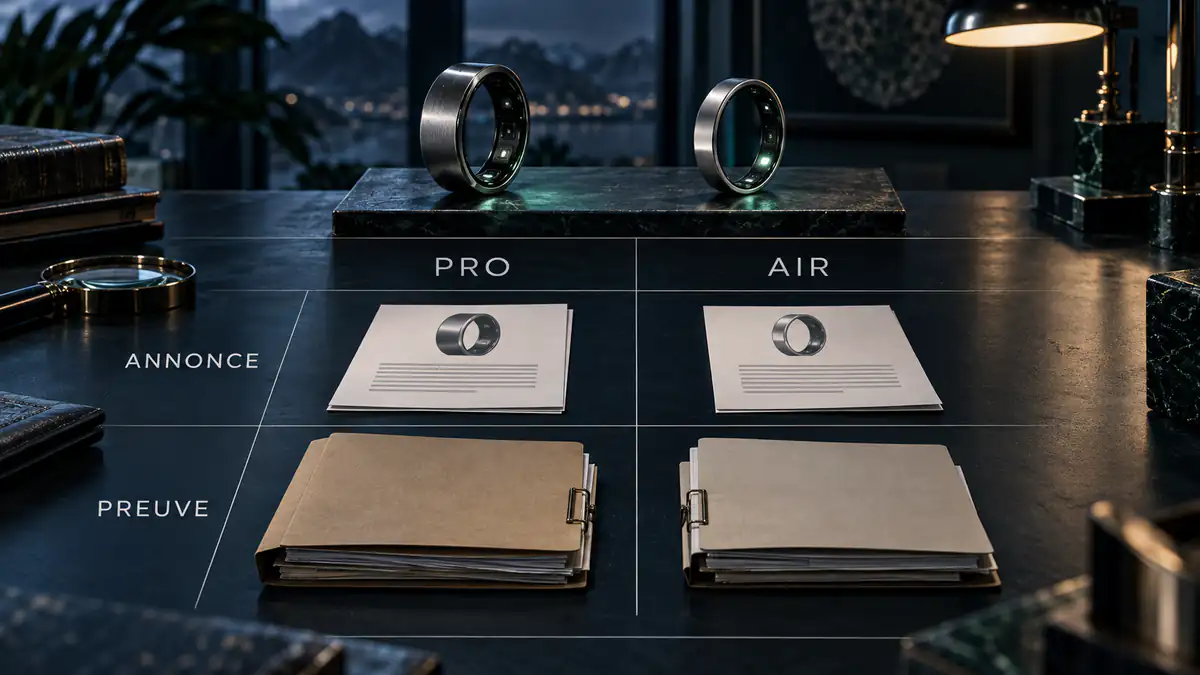
The price, the influencer and the number of programs tell you nothing about the dose. Start by looking for the exact model in publications and trial registries. A university study of generic taVNS does not automatically validate a commercial device.
Ask for precise specifications:
- anatomical stimulation site
- frequency in hertz and pulse width
- intensity range in milliamperes
- waveform and charge control
- contraindications and cleaning procedure
- regulatory status for the claimed indication
- controlled trials on the exact model
- disclosure of funding and authors’ relevant relationships
A regulatory mark does not mean effectiveness for every advertising claim. Check the exact indication. “Wellness,” migraine, epilepsy and anxiety are distinct uses.
A cautious personal trial if a professional agrees
This protocol is only for an adult who has received appropriate advice, using a documented device according to its instructions. It does not provide universal electrical settings.
Before starting
Choose a primary outcome: a validated anxiety score, number of episodes, perceived sleep quality or ability to carry out an activity. Record your treatments and do not change them during the trial without consulting your prescriber. Keep free techniques as a comparison, for example guided slow breathing.
For two to four weeks
Use only the settings and frequency specified in the instructions or chosen clinical protocol. Log the session, tolerated intensity, outcome and any adverse effects. Do not judge the device on a single session. If possible, alternate defined periods rather than adding the device only on bad days, which would bias the comparison.
At reassessment
Look for a functional improvement large enough to matter. If only the HRV score changes, without a perceived or behavioral benefit, its relevance is limited. If nothing improves, do not increase the dose beyond the instructions or buy a more powerful device.
What remains preferable as a first-line approach
Persistent anxiety first requires an assessment. Structured psychotherapies, suitable physical activity, regular sleep and medication when indicated have a more established framework. Slow breathing can temporarily alter HRV without a device and lets you test whether a brief physiological intervention helps you.
Intense cold is not a universal alternative: it initially activates a sympathetic response and carries cardiovascular risks. Meditation is not a moral obligation either. The choice depends on symptoms, preferences and access to care.
The Verdict
Transcutaneous electrical vagus nerve stimulation is a credible research technology. It is not yet a validated “pause button” for self-managing chronic anxiety. Evidence is specific to a technique, placement, dose and population. Vibrating devices must demonstrate their own effects rather than borrow electrical stimulation studies.
If a brand promises an immediate cortisol drop, a guaranteed HRV increase or deep reprogramming in a few weeks, walk away. If an exact device has controlled trials, a clear status and thorough instructions, it can be discussed as an adjunct, with a useful outcome measure and a stopping rule.