The short answer
Eight electrodes, “metabolic age,” visceral fat to one decimal place, sometimes even a “nerve score”: smart scales promise a health check every morning. Compared with DEXA, an independent study mostly finds a very good weighing scale.
A bioimpedance scale is generally very good at weighing you and much less reliable at describing what makes up that weight. Eight electrodes and multiple frequencies improve the available electrical information, but they do not turn the device into a DEXA scan, an abdominal CT scan, a vascular examination or a neurological test.
The independent study by Frija-Masson and colleagues compared three smart scales with DEXA. Weight measurements were accurate, while every device underestimated fat mass and individual errors were fairly large. That is the key takeaway: a strong correlation between two methods across a group does not guarantee an accurate number for an individual.
A defensible use is to standardize measurements and track a trend. Misuse means treating an estimate of “visceral fat,” “vascular age” or “nerve health” as a diagnosis.
What the scale actually measures
Bioelectrical impedance analysis, or BIA, sends an imperceptible alternating current between electrodes. The device measures the body’s opposition to that current. Tissues rich in water and electrolytes, such as muscle, conduct electricity better than fat tissue.
From this impedance, the scale first estimates body water. It then applies an equation incorporating weight, height, age, reported sex and sometimes activity to derive lean mass and fat mass. “Cellular measurement” is therefore marketing shorthand. The current is measured, while body composition is modeled.
Many factors can shift the estimate without changing your body fat:
- hydration and salt intake
- glycogen after a carbohydrate-rich meal or a workout
- alcohol and a recent meal
- sweating and skin temperature
- exercise that has changed fluid distribution
- menstrual cycle, edema or inflammation
- quality of contact between foot, hand and electrode
The reference review on BIA principles emphasizes these assumptions about body geometry and hydration. They explain why the algorithm works better for some profiles than others.
Four or eight electrodes: an improvement, not a clinical benchmark
A foot-to-foot scale mainly measures the pathway between the legs. The trunk and arms are estimated using more assumptions. A handle adds hand-to-foot pathways and enables segmental analysis.
This can be useful for tracking rehabilitation or substantial changes in muscle mass. It does not mean the device “directly measures every muscle.” The trunk poses a particular problem: its large diameter produces relatively low impedance, yet it contains a substantial share of body mass. A small modeling error can therefore have a notable impact.
Multiple frequencies aim to better distinguish extracellular from intracellular fluids. This information is relevant in clinical settings, particularly when fluid status is monitored using a device and equations validated in the population concerned. On a consumer scale, the result remains a proprietary estimate. An unusual extracellular-to-total body water ratio does not establish inflammation, edema or “poor cellular health.”
Body fat and visceral fat: how to read the numbers
DEXA estimates fat mass, lean mass and mineral content from X-ray attenuation. It is not perfect, but it provides a more robust comparator than BIA alone. In the 2021 study involving 53, 52 and 48 people depending on the scale, all three models tested were accurate for weight, but not for individual body composition.
Two devices can show a similar trend while differing by several kilograms. Switching brands midway through weight loss therefore breaks the tracking series.
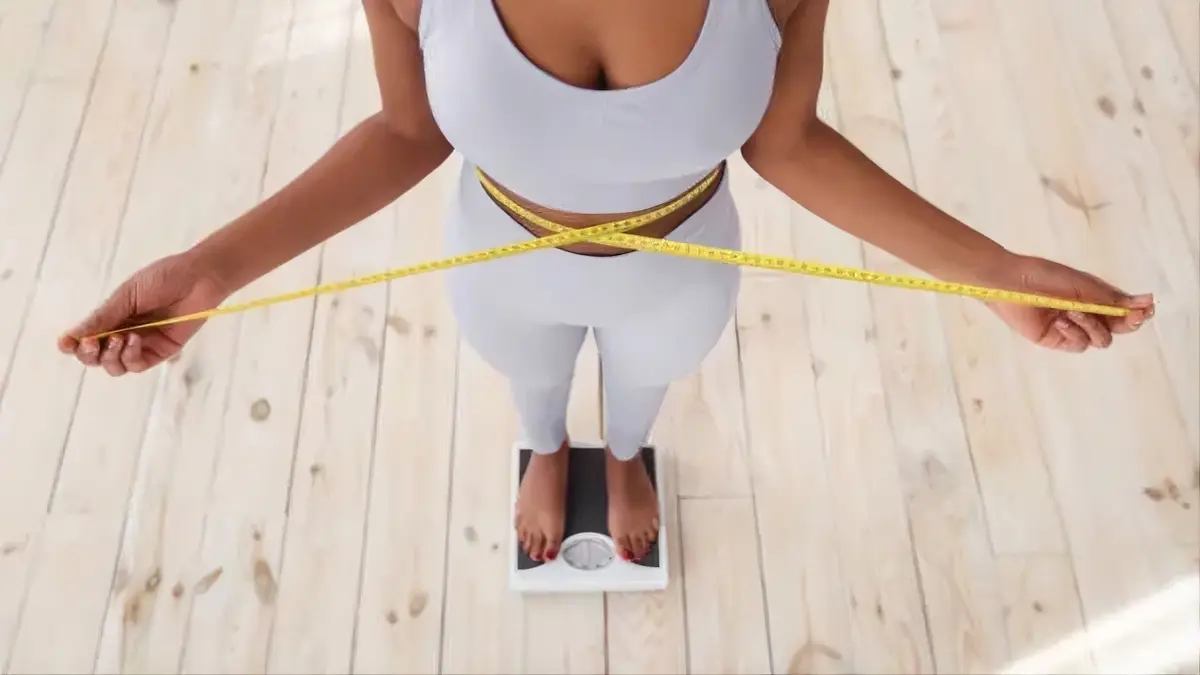
Visceral fat calls for even more caution. The displayed number is an algorithm-derived index. It is not an image of the fat around your liver and intestines. Waist circumference, measured at the same site and under the same conditions, is often a more transparent way to track cardiometabolic risk. Imaging is only indicated to address a clinical question, not to keep an app score happy.
To track a change in body composition, combine the following indicators instead:
- seven-day average weight
- weekly waist circumference
- standardized photos if your goal is aesthetic
- weights lifted, repetitions and performance if your goal is muscle development
- the same BIA estimate, treated as a secondary trend
PWV and vascular age: a signal to confirm
Pulse wave velocity, or PWV, increases as arteries become stiffer. The clinical reference method generally measures transit time between the carotid and femoral arteries under controlled conditions.
A smart scale can combine ballistocardiography and impedance plethysmography to estimate aorta-to-leg transit time. The validation study published in 2017 compared this system with SphygmoCor in a calibration group and then in 86 validation participants. Average agreement was considered acceptable, with a reported standard error of 1.39 m/s. This variability remains substantial when interpreting an individual value.
“Vascular age” adds a second layer of calculation: the value is compared with a reference population. This number may raise awareness, but it does not replace blood pressure, smoking status, diabetes, lipids or overall cardiovascular risk.
Repeated high readings should prompt you to check established measurements, not buy a supplement. Start by repeating the test at rest, then measure your blood pressure correctly. Talk to a doctor if the result persists, especially in the presence of hypertension, chest pain, shortness of breath or a family history.
Nerve scores and electrodermal activity
Some devices apply a low voltage to the soles of the feet and assess the skin’s electrochemical conductance. Sweat glands are innervated by small autonomic fibers, making the signal biologically plausible for investigating sudomotor dysfunction.
But several steps separate this signal from a diagnosis of neuropathy. Sweating, temperature, calluses, creams and foot placement affect conductance. A consumer score does not assess sensation, reflexes, strength, nerve conduction or possible causes.
Seek medical advice promptly if you have signs such as:
- persistent numbness or burning in the feet
- loss of sensation, a painless injury or a wound
- progressive weakness or balance problems
- symptoms alongside known diabetes
A reproducible measurement protocol
The electrical mechanism depends heavily on fluids. The priority is therefore not “perfect” conditions, but consistent ones.
Follow this protocol for four weeks:
- weigh yourself in the morning, after using the toilet and before eating or drinking
- place the scale on a hard floor in the same spot
- use bare, dry, clean feet, with no cream
- avoid interpreting a measurement after alcohol, travel, fever or a very intense late workout
- keep the same user profile and the same athlete or standard mode
- calculate a seven-day average weight
- compare estimated body fat over four weeks, not from one morning to the next
Do not deliberately drink a glass of water just beforehand to “improve conductivity.” You would be adding a variable. If two consecutive weigh-ins differ greatly, check your positioning and repeat just once.
To put the number in context, the guide to protein intake by body weight and goal is more useful for making muscle-related decisions than an isolated percentage.
Useful buying criteria
A more expensive model is only justified if its features change a decision. Before buying, check these points:
- weight accuracy and appropriate measurement increments
- an independent study on the exact model
- individual error, not just the correlation coefficient
- data export and operation without a mandatory cloud service
- clearly documented pregnancy mode or contraindication
- compatibility with an implanted device confirmed in the instructions
- privacy policy and support duration
People with a pacemaker or another implanted electronic device should follow the instructions and their medical team’s advice. Weight measurement without BIA may still be possible, depending on the model.
The Verdict
Eight electrodes are better than four for certain body pathways, but “better” does not mean “clinical.” An advanced scale is a tracking tool, not a diagnostic station.
I would pay more for stable weight measurement, reliable exports and good repeatability. I would not pay a substantial premium for metabolic age, visceral fat down to the gram or a nerve health score presented without independent validation. If your weight, waist circumference and performance are trending in the right direction, daily impedance fluctuations have no business dictating your behavior.