The main danger of nattokinase is treating it as harmless cardiovascular protection, then adding it to treatment or using it as a replacement. Serious bleeding has been reported. Its frequency remains unknown, and the available trials do not allow all combinations to be declared safe.
If you take an anticoagulant or an antiplatelet drug such as aspirin, do not start this supplement without discussing it with your prescriber or pharmacist. If you have already added it, let them know promptly without changing your medication yourself.
Emergency in France: call 15 or 112 for sudden weakness on one side, speech difficulties, a sudden, severe and unusual headache, heavy bleeding with feeling unwell, or difficulty breathing with swelling of the tongue or throat. Do not wait to find out whether nattokinase is responsible. Detailed warning signs appear below.
Nattokinase: why natural does not mean risk-free
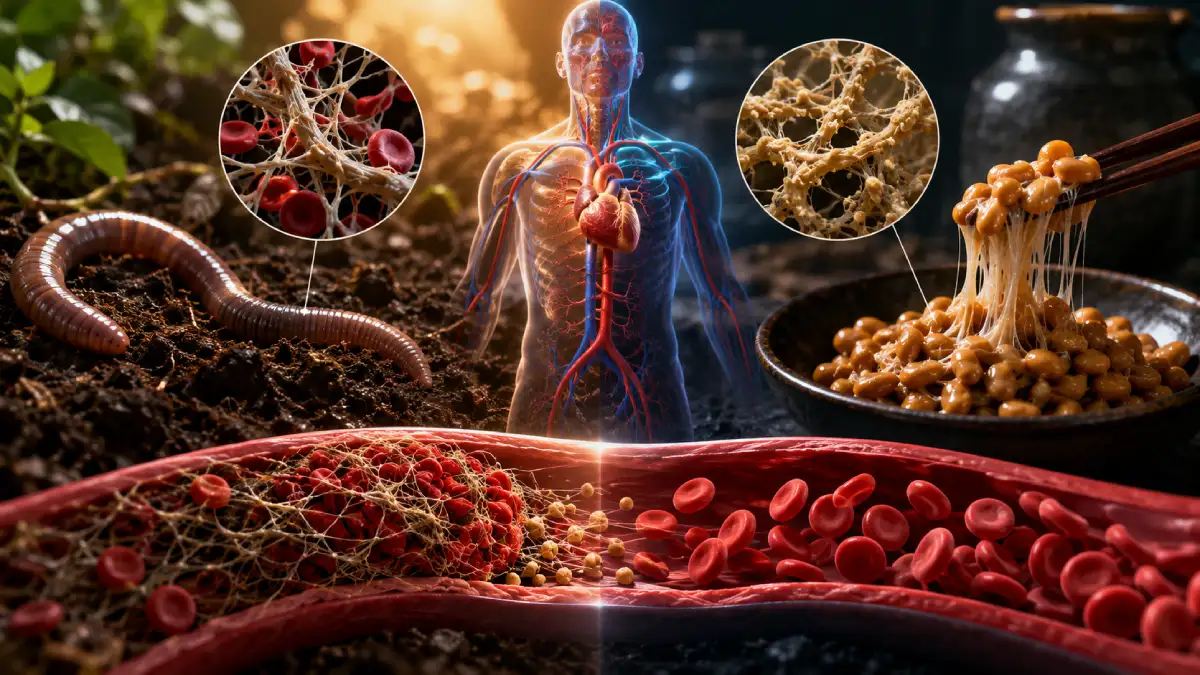
Nattokinase is an enzyme produced during the fermentation of soybeans into natto. Its food origins do not answer the clinical question: what does a concentrated extract do in someone already taking several medications?
Fibrin helps form the structure of a clot. Nattokinase can break it down in laboratory experiments. This activity explains both the research interest and the concern about bleeding. It does not demonstrate that a capsule acts like a thrombolytic drug used in hospital.
A 2015 crossover trial in 12 healthy young men observed changes in coagulation and fibrinolysis markers after a single dose. Values remained within normal ranges. This is a biological signal, not evidence of stroke prevention or a safety test in someone taking an anticoagulant.
The marketing shortcut is to use the mechanism to suggest a benefit, then forget it when discussing risk. A claimed biological action also deserves a review of interactions.
What the safety data really say
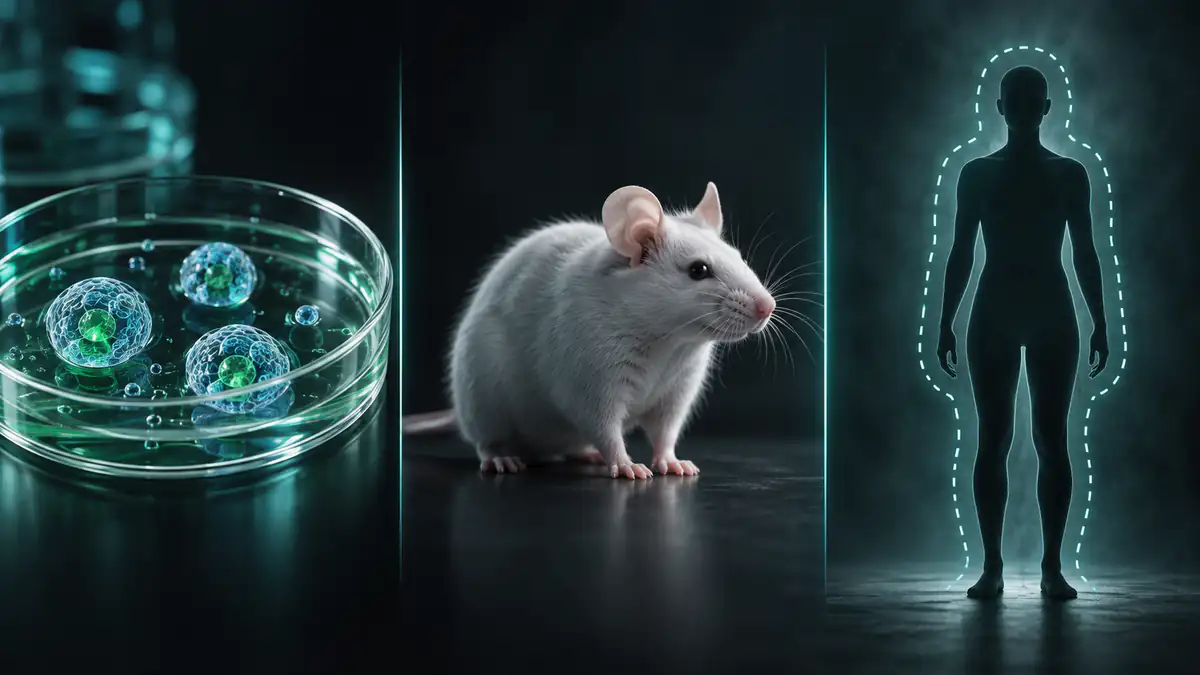
The data cannot be reduced to “no problems” or “dangerous for everyone.” Different situations need to be distinguished:
| Evidence | What it contributes | What it does not demonstrate |
|---|---|---|
| Toxicology of a defined extract | Information under specific experimental conditions | Safety of all products and combinations |
| Short trial in selected volunteers | Tolerability observed during follow-up | Absence of rare or delayed events |
| Multiyear trial | Longer follow-up within its protocol | Safety in all people with illnesses or taking multiple medications |
| Bleeding case report | A signal that warrants assessment | Risk frequency or certain causality on its own |
| Testimonial from a satisfied user | Individual experience | A guarantee for someone else |
The EFSA opinion is not a universal guarantee
In its 2016 opinion on NSK-SD extract, EFSA concludes that it is safe under the proposed conditions of use for that specific extract: healthy adults over 35 years old, excluding pregnancy and breastfeeding, with a maximum amount defined in the dossier.
The agency also notes that the submitted human studies, which were underpowered and had inconsistent findings, are not sufficient on their own to draw a safety conclusion. The overall conclusion draws in particular on the full toxicology dossier. This opinion does not assess cardiovascular effectiveness or endorse every bottle sold under the name nattokinase.
Reassuring evidence within a given setting is still useful. Turning it into a general absence of toxicity or interactions makes it say something else.
There is also a three-year trial
The NAPS randomized trial, published in 2021, included 265 people without clinical cardiovascular disease, followed for a median duration of three years. It found no significant difference in the progression of subclinical atherosclerosis between nattokinase and placebo.
It would therefore be inaccurate to say that all the research is limited to a few weeks. But this trial proves neither the prevention of cardiovascular events nor the safety of combining it with an anticoagulant. The product, participants and outcomes studied define the limits of the conclusion.
Bleeding: serious reports, unknown frequency
Two publications illustrate why caution is warranted:
- A case published in 2008 describes a cerebellar hemorrhage after nattokinase was added to aspirin in a person with cerebral microbleeds. The person’s underlying condition and the combination matter.
- A case published in 2021 describes severe abdominal bleeding in a 92-year-old woman taking nattokinase. She had several illnesses, had fallen, and the amount taken was not reliably known. The outcome was fatal, but these factors prevent the entire event from being attributed simply to the supplement.
A case report establishes that a situation was observed. It provides neither the total number of people exposed nor a comparable group not taking the supplement. It therefore cannot yield a percentage risk, or establish that the risk is common or exceptionally rare.
Conversely, a few trials without major safety signals are not enough to rule out a rare complication. The useful conclusion is a precaution for use, not an invented number.
Anticoagulants, aspirin and other combinations
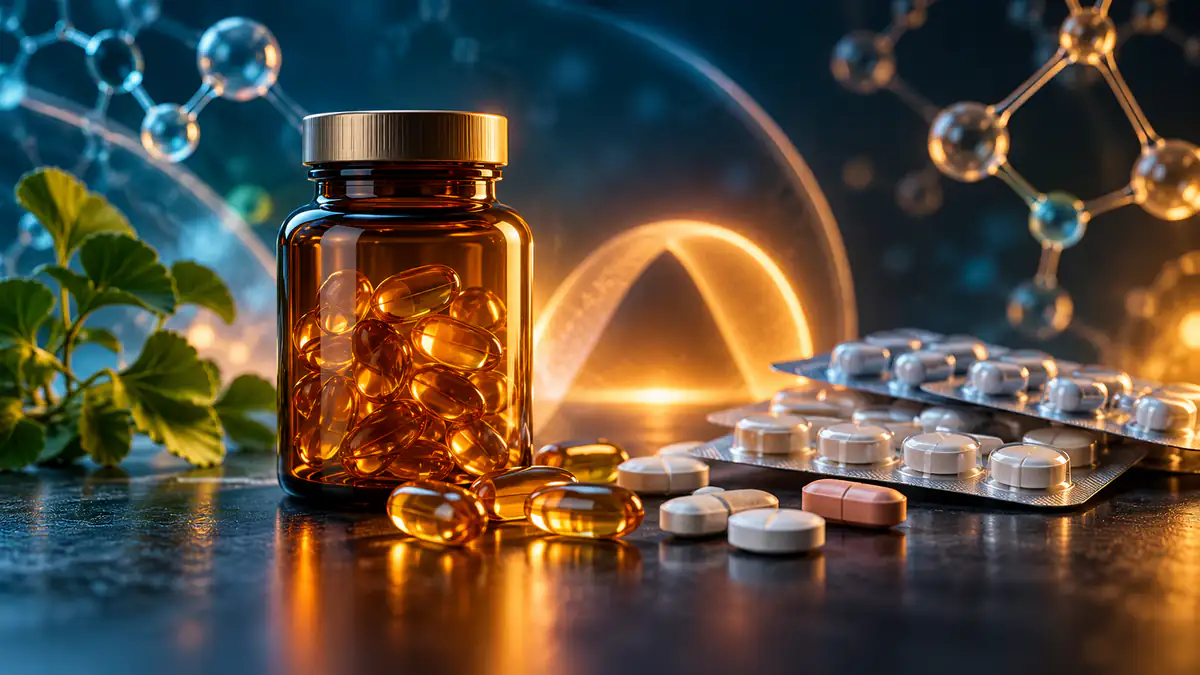
The Memorial Sloan Kettering Cancer Center advises against nattokinase in people with a coagulation disorder or taking anticoagulants, and warns about aspirin. It describes a possible increased risk with anticoagulant, antiplatelet and fibrinolytic drugs.
The following table distinguishes documented signals from precautions based on mechanism or context. It is not an exhaustive list of demonstrated interactions:
| Treatment or combination | Risk or uncertainty | Cautious approach |
|---|---|---|
| Aspirin, even at a low dose | A bleeding case has been published involving the combination. Frequency unknown | Do not add nattokinase without an assessment. Do not stop prescribed aspirin yourself |
| Other antiplatelet drugs, such as clopidogrel | Combined effects on hemostasis are concerning. Specific risk poorly quantified | Have the full prescription reviewed before adding anything |
| Oral anticoagulants, such as apixaban, rivaroxaban, dabigatran or vitamin K antagonists | Potentially increased bleeding risk, without therapeutic equivalence | Do not combine on your own initiative, and never substitute the supplement for treatment |
| Heparins or hospital fibrinolytic treatments | Antithrombotic treatment context requiring medical management | Tell the team about nattokinase, even if it does not appear on the prescription |
| Anti-inflammatory drugs such as ibuprofen or naproxen | These drugs can themselves promote bleeding. Their specific interaction with nattokinase is poorly studied | Seek advice before taking them on your own initiative, especially with another antithrombotic drug |
| Other supplements marketed as “fibrinolytic” | Mixtures and combined effects insufficiently assessed | Bring all ingredient lists to the pharmacist rather than stacking products |
For anti-inflammatory drugs, Assurance Maladie highlights their role among medications that promote gastrointestinal bleeding. This is not a specific interaction trial with nattokinase.
Taking the products a few hours apart does not demonstrate that the combination becomes safe. Likewise, normal routine test results are not permission to combine them. The healthcare professional chooses appropriate tests according to the treatment and context.
It does not replace an anticoagulant
A case of mechanical valve thrombosis was reported after warfarin was replaced with nattokinase. Another operation was required.
This case does not establish a failure rate, but illustrates the danger of substitution without demonstrated protection. A fibrinolytic mechanism does not mean equivalent protection against thrombosis. Do not reduce your medication or skip doses to “compensate” for adding the supplement.
Surgery and vulnerable groups: seek advice, do not improvise
An operation, biopsy or invasive dental procedure is a reason to tell the team about all your supplements. Assurance Maladie notes that procedures likely to cause bleeding require medical planning in people taking anticoagulants.
For nattokinase, this article provides no universal schedule for stopping or restarting. Contact the team as soon as the procedure is planned. Provide the ingredients, the amount used and the time of your last dose. It is up to them to decide what to do, also taking prescribed medications into account.
Other situations mean you should not start on your own:
- A known coagulation disorder, active bleeding, an ulcer or a history of hemorrhage.
- Kidney or liver disease, significant frailty or multiple medications: these situations require individual assessment, although their specific risk with nattokinase has not been quantified.
- A history of thrombosis, stroke, a mechanical valve or cardiovascular disease: the supplement must not replace the medical management plan.
- Pregnancy, breastfeeding or being underage: findings in selected adults are not enough to establish safety in these populations.
- An allergy to soy or natto, or a previous reaction to a related product: have the risk assessed before taking any.
Allergy: natto and soy are not interchangeable
A 2022 allergy publication describes anaphylaxis after eating natto, with sensitization to nattokinase identified. It does not report capsule use. It nevertheless serves as a reminder that the enzyme itself can be an allergen and that tolerating other soy foods does not guarantee tolerance of natto.
Do not test a “small amount” at home after a reaction. An extract marketed as purified is not enough on its own to establish the absence of allergy risk.
Warning signs: when should you seek help?
These signs can have several causes. Their presence does not prove that nattokinase is responsible, but should determine how quickly help is sought.
Call 15 or 112 immediately in France
The following situations require an emergency call:
- Sudden weakness on one side, facial asymmetry, difficulty speaking, sudden vision problems or a severe, sudden and unusual headache, even if the symptom goes away.
- Heavy or persistent bleeding with feeling unwell, marked paleness, loss of consciousness or shortness of breath.
- Vomiting blood, or black, tarry stools accompanied by feeling unwell or severe weakness.
- Swelling of the tongue or throat, difficulty breathing or swallowing, particularly after taking a dose.
This guidance follows the Assurance Maladie pages on stroke, gastrointestinal bleeding and angioedema. Do not drive yourself if you feel unwell or have neurological signs. Follow the emergency services’ instructions and tell them about your medications and the supplement.
Seek medical advice promptly
Repeated nosebleeds or bleeding gums, blood in the urine or stools, unusual spontaneous bruising or noticeably heavier periods warrant prompt medical advice, particularly during antithrombotic treatment. New black stools also require assessment without waiting until you feel unwell. If bleeding becomes heavy or your general condition deteriorates, call emergency services.
If you suspect an adverse effect, do not take nattokinase again until you have professional advice and do not change prescribed treatment yourself. Keep the product and its packaging. The French nutrivigilance system allows suspected adverse effects to be reported, ideally with a healthcare professional. Reporting does not replace medical care.
Consultation checklist: information to bring to your pharmacist
Prepare these details before the discussion:
| What to note or photograph | Why it helps |
|---|---|
| Exact name, brand, ingredients, batch and full label | Check the actual product and its other ingredients |
| Amount taken, FU stated per capsule and per serving, start date | Avoid confusing activity, mass and number of capsules |
| All medications, even occasional ones, and all supplements | Identify combinations that do not appear on a single prescription |
| Illnesses, bleeding history, allergies and planned procedures | Tailor the decision to your circumstances |
| Symptoms, timeline and last dose | Help assess a suspected event |
You can ask these questions directly:
- “What clinical benefit has been demonstrated for the goal I have in mind?”
- “Do my treatment or medical history make this addition inadvisable?”
- “Does this product contain other substances relevant to my medications?”
- “Who should I notify before my procedure, and who will give me instructions?”
- “Which signs mean I should call emergency services rather than wait for an appointment?”
To understand the difference from another enzyme, see the lumbrokinase and nattokinase comparison. This comparison does not offer a safe alternative to choose on your own.
The Verdict
Frequently asked questions
Can it be combined with aspirin?
Do not add this supplement to prescribed aspirin without an assessment. The published case involving the combination and clinical precautions warrant this caution. Spacing doses apart does not demonstrate safety. Do not change your aspirin treatment yourself.
Can it replace an anticoagulant?
No. Equivalent protection has not been demonstrated. The case of valve thrombosis after replacing warfarin shows why a supplement must not take the place of prescribed treatment.
What does FU mean on a label?
The FU are units of fibrinolytic activity measured in a laboratory, under the conditions of a fibrin breakdown test. They differ from milligrams, which indicate mass. The EFSA opinion describes this measurement for the extract assessed. More FU means neither greater demonstrated clinical protection nor an equivalent anticoagulant dose.
Do short trials demonstrate long-term safety?
No. They do not rule out rare or delayed events. The existence of a longer trial does not allow extrapolation to people taking multiple medications either. The useful question is whether the data concern a product, a population and a combination comparable to your situation.
Sources and methodology
Documentary synthesis verified on October 19, 2026. Case reports help identify signals, trials define the limits of the conclusions, and institutional resources guide next steps. This selection is neither a systematic review nor a personalized consultation.