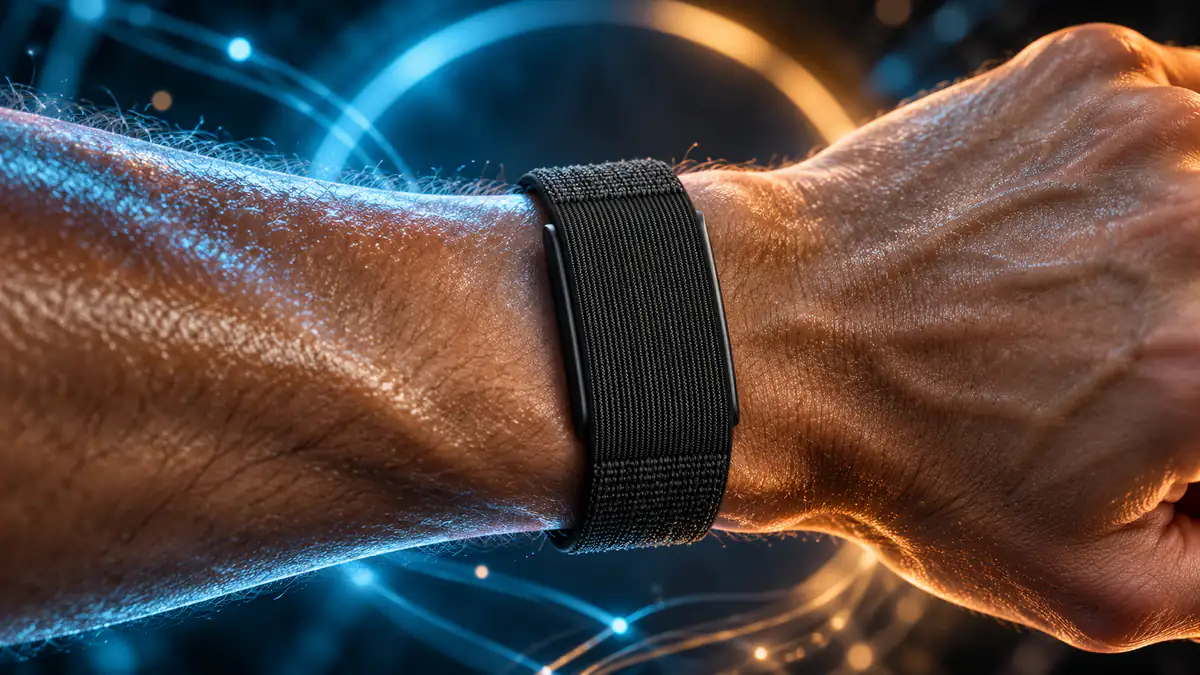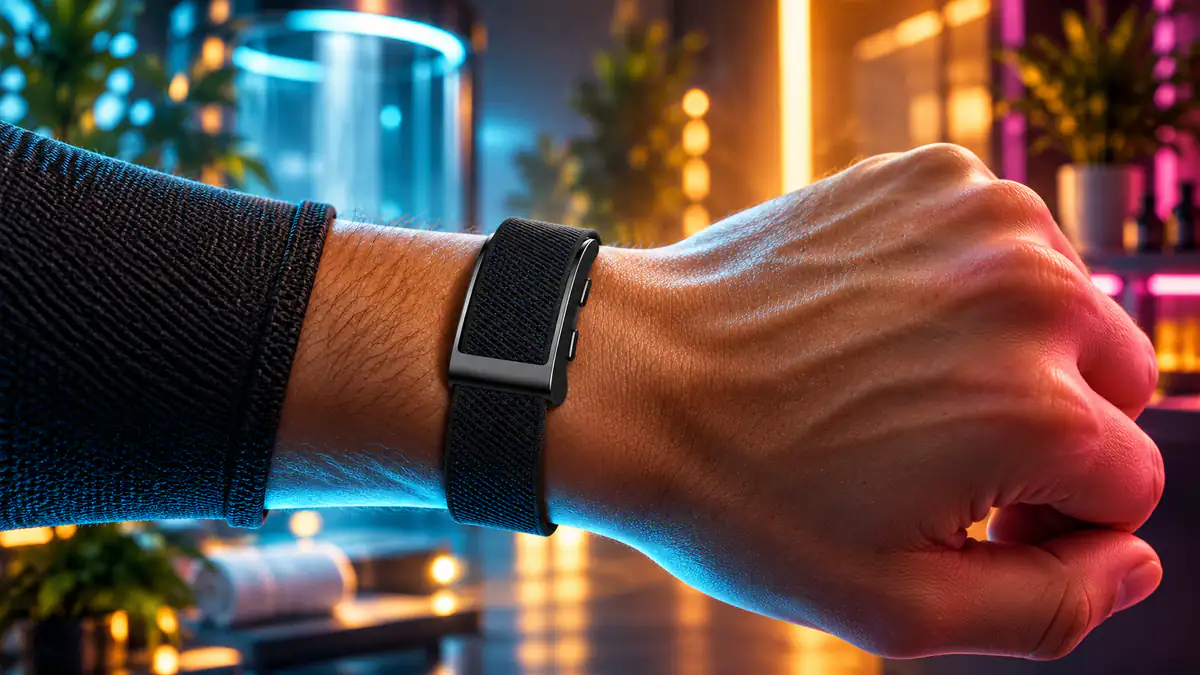
My verdict: the DuckDik Sense Pro is the pleasant surprise of my autumn tests. After two weeks on my wrist, day and night, I got accurate sleep and wake times, an app I understood without reading the manual, around 7 days of battery life and a list of features you usually pay for every month. Here, you pay €129 once, or €116.10 with my code LEBIOHACKE10. The caveat is the same as for all consumer bands: sleep stages and HRV are estimates, and the band needs a few nights to get to know you.
Transparency: DuckDik sent me the band for free, with no obligation to publish anything or say anything positive. The DuckDik links on this page are affiliate links: if you order with the code, I earn a commission and you get a 10% discount. Another useful detail: I don’t wear a fitness tracker day to day. So I tested it from the perspective of someone who doesn’t want to wrestle with a dashboard.
What is the DuckDik Sense Pro?
DuckDik is a Spanish brand that designs its band and app in-house. The Sense Pro is a screen-free band: nothing lights up on your wrist; you view everything in the DuckDik Health app, on iPhone or Android. It’s the same principle as WHOOP, without the monthly fee.
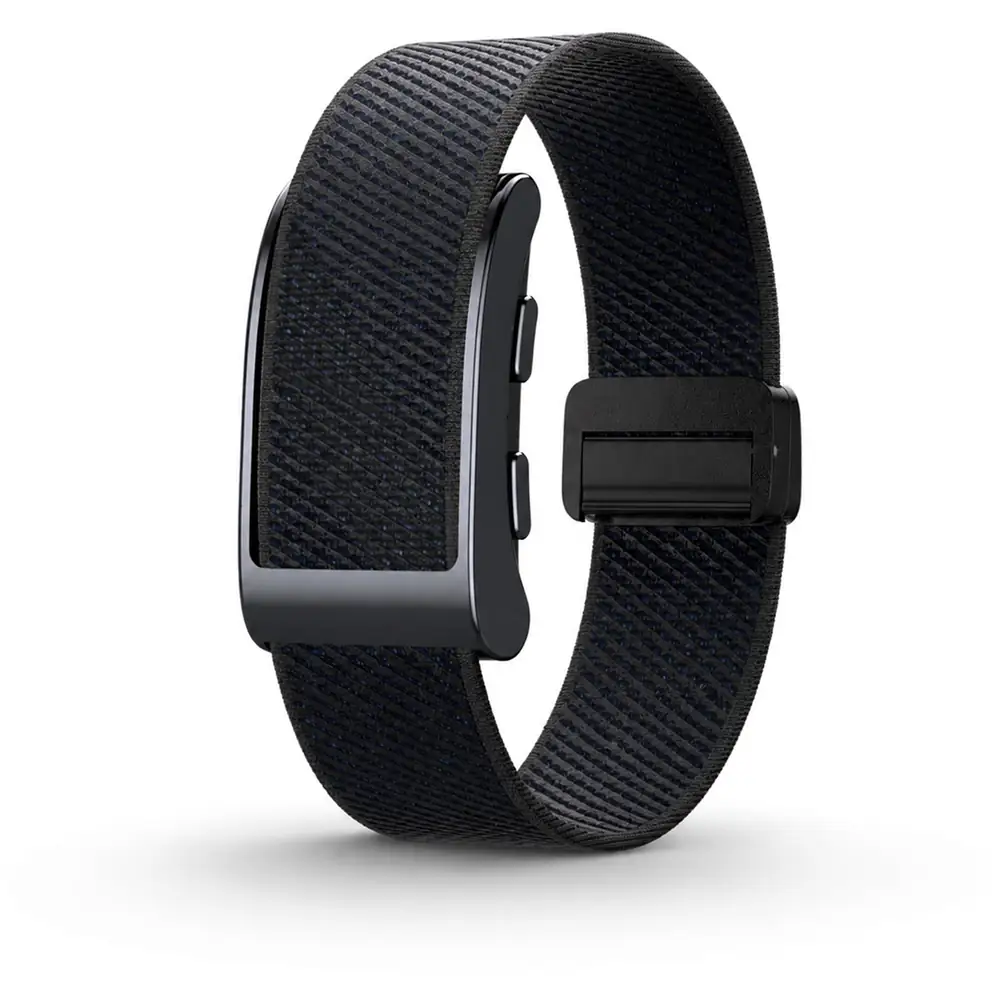
According to the technical documentation DuckDik sent me in July, the module includes:
- a multichannel optical sensor for continuous heart rate and beat-to-beat intervals, used to calculate HRV (RMSSD)
- a 6-axis Bosch BMI270 inertial measurement unit for steps, movement and sleep
- a dedicated thermistor for skin temperature
- continuous SpO₂ and nighttime respiratory rate
This last trio sets it apart from the classic Sense (€89): temperature, breathing and SpO₂ allow the Pro to track the menstrual cycle and menopause. In return, the classic Sense claims up to 45 days of battery life. One thing I liked in my exchanges with the brand: DuckDik refuses to display blood pressure, blood glucose or body composition guessed by an optical sensor, because the reliability simply isn’t there. In an industry all too happy to sell wrist-based numbers with no evidence behind them, that’s rare enough to be worth noting.
Unboxing and setup: ten minutes, tops
The packaging feels like a finished product, not an imported gadget. Inside:
- the Sense Pro band
- its charging dock
- a USB-C to USB-C cable
- a small QR code linking to the online manual
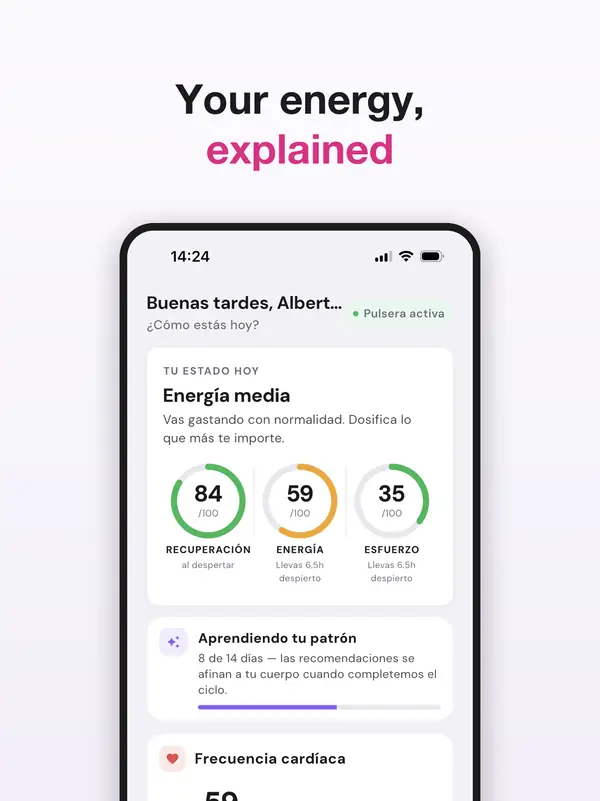
Pairing happens through the app, and that’s where the Sense Pro scored its first point. The home screen sums up the day with three gauges (recovery, energy, exertion) and a sentence telling you what to do with that information. I didn’t have to hunt for the sleep section or decipher a proprietary score before using it.
You quickly forget you’re wearing the band, even at night, which matters more than any spec sheet: a sleep tracker you take off because it’s uncomfortable measures nothing.
Sleep: three nights to settle in, then accurate timings
For the first two nights, the app logged my sleep as starting at 12:00 a.m. sharp and ending around 5:34 a.m., even though I get up much later. It was a known bug: the DuckDik Health update log mentions a fix in September for sleep start times being artificially set to midnight. By the third or fourth day, everything fell into place.
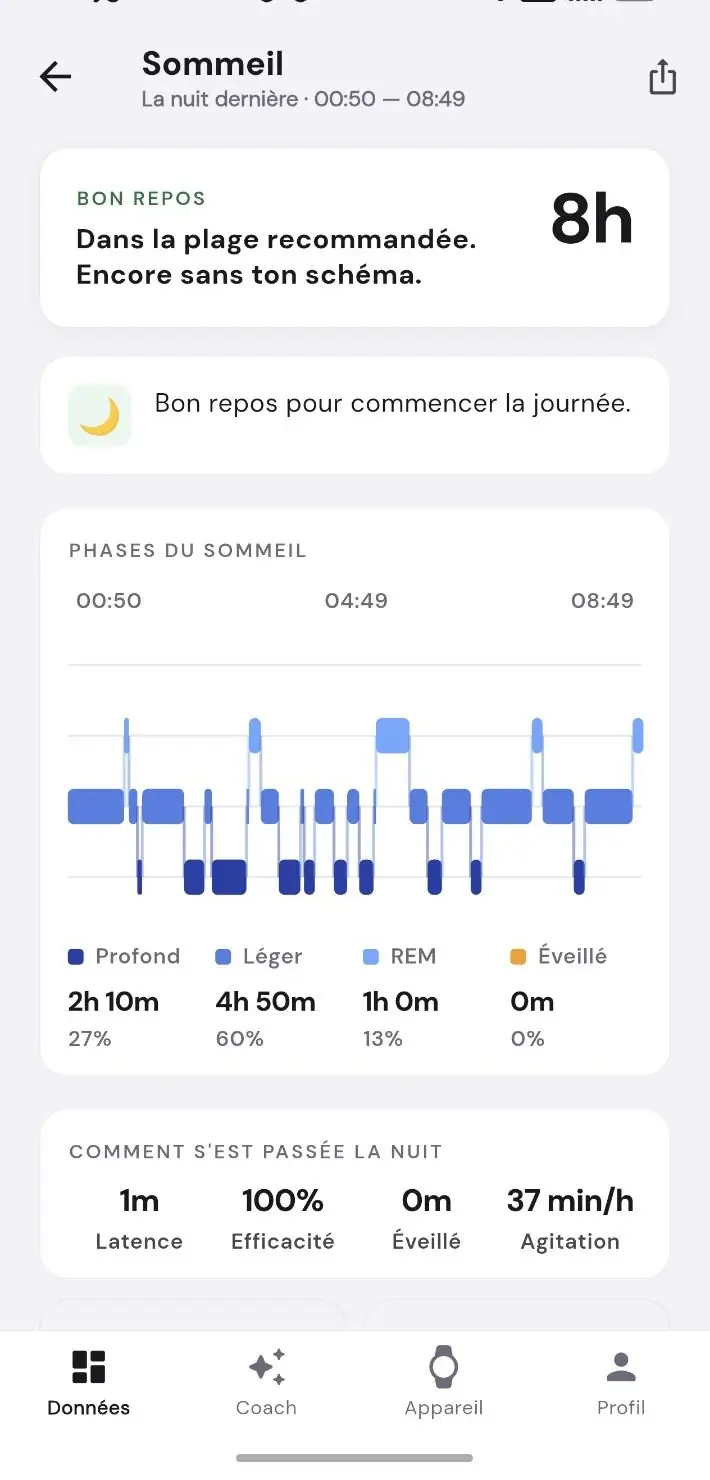
A typical example after calibration: fell asleep at 12:50 a.m., woke up at 8:49 a.m., roughly 8 hours, broken down into 2 h 10 of deep sleep, 4 h 50 of light sleep and 1 h of REM. The times matched my experience. The only snag: the app showed 0 minutes awake, even though I remembered being awake for about five minutes in the middle of the night.
This isn’t a DuckDik-specific flaw. A Naval Health Research Center study compared seven consumer trackers with polysomnography in 34 young adults: all detected sleep very well (sensitivity of at least 0.93), but struggled to detect wakefulness (specificity of 0.18 to 0.54), and their sleep-stage results were mixed. A wristband assumes that a motionless wrist with a calm heart means you’re asleep. A five-minute awakening without movement can easily slip past it. Some good news, though: version 1.0.90 of the app, released on October 24, specifically promises better detection of nighttime awakenings. The app is evolving quickly, and in the right direction.
So look at trends rather than individual nights. DuckDik recommends wearing it for around 14 days, nights included, to build your personal baseline. My experience supports that, though the sleep timings were accurate much sooner. If you find yourself sleeping worse because you’re waiting for your morning score, read the article on orthosomnia and tracker-related anxiety · FR.
Heart rate and recovery: easy-to-read graphs
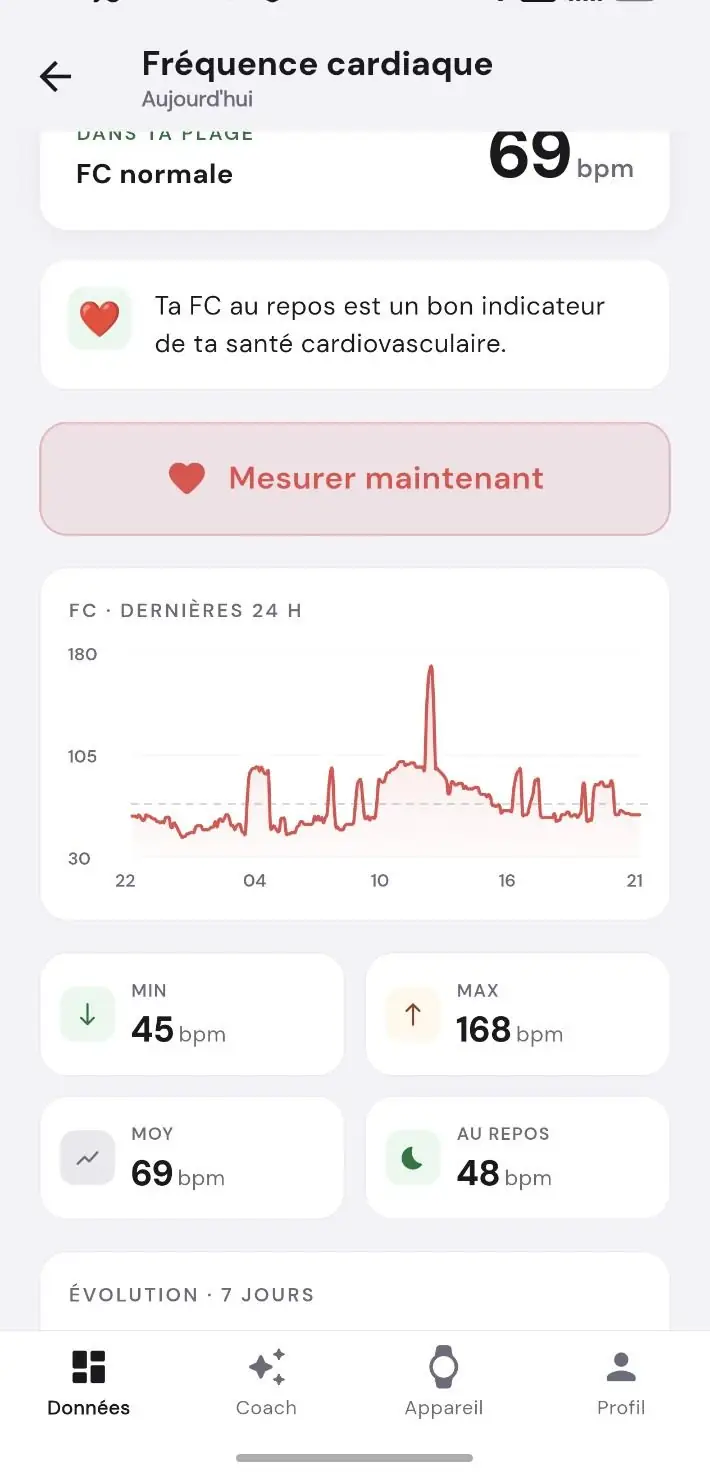
On my typical day, the app showed a minimum heart rate of 45 bpm, an average of 69 bpm, a resting rate of 48 bpm and a peak of 168 bpm during my gym session. The peaks came at the right times. A small rise to around 90 bpm at 4 a.m. remains unexplained: a forgotten brief awakening, a restless dream or an optical artifact—the graph alone can’t tell us.
Each morning, the recovery score compares your HRV, resting heart rate, breathing, skin temperature and sleep with your own baseline, not a population average. That’s the right approach: an HRV of 45 ms tells you nothing on its own; it means something when compared with your last 30 days. To learn how to interpret this number, see the guide to nighttime HRV and its normal ranges.
One limitation to keep in mind: DuckDik confirmed to me that no study comparing the Sense Pro with an ECG or a chest strap has been published to date. I haven’t made that comparison either. For tracking trends, it’s enough. For heart rate zones accurate to the beat, a chest strap remains the benchmark.
Battery life: a first-day scare, then a week
On the first day, the battery gauge dropped from 99% to 45% in less than 24 hours. I thought battery life was going to be disastrous. Then the drain slowed sharply (45% to 43% over the next period), as though the gauge was calibrating itself. In the end, I got around 7 days between charges, workouts included, which matches what DuckDik had told me in July.
The product page is more cautious, stating “up to 5 days” with typical use. I prefer a brand that promises 5 and delivers 7 to the other way around. Charging uses a magnetic dock: I’d put it on while taking my morning shower.
The features I wasn’t expecting
Beyond sleep and heart tracking, the app is packed with tools that often cost extra elsewhere:
- a power nap feature: the band detects when you fall asleep and wakes you after 26 minutes, according to DuckDik (the short nap guide · FR explains why duration matters)
- sessions of meditation and guided breathing, including a Navy SEAL-inspired breathing exercise similar to box breathing
- tracking for workouts, activity, calories and heart rate during exercise
- the menstrual cycle and perimenopause: phases, estimated date, symptom diary, nighttime hot flashes, PDF export
- Family Circle, for sharing a few general metrics with someone close to you, without precise location data
- syncing with Apple Health and Google Fit

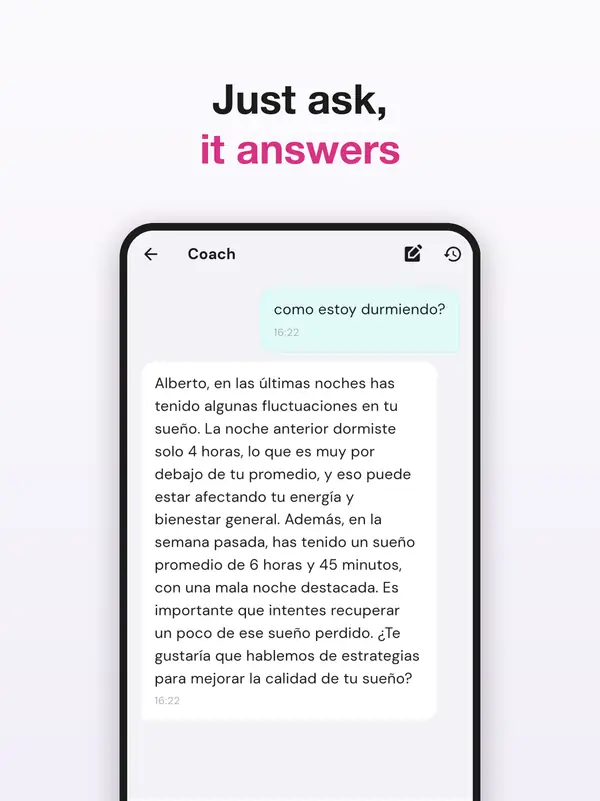
I haven’t tested cycle tracking, for obvious reasons, or used the AI coach in depth. It can comment on your data, respond in everyday language and build a training plan based on your recovery. My charts were enough for me. If you don’t like reading graphs, this is probably the feature that will save you the most time, but I can’t judge the quality of its answers.
Your data: processed on your phone, hosted in Europe
According to its privacy policy, DuckDik performs all health calculations locally, within the app. Its servers are hosted in Amsterdam. The AI coach uses OpenAI to generate its answers; OpenAI receives the necessary context, not your raw signals. You can export your history as a CSV and delete your account from the app, and the brand says it neither sells nor rents out any data. These are written commitments that I haven’t audited. For more on this topic, read the analysis of health data and AI · FR.
Customer support: a real test, passed
My first unit failed within the first few days: the sensor stayed on constantly, then showed no signs of life after the battery drained completely. A faulty device can happen with any brand: it’s the response that tells you what they’re worth. DuckDik’s founder contacted me personally, first through the app and then by email, and a replacement band was shipped free of charge, without even requiring me to return the first one. The second has worked perfectly ever since.
For your order, DuckDik advertises free delivery throughout the EU within 3 to 5 business days, 30 days to return the band with a prepaid label, and a 2-year warranty.
DuckDik Sense Pro or WHOOP?
That’s the question I asked myself at the end of my test. The Toll, that hidden cost we forget about when buying, is calculated here in euros: WHOOP provides the sensor with the subscription, and you pay every year. Prices checked on the official stores (October 25, 2026 for DuckDik, October 12, 2026 for WHOOP):
| DuckDik Sense Pro | WHOOP 5.0 (One) | |
|---|---|---|
| Price | €129, or €116.10 with the code | €199 per year, sensor included |
| Cost over 2 years | €116.10 with the code | €398 at the same annual rate |
| Subscription | None | Required |
| Screen | No | No |
| Battery life | Around 7 days in my test | 14 days or more advertised |
WHOOP retains the advantage in battery life and has a more established ecosystem, which I cover in my WHOOP 5.0 review. But for my use, I’d choose the Sense Pro: more features included, a simpler app, and no bill coming back every year. That’s a preference for its business model and ease of use, not a lab-tested accuracy showdown. Compared with the other subscription-free bands in the screenless fitness band comparison · FR, such as the Polar Loop listed at €179.90 in late September, the Sense Pro is also the cheapest of the available models when using the code.
Who is the Sense Pro for?
The Sense Pro is a very good choice if any of these sound like you:
- you want to track your sleep, recovery, and activity without paying a subscription
- you’re looking for a discreet band with no screen or wrist notifications
- you want an app that interprets the numbers for you
- you track your cycle or perimenopause and want an exportable log
Give it a miss in these cases:
- you want to see the time or your data on your wrist
- you need validated measurements for medical monitoring
- you refuse to charge your band every week
To order, go to the official Sense Pro product page and enter the code LEBIOHACKE10 at checkout for 10% off. My DuckDik link applies the discount automatically, but it opens the store on the standard Sense: select the Pro model from there.