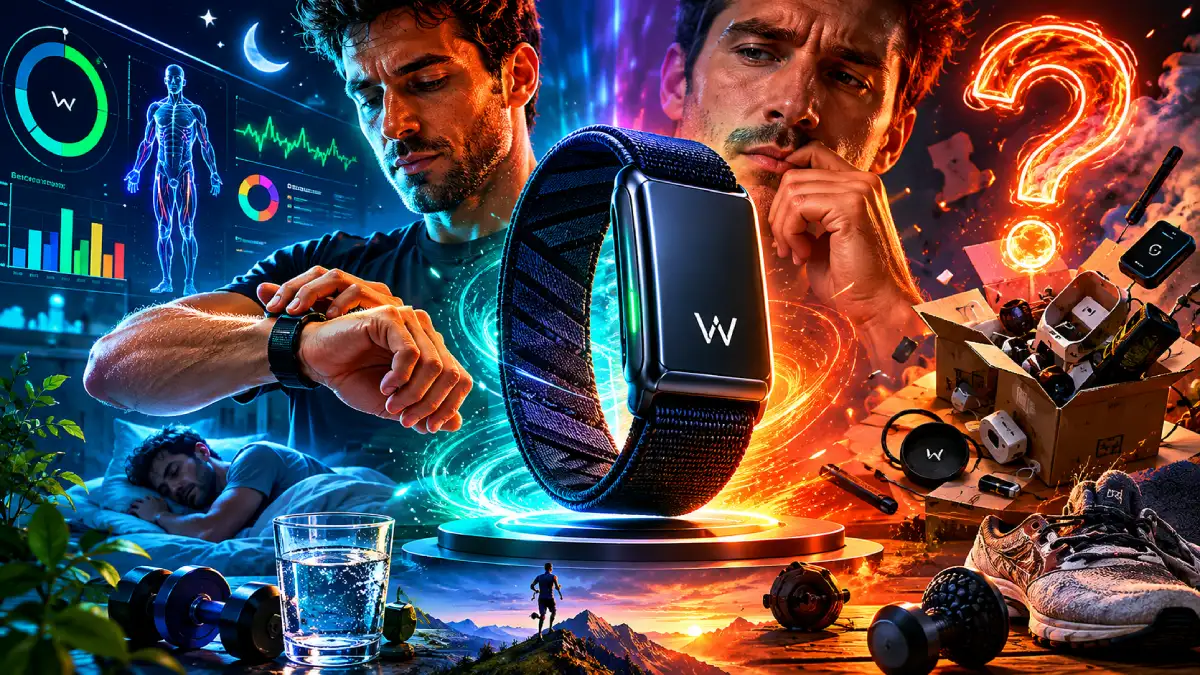
Choose WHOOP if you want a screen-free sensor that turns sleep, habits and load into a daily recovery routine. Choose the Apple Watch if you want a standalone device to record a workout, view your data, use apps and stay connected with an iPhone. WHOOP primarily sells subscription-based analysis. Apple primarily sells a watch. To compare rings and subscription-free bands too, see the general comparison of sleep and recovery trackers.
These are not two versions of the same product. WHOOP aims to influence decisions before and after training. The Apple Watch also plays a role during workouts and throughout the day. The real trade-off is not “which sensor knows everything?” but which decision do you want to improve often enough to justify the cost?
Prices, models and features were checked on September 17, 2026. Apple then listed the Series 12 and Ultra 4 for preorder, with availability announced for September 18. The Ultra 4 starting price was checked again on October 13, 2026 on the Apple Store France: from €800. WHOOP prices and regulated features may change depending on the country, subscription and updates.
Quick verdict by user profile
Here is the most sensible choice based on your main use:
| Your profile | Starting choice | Why | Limitation to accept |
|---|---|---|---|
| Athlete looking to connect habits, sleep and load | WHOOP Peak | Recovery, Strain, Sleep and journal in one timeline | €264 per year and no screen |
| Runner wanting pace, GPS and zones on the wrist | Apple Watch | Built-in GPS, screen, laps, workouts and apps | Much more frequent charging |
| iPhone user wanting a single device | Apple Watch | Sport, health, payments, communications and safety | Less centralized recovery experience |
| Person who refuses wrist notifications | WHOOP | Discreet, screen-free design | Phone needed to view data and map workouts |
| Athlete already equipped with a watch or GPS computer | WHOOP, possibly | Can add a recovery and habits layer | Risk of paying for data already available elsewhere |
| Android user | WHOOP | The current Apple Watch requires a compatible iPhone | Also check whether a Garmin better meets your sports needs |
| Person seeking a cardiac or sleep diagnosis | Neither | A wearable cannot replace a medical ECG or polysomnography | Seek medical advice based on symptoms |
WHOOP One is the entry-level option. Peak adds features including Health Monitor, Stress Monitor and Healthspan. Life pairs WHOOP MG with features such as on-demand ECG, subject to regional availability. At Apple, the SE 3 is the entry-level model without an ECG app, the Series 12 is the all-round model and the Ultra 4 is the endurance and adventure version.
Buy Whoop One
Buy Whoop Peak
Buy Whoop Life
Buy Apple Watch Ultra 3
WHOOP and Apple Watch: two different propositions
WHOOP 5.0 is a screen-free module worn day and night. Its software organizes data around three concepts: Strain for cardiovascular stress, Sleep for estimated sleep need and duration, then Recovery for readiness that day. The journal looks for associations between reported habits and subsequent outcomes.
This simplicity is designed, not inherent. Recovery combines HRV, resting heart rate, sleep and other signals using WHOOP’s formula. Strain uses a proprietary scale from 0 to 21. A green 78 does not mean 78% physiological recovery and cannot be compared with another brand’s score.
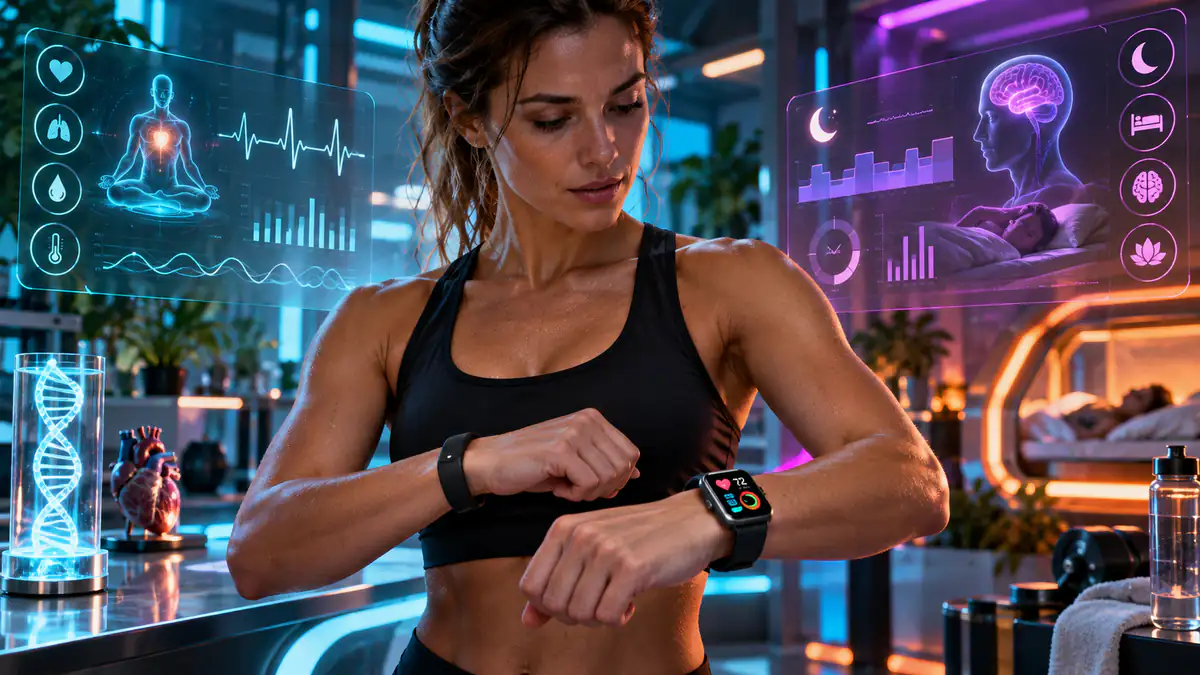
The Apple Watch spreads the same question across Sleep, Vitals, training load, activity, heart rate and third-party apps. In the current lineup, the Series 12 and Ultra 4 add recovery HRV. Apple collects a lot, but does not exactly replicate WHOOP’s daily narrative.
In return, the watch displays pace, zones, intervals, routes, music and notifications. Its GPS is built in. Cellular versions can communicate without a nearby iPhone, subject to plan requirements. WHOOP can store data before syncing, but relies on the phone for its interface and GPS track.
This contrast creates two distinct uses:
- WHOOP asks “how do your load and habits line up with your recovery?”
- Apple Watch asks “what do you want to measure or do on your wrist right now?”
WHOOP’s lack of a screen can reduce distractions. It becomes a drawback if you want to slow down immediately, follow a route or check an interval without a phone.
Accuracy of heart rate, sleep and recovery
Both devices use photoplethysmography. LEDs shine light onto the skin, and the sensor analyzes changes in light related to blood volume. Movement, contact, perfusion, body hair, cold and wrist contractions can degrade this signal.
Each layer then adds uncertainty:
- the optical signal is used to estimate heartbeats
- filtered intervals are used to estimate HRV
- movement and cardiac signals are used to classify sleep
- several estimates feed into a recovery score
A watch that measures resting heart rate accurately is therefore not automatically accurate for calories or REM sleep. No independent research identified directly validates WHOOP 5.0 against the Apple Watch Series 12 or Ultra 4 across all these measures.
Heart rate during exercise
The most useful direct comparison is still an older one. A study published in 2023 compared the Apple Watch Series 6 and WHOOP 3.0 with a Polar H10 chest strap in 29 adults during five resistance exercises. Apple produced the most favorable results, with high agreement for squats, deadlifts and seated rows. Both showed lower agreement during burpees and certain arm movements.
This result does not crown the current models. It shows that the exercise matters as much as the brand. An independent validation study from 2025 also found that WHOOP 4.0 became less accurate during rapid transitions between rest and walking at different intensities.
To manage intervals down to the beat, connect a compatible chest strap. To track a load trend, a well-fitted optical sensor may be enough. For strength training, also record sets, repetitions, weight and perceived difficulty: heart rate does not measure all mechanical stress.
Sleep: useful for schedules, limited for stages
In 2022, 53 young, healthy adults wore an Apple Watch Series 6 and a WHOOP 3.0 for one night with polysomnography. Sleep-versus-wake agreement reached 88% for Apple and 86% for WHOOP. For wakefulness and sleep stages, it dropped to 53% and 60%. The research group reported receiving support and equipment from WHOOP, with no company involvement in the protocol or report.
An independent study published in 2025 compared six newer devices, including the Apple Watch Series 8 and WHOOP 4.0, in 62 adults during one laboratory night. All detected more than 90% of sleep periods, but only 29.39–52.15% of wake periods. Multiclass agreement with polysomnography remained low to moderate. The Apple Watch Series 8 achieved the group’s highest kappa, 0.53, without validating the 2026 generations.
Use both devices to track bedtime, duration and consistency over several weeks. Do not change your day over 14 minutes of estimated deep sleep. The guide to the reliability of watches for sleep tracking · FR explains this gap between useful trends and false precision.
Recovery: WHOOP wins on interface, not biological truth
WHOOP offers the best out-of-the-box recovery experience. Its advantage is software: the morning score, sleep need, target Strain and journal are designed to work together. The Apple Watch can provide sleep, resting heart rate, HRV, temperature and load, but interpretation is more scattered, and some summary insights require a third-party app.
HRV illustrates why the numbers are not interchangeable. WHOOP mainly aggregates nighttime RMSSD. Apple Health stores SDNN samples, among other data. Measurement windows and filters differ. A WHOOP reading of 52 ms and an Apple reading of 61 ms do not necessarily represent a real nine-millisecond difference. Compare the same device against its own baseline, as explained in the guide to nighttime HRV.
A green score will not necessarily detect pain, a conflict, an emerging infection or deteriorating technique. A red score may reflect a single poor night without requiring complete rest. Use it as an alert to investigate, never as an order.
Training, GPS, screens and everyday use
WHOOP makes sense for an athlete who analyzes things after exercise. Strength Trainer lets you enter exercises, sets and weights to better represent strength training. Wearing it on the biceps instead can also improve comfort in certain sports. But recording still requires documenting what the sensor does not know.
The Apple Watch makes more sense during exercise. It displays pace, duration, zones and instructions. It has its own GPS, stores music and apps, offers Apple Pay and can receive calls or messages. It also supports a broad range of training apps.
For health, the Series 12 and Ultra 4 include an ECG app and various notifications, subject to age, country and usage requirements. The SE 3 has no ECG app. WHOOP reserves Heart Screener with ECG for WHOOP MG paired with Life, depending on regulatory availability. These features can look for certain signals, not rule out disease.
Comfort sometimes reverses the verdict. WHOOP advertises at least 14 days of battery life and, with eligible plans, allows charging while worn using the PowerPack. Apple advertises up to 18 h for the SE 3, 24 h for the Series 12 and 50 h for the Ultra 4. Charging an Apple Watch can fit into shower time, but is more likely to leave gaps in nighttime data.
WHOOP also means accepting a damp fabric band after a shower or workout. A second band reduces this problem but increases the cost. Apple is bulkier in bed, especially the Ultra version. The best nighttime sensor is still the one you actually wear.
Subscription and total cost over two years
WHOOP ties the sensor and analysis to a service. The annual prices in euros displayed when checked were €199 for One, €264 for Peak and €399 for Life. The Apple Watch does not require a subscription for its core features, but a cellular plan, Apple Fitness+ or third-party apps can add costs.
Here is the minimum cost over 24 months if WHOOP prices remain unchanged:
| Option | Payment used | Cost over 2 years | After 2 years |
|---|---|---|---|
| WHOOP One | €199 per year | €398 | Another renewal required |
| WHOOP Peak | €264 per year | €528 | Another renewal required |
| WHOOP Life with MG | €399 per year | €798 | Another renewal required |
| Apple Watch SE 3 | €269 upfront | €269 | The watch remains usable without a mandatory subscription |
| Apple Watch Series 12 | €449 upfront | €449 | The watch remains usable without a mandatory subscription |
| Apple Watch Ultra 4 | From €800 upfront | €800 | The watch remains usable without a mandatory subscription |
Buy Whoop One
Buy Whoop Peak
Buy Whoop Life
Buy Apple Watch Ultra 3
The calculation excludes promotions, bands, an extra PowerPack, a heart rate chest strap, Cellular, a carrier plan, paid apps, damage and battery replacement. Above all, it reveals two useful comparisons. WHOOP Peak costs €79 more than a Series 12 over two years. WHOOP Life costs just €2 less than the starting price of an Ultra 4, but provides no screen, built-in GPS or wrist-based apps.
The WHOOP subscription is worth its price only if its software changes recurring decisions. If you check Recovery and then do your planned workout without changing anything, you are paying for a color. Conversely, if the journal helps you keep a consistent bedtime, reduce alcohol or space hard sessions better, the value comes from the behavioral feedback loop, not the band alone.
For a detailed review of the hardware and plans without repeating this head-to-head, see the WHOOP 5.0 review. If you mainly want GPS, navigation and battery life without a subscription, the WHOOP vs Garmin comparison · FR addresses a different decision. If you choose a Garmin, also check the zone 2 settings in Garmin Connect · FR before following the colors during an easy outing.
Choose, wear and test without obeying the scores
Test the ecosystem for 14–30 days with a written question. Use this method:
- Choose one decision, such as moving an intense workout or bringing your bedtime forward.
- For seven days, record energy, pain, perceived sleep quality and motivation before opening the app.
- Wear the sensor every night and during three representative workouts.
- Compare heart rate with a chest strap during one steady workout and one workout with transitions.
- Change just one habit over the following two weeks.
- On day 30, count the useful decisions you actually changed and the obvious errors.
- Keep the device only if the benefit outweighs charging, subscriptions, notifications and analysis time.
Stopping rule: pause the scores if they increase anxiety, delay sleep or make you systematically ignore how you feel. The article on counterproductive health tracking · FR helps distinguish information from dependence.
Chest pain, feeling unwell, unusual shortness of breath, persistent palpitations or observed pauses in breathing are not a Recovery problem. Seek appropriate medical advice without waiting for an alert.
Independent verdict
WHOOP is the best dedicated recovery system in this head-to-head. The Apple Watch is the best all-round purchase. Choose WHOOP if you specifically want its journal, screen-free design and integrated view of load, while accepting a cost of €398–€798 over two years. Choose Apple if you want GPS, a screen, apps and everyday features without mandatory renewals.
Do not pay for WHOOP to duplicate data already available on a watch. Do not choose Apple expecting an app to automatically turn every signal into a good decision. Both can measure a trend. Neither knows better than you whether pain makes a workout a bad idea.