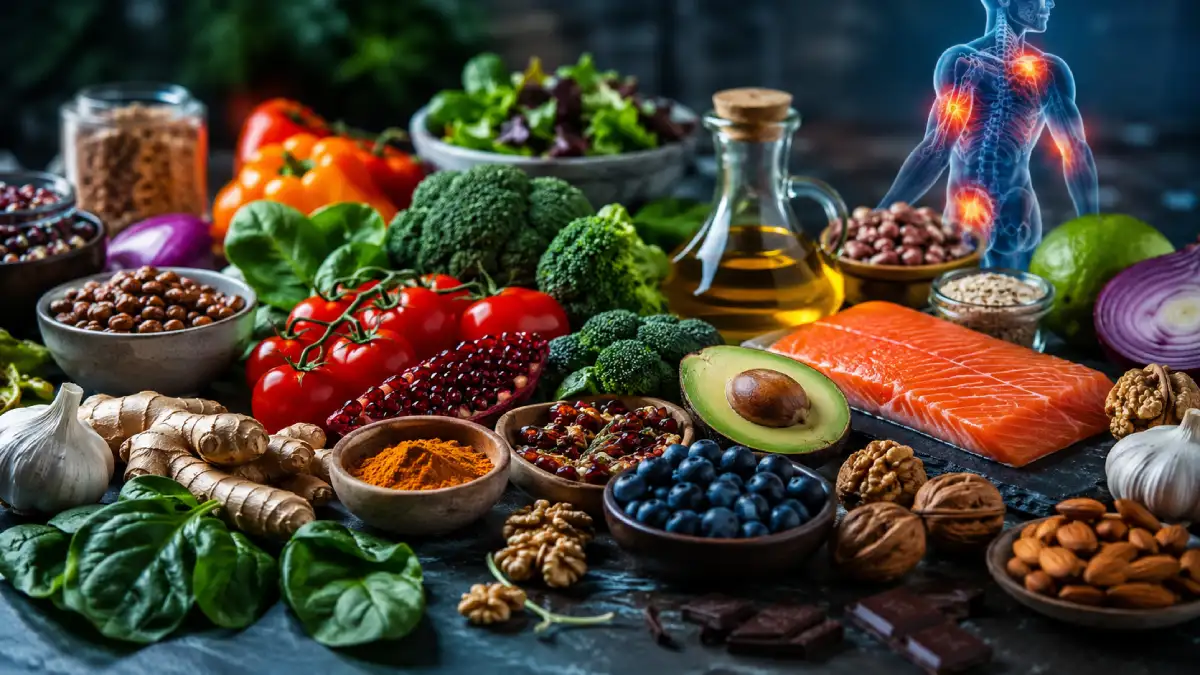
No food switches off inflammation on its own. What lowers inflammatory markers in trials is an entire Mediterranean-style diet, followed for weeks. The 25 foods below are those that appear most often in these diets and meta-analyses, with portions that make sense for everyday life.
The “anti-inflammatory superfood” market prefers a different story: a curcumin capsule that supposedly makes up for sugary drinks and processed meats. The evidence says otherwise. Curcumin is poorly absorbed, and a 2026 meta-analysis finds that it is the Mediterranean diet as a whole that reduces high-sensitivity CRP and interleukin 6.
What we mean by low-grade inflammation
Inflammation is first and foremost an essential defense mechanism: in response to an injury or a microbe, immune cells release messengers such as interleukin 6 and TNF alpha, which coordinate repair. The problem starts when this response no longer switches off.
A diet high in calories, refined sugars and ultra-processed foods, especially alongside abdominal fat, sustains low-grade inflammation: no fever, no pain, but slightly elevated CRP for years, associated with type 2 diabetes and cardiovascular disease. The guide to chronic low-grade inflammation · FR explains this cascade.
Diet influences this underlying state through four plausible pathways:
- reducing the metabolic signals that activate inflammation (excess calories, blood sugar spikes)
- providing omega-3s, precursors of mediators that help “switch off” inflammation
- feeding the gut microbiota, which produces regulatory metabolites such as butyrate
- providing polyphenols that activate cells’ antioxidant defenses
To turn this list into meals, the 7-day anti-inflammatory meal plan · FR offers a sample week.
How this list was compiled
The ranking is based on four criteria:
- Availability of human evidence
- Plausible physiological mechanism
- Density of bioactive compounds
- Ease of everyday use
Nutrition studies cannot always isolate the exact effect of a food. Someone who eats more vegetables may also exercise more, sleep more or consume fewer ultra-processed foods.
This list is therefore not a pharmacological ranking. It is a practical hierarchy designed to help build an overall Mediterranean-style diet.
The 25 best anti-inflammatory foods
1. Extra virgin olive oil
Extra virgin olive oil provides oleic acid and polyphenols such as hydroxytyrosol and oleocanthal.
These compounds may reduce lipoprotein oxidation, modulate NF-kB and decrease the expression of certain vascular adhesion molecules. Randomized trials and their meta-analyses report favorable effects on several inflammatory markers.
Portion guide: 15 to 30 ml per day, ideally uncooked or used at moderate temperatures.
Learn how to choose an olive oil that is genuinely rich in polyphenols · FR.
2. Sardines
Sardines are a concentrated source of the omega-3s EPA and DHA, with a generally lower risk of mercury contamination than large predatory fish.
EPA and DHA are incorporated into cell membranes, where they serve as precursors to resolvins and protectins. These mediators do not abruptly block immunity. They help actively resolve the inflammatory response.
Portion guide: one 90 to 120 g can, twice a week.
3. Salmon
Salmon is another concentrated source of EPA and DHA.
Meta-analyses of clinical trials indicate that omega-3s may reduce CRP, IL-6 and TNF alpha in certain populations. The effect varies depending on the initial dose, metabolic status and baseline fish consumption.
Portion guide: 120 to 150 g, once or twice a week.
Our DHA versus EPA · FR comparison explains their respective functions.
4. Walnuts
Walnuts provide alpha-linolenic acid, polyphenols, fiber and arginine.
Alpha-linolenic acid can be partially converted into EPA, although this conversion remains limited. Above all, walnuts are a worthwhile replacement for refined snacks while improving the overall fat profile of the diet.
Portion guide: about 30 g per day.
5. Ground flaxseeds
Flaxseeds provide alpha-linolenic acid and lignans.
Grinding is essential, because whole seeds can pass through the digestive system without releasing much of their nutrients. Meta-analyses report reductions in CRP and IL-6 with flaxseed consumption, especially in people who already have metabolic disturbances.
Portion guide: 10 to 20 g per day.
6. Chia seeds
Chia seeds combine viscous fiber, alpha-linolenic acid and phenolic compounds.
When mixed with water, they form a gel that slows gastric emptying and carbohydrate absorption. This reduction in blood sugar fluctuations may limit pro-inflammatory metabolic signals after a meal.
Portion guide: 15 to 25 g per day, soaked.
7. Blueberries
Blueberries are rich in anthocyanins, pigments capable of modulating antioxidant pathways and endothelial function.
Studies on anthocyanins show variable effects on cytokines, but more consistent benefits for vascular function and certain metabolic markers.
Portion guide: 100 to 150 g, fresh or frozen.
8. Raspberries
Raspberries provide anthocyanins, ellagic acid and plenty of fiber with a low glycemic load.
They feed the gut microbiota while slowing the absorption of carbohydrates consumed in the same meal.
Portion guide: 100 to 150 g per day, in season or frozen.
9. Tart cherries
Tart cherries contain anthocyanins and other polyphenols associated with the modulation of oxidative stress.
Human research has focused particularly on exercise recovery and uric acid metabolism. Their sugar content does, however, mean whole fruit should be favored over concentrated juice.
Portion guide: 100 to 150 g of whole fruit.
10. Pomegranate
Pomegranate contains ellagitannins that certain gut bacteria convert into urolithins.
These metabolites are of research interest for their effects on mitochondria and inflammatory pathways. Urolithin production varies greatly between individuals depending on their gut microbiota.
Portion guide: half a fruit or 100 g of arils.
11. Oranges and other citrus fruits
Citrus fruits provide vitamin C, hesperidin and naringenin.
These flavanones may support endothelial function and antioxidant systems. Whole fruit is preferable to juice because fiber slows glucose absorption.
Portion guide: one whole citrus fruit per day.
12. Spinach
Spinach is a concentrated source of folate, magnesium, carotenoids and dietary nitrates.
Nitrates are converted into nitrites, then into nitric oxide. This pathway supports vasodilation and endothelial function, which are often impaired by metabolic inflammation.
Portion guide: one to two large handfuls, raw or lightly cooked.
13. Broccoli
Broccoli provides glucosinolates that are converted into isothiocyanates such as sulforaphane.
Sulforaphane activates Nrf2, a transcription factor that increases the production of endogenous antioxidant enzymes. Clinical evidence remains more mixed than the cellular mechanisms, but cruciferous vegetables remain a nutritional staple.
Portion guide: 100 to 200 g, three times a week.
Brief steaming preserves sulforaphane precursors better than prolonged boiling.
14. Red cabbage
Red cabbage combines glucosinolates, fiber and anthocyanins.
It therefore works through two complementary pathways: stimulating cellular defenses and supporting the gut microbiota.
Portion guide: 100 to 150 g, raw, cooked or fermented.
15. Cooked tomatoes
Tomatoes contain lycopene, a fat-soluble carotenoid.
Cooking breaks down cell walls and increases its bioavailability. Adding olive oil then improves its intestinal absorption.
Portion guide: 150 to 250 g of tomatoes cooked with fat.
16. Red onions
Red onions provide quercetin and sulfur compounds.
Quercetin can modulate several inflammatory pathways in laboratory studies, but human results depend heavily on dose and bioavailability. The main value of onions remains their regular contribution of polyphenols and prebiotic fiber.
Portion guide: half an onion per day, depending on digestive tolerance.
17. Garlic
When garlic is chopped or crushed, alliinase converts alliin into active sulfur compounds.
Meta-analyses of clinical trials report reductions in CRP, IL-6 and TNF alpha with certain garlic preparations.
Portion guide: one to two cloves per day.
Crush the garlic and let it rest for about ten minutes before cooking to encourage the formation of sulfur compounds.
18. Turmeric
Curcumin may modulate NF-kB, COX-2 and several inflammatory cytokines.
Clinical trials often involve concentrated extracts, not a simple pinch of culinary turmeric. Its natural bioavailability is low, so results from supplements cannot be directly applied to the spice.
Portion guide: half a teaspoon to one teaspoon in a meal containing fat.
Our analysis of curcumin’s actual bioavailability explains the formulations.
19. Ginger
The gingerols and shogaols in ginger may modulate prostaglandin production and several inflammatory signaling pathways.
Meta-analyses report reductions in CRP and TNF alpha with concentrated doses, particularly in people with metabolic disorders.
Portion guide: 2 to 5 g of fresh ginger per day.
20. Green tea
Green tea contains catechins, particularly EGCG.
These molecules support antioxidant defenses and vascular function. However, recent meta-analyses do not show consistent reductions across all inflammatory markers.
Green tea is therefore a supporting player, not an anti-inflammatory drug.
Portion guide: two to three cups per day, early enough to protect your sleep.
21. Coffee
Coffee contains chlorogenic acids and several hundred bioactive compounds.
Observational studies often associate its consumption with lower CRP levels, but results vary depending on the dose, brewing method and individual metabolism.
Portion guide: one to three cups if caffeine is well tolerated.
Coffee that wrecks your sleep becomes indirectly pro-inflammatory. Cut it off early enough.
22. Unsweetened cocoa
Cocoa flavanols may support nitric oxide production, endothelial function and certain markers of oxidative stress.
Sugar-rich milk chocolate does not produce the same metabolic profile.
Portion guide: 5–10 g of unsweetened cocoa or 15–20 g of dark chocolate with at least 85% cocoa.
23. Lentils
Lentils combine fiber, resistant starch, plant protein, magnesium and polyphenols.
Their fermentation by the gut microbiota produces short-chain fatty acids such as butyrate. Butyrate supports the intestinal barrier and helps regulate immune cells.
Portion guide: 120–180 g cooked, three to five times a week.
Use the list of 20 prebiotic foods that feed your gut microbiota · FR to diversify your fiber intake.
24. Oats and barley
These grains contain beta-glucans, viscous, fermentable fibers.
Beta-glucans slow nutrient absorption, improve the glycemic response and provide a substrate for gut bacteria.
Portion guide: 40–80 g of flakes or whole grains, depending on energy needs.
The intestinal mechanism is explained in detail in our guide to butyrate and postbiotics · FR.
25. Fermented vegetables and kefir
Fermentation produces organic acids, peptides and microorganisms capable of interacting with the gut ecosystem.
In a controlled trial, a diet rich in fermented foods increased microbial diversity and reduced several inflammatory markers. However, not all fermented products contain live microbes after pasteurization.
Portion guide: one small serving a day, introduced gradually.
Practical options include:
- Raw sauerkraut
- Kimchi
- Plain kefir
- Plain yogurt
- Lacto-fermented vegetables
Summary table of the 25 foods
| Category | Priority foods | Main mechanism |
|---|---|---|
| Fats | Olive oil sardines salmon walnuts flax chia | Resolvins membranes and signaling |
| Fruit | Blueberries raspberries cherries pomegranate citrus | Anthocyanins flavanones and fiber |
| Vegetables | Spinach broccoli red cabbage tomatoes onions garlic | Nrf2 carotenoids and sulfur compounds |
| Spices and drinks | Turmeric ginger green tea coffee cocoa | Polyphenols and enzyme modulation |
| Gut microbiota | Lentils oats barley fermented vegetables kefir | Butyrate diversity and intestinal barrier |
The daily anti-inflammatory protocol
You do not need to eat all 25 foods every day.
Instead, use a repeatable framework:
| Timing | Target |
|---|---|
| Breakfast | Berries plus oats or seeds |
| Lunch | Two vegetables plus legumes or fish |
| Fat source | Extra virgin olive oil |
| Optional snack | Walnuts or dark chocolate |
| Dinner | Cruciferous vegetables plus complete protein |
| Fermented foods | One small daily serving |
| Spices | Garlic ginger or turmeric to suit the meal |
Aim for the following each week:
- At least 30 different plant foods
- Two servings of oily fish
- Three to five servings of legumes
- A handful of walnuts a day
- Two different vegetables per main meal
- One fermented food a day if tolerated
- Mostly minimally processed foods
To turn this list into actual meals, use the seven-day science-based anti-inflammatory meal plan · FR.
Mistakes that cancel out the benefits
Adding without replacing
Pouring olive oil over a diet dominated by sugary drinks, pastries and processed meats is not enough.
The most powerful effect often comes from replacement:
- Walnuts instead of cookies
- Lentils instead of some of your processed meat
- Water or tea instead of soft drinks
- Olive oil instead of ultra-processed sauces
- Whole fruit instead of sugary desserts
Confusing antioxidant with anti-inflammatory
An antioxidant-rich food does not act like a magic sponge for free radicals.
Polyphenols are often poorly absorbed. They exert some of their effects by triggering a mild adaptive response, changing gene expression and interacting with the gut microbiota.
Looking for an imaginary intolerance
Cutting out gluten, dairy, legumes and nightshades all at once can needlessly reduce dietary diversity.
A targeted exclusion may be justified in cases of allergy, celiac disease or documented intolerance. It should not become the default strategy for every bout of fatigue or pain.
Ignoring sleep and visceral fat
Insufficient sleep, inactivity and excess abdominal fat sustain inflammation regardless of the quality of any single meal.
Diet is one layer of the system, not the whole system.
Conclusion: The power is in the combination
The best anti-inflammatory foods are not medicines hiding on a supermarket shelf.
They gradually change the biological environment.
Olive oil and walnuts improve the quality of membrane lipids. Oily fish supply the precursors of pro-resolving mediators. Berries, cocoa and spices modulate antioxidant pathways. Vegetables, legumes and whole grains feed the gut microbiota. Fermented foods add complementary microbial stimulation.
None of these levers works to its full potential in isolation.
Start with a simple rule:
Add two colors of plant foods to every meal and replace one source of fat or refined carbohydrates with a food from this list
After two weeks, add oily fish, legumes and fermented foods.
The most effective strategy is not to eat perfectly for three days.
It is to build a diet that is simple, tasty and repeatable enough to sustainably reduce your inflammatory burden week after week.
When food is not enough
An anti-inflammatory diet supports treatment; it does not replace it. Seek medical advice if you have joint pain with swelling, persistent diarrhea, fever or unexplained weight loss, or elevated CRP on a blood test. If you take an anticoagulant, report any major change in your intake of concentrated garlic, turmeric capsules or fish oil.