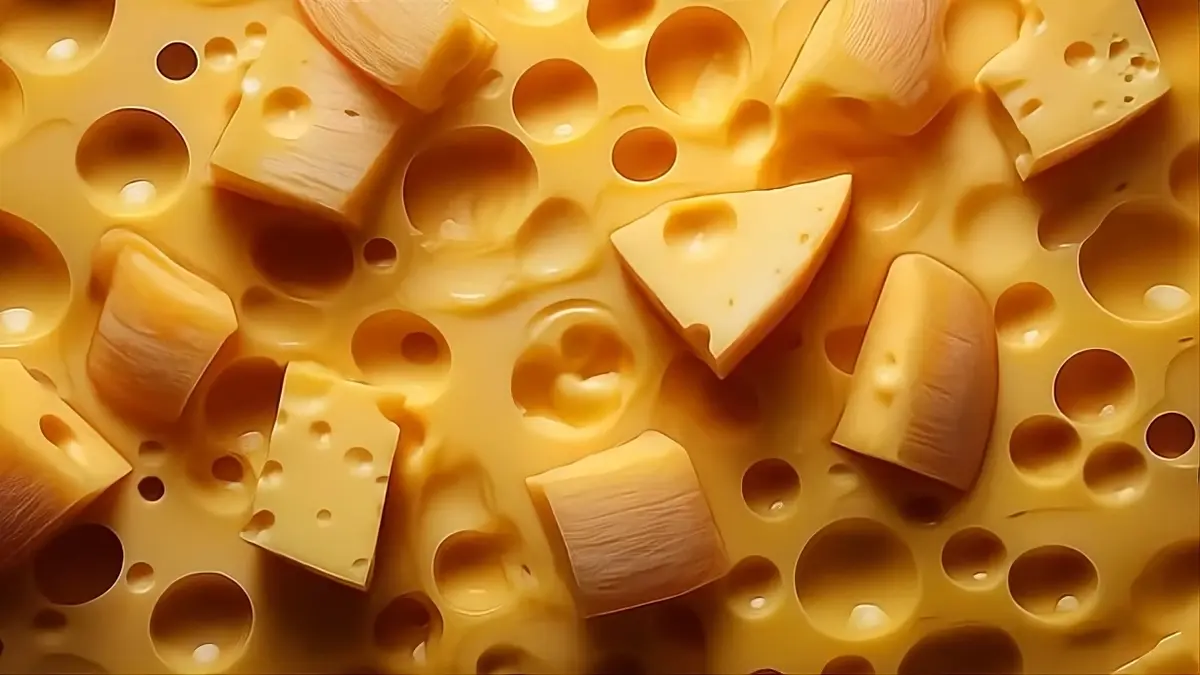
Fermented cheese is cheese made using microbes, such as camembert, emmental or roquefort; it is not automatically a probiotic. No robust clinical benefit for the microbiome or immunity has been established for cheese alone, while trials on dairy products show no consistent inflammatory effect. Cohort studies also find a largely neutral or modestly favourable association between cheese consumption and cardiovascular risk. But these data do not prove that camembert, comté or roquefort “reprogrammes” immunity.
The key distinction is simple: fermentation transforms milk and its matrix, but a plausible mechanism is not a clinical benefit. The microbes, peptides or menaquinones in cheese justify neither a daily prescription nor a blanket preference for raw milk.
Which cheeses are fermented? Definition and examples
The National Museum of Natural History describes the microbial communities that transform milk and curds. Fermentation and ageing complement each other: the former involves transformations by microbes, while the latter refers to cheese maturation. “Fresh”, “pasteurised” or “cooked-curd” are not enough to label a cheese unfermented.
Here are examples of production methods, not a ranking of health benefits:
| Family | Examples | What the microbes do |
|---|---|---|
| Soft cheese with a bloomy rind | Camembert | Bacteria in the curd, followed by surface yeasts and moulds |
| Pressed cheese | Emmental, saint-nectaire depending on the family | Acidification and internal maturation, sometimes surface ripening |
| Blue cheese | Roquefort | Curd fermentation and mould growth inside |
| Fresh cheese made by lactic acid coagulation | Fromage blanc depending on how it is made | Acidification without prolonged maturation |
The ISAPP consensus on fermented foods distinguishes the production process from the presence of live microbes at the time of eating. Cooking, storage and the recipe can alter their presence. A “fermented” label provides neither a probiotic strain nor a clinical dose.
What fermentation actually changes
To make cheese, lactic acid bacteria acidify the milk. Draining removes some of the whey, then ageing involves bacteria, yeasts or moulds, depending on the product. These steps change several properties:
- the amount of lactose, generally lower in aged cheeses
- the texture and availability of proteins and fats
- the water, salt and flavour compound content
- the microbial population present when the cheese is eaten
This process explains why cheese does not necessarily produce the same biological response as an equivalent amount of butter. In the randomised trial by Feeney and colleagues, conducted over six weeks in 164 overweight adults over 50, total and LDL cholesterol measured after the intervention were lower when the fat was consumed within a full-fat cheddar matrix than as butter with caseinate and calcium. However, the trial tested around 120 g of cheese per day, a large amount, and assessed lipid biomarkers. It measured neither the microbiome, infections nor cardiovascular events.
The “dairy matrix” is therefore a useful model for avoiding reducing cheese to its saturated fatty acids. That does not turn every variety into a protective food. This distinction also helps when assessing claims about the C15:0 found in dairy fat.
Cheese and the microbiome: direct evidence remains exploratory
A fermented food can contain live microorganisms without being a probiotic. That designation requires a characterised strain, administered in a known amount, with a demonstrated benefit for a specific population and outcome. Yet a cheese’s microbial community depends on the milk, starter cultures, ageing, rind, storage and sometimes cooking.
What the 2026 cheddar study adds
A secondary analysis published in April 2026 examined 69 participants, aged at least 50 and overweight, in a six-week trial. The groups consumed 120 g/day of unmelted cheddar, the same cheese melted, or its separate components. Alpha diversity increased from before to after the intervention in the unmelted group, but the difference in change between groups was not significant. This therefore does not demonstrate that cheddar is generally superior for diversity.
The analysis relied on voluntarily provided stool samples in a trial designed to assess lipids, without a prior power calculation for the microbiome. Funding included Food for Health Ireland, public funds and industry. This analysis demonstrates no clinical benefit for gut or immune health. The 120 g/day studied does not justify a dietary prescription.
Microbial presence and clinical outcomes remain separate things
Ingested microbes may pass temporarily through the digestive tract. Detecting them in stool would prove neither lasting colonisation nor an improvement in the intestinal barrier. Likewise, identifying a bacterium in cheese that can produce a peptide or vitamin in the laboratory does not demonstrate that the amount consumed has an effect in humans.
The most frequently cited trial on fermented foods did not test cheese alone. The study by Wastyk and colleagues followed 36 healthy adults in a 17-week randomised protocol comparing a fibre-enriched diet with a diet high in fermented foods. This duration includes follow-up phases and does not mean 17 weeks at maximum intake. In the fermented-food group, which consumed various products such as yoghurt, kefir, fermented vegetables and fermented drinks, alpha diversity increased and several inflammatory markers decreased. With only 18 people per group and a multicomponent intervention, the result cannot be attributed to cheese, let alone a specific variety.
This trial involving a range of fermented foods does not answer several cheese-specific questions. It did not compare raw-milk and pasteurised-milk cheese, identify a dose of live microbes or track infections or immune diseases. An increase in diversity observed with this range of fermented foods also does not tell us whether it came from the ingested microbes, a change in diet or another component of the products.
A sound, specific recommendation would require trials assigning a defined variety and portion against a relevant comparator, measuring tolerance, the microbiome, microbial function and clinical outcomes. The sources consulted do not establish this chain of evidence for common cheeses. To understand why a diversity score alone is not enough to draw conclusions, see our analysis of gut microbiome diversity · FR.
To compare cheese with fermented drinks without attributing the same effect to every product, read kefir and kombucha: evidence and limitations · FR. For fibre, the guide to prebiotic foods · FR complements this approach with gradual increases based on your tolerance.
Is cheese inflammatory or good for immunity?
A systematic review of 16 randomised trials published up to 2018 examined CRP, cytokines and adhesion molecules after consumption of milk or dairy products. It found no consistent pro-inflammatory effect in healthy adults or those with overweight, metabolic syndrome or type 2 diabetes. Several trials suggested an anti-inflammatory effect, but not all were high-quality, and interventions often combined milk, yoghurt and cheese.
The applicable conclusion remains narrow: in most adults studied, dairy products do not appear to consistently increase inflammation measured in the blood. This does not mean that cheese treats inflammatory disease, prevents infection or boosts immunity.
Cardiovascular cohort studies provide another level of evidence. In PURE, 136,384 adults from 21 countries were followed for around nine years. Higher dairy consumption was associated with fewer cardiovascular events and deaths, but the cheese-specific association was not statistically significant. A meta-analysis of cohort studies and a more recent umbrella review found modest inverse associations for certain events. These remain subject to dietary measurement errors, social differences and the fact that cheese replaces different foods in different countries.
So presenting cheese as an explanation for the “French paradox” or as an anti-inflammatory strategy would be a stretch.
Peptides, vitamin K2 and spermidine: three common extrapolations
Peptides are not blood pressure medication
Proteolysis can release peptides that inhibit angiotensin-converting enzyme in experimental models. This does not make a portion of cheese comparable to a medicine. Bioavailability, dose, digestion and the magnitude of the clinical effect must be demonstrated in specific trials. High blood pressure is treated according to established guidelines, not with aged cheese.
Vitamin K2 does not “remove” calcium from arteries
Some bacteria produce menaquinones, grouped under the name vitamin K2. Their concentrations vary greatly between cheeses. These compounds contribute to the carboxylation of vitamin K-dependent proteins, but the presence of K2 does not prove that a cheese reverses arterial calcification or prevents fractures.
People taking vitamin K antagonists should, above all, maintain consistent dietary intakes and discuss any major change with their doctor. They should not adjust their treatment themselves.
Spermidine does not turn cheese into a longevity treatment
Spermidine is involved in pathways related to autophagy, mainly studied in mechanistic and animal models. Food levels vary, and human longevity data are mostly observational. No trial shows that spermidine-rich cheese extends life or “cleans out” cells.
Raw or pasteurised milk: unproven benefit, real risk
Raw milk provides a more diverse microbial community than pasteurised milk. This analytical finding is not enough to show a better gut microbiome. Pasteurisation primarily reduces known risks such as those associated with Listeria monocytogenes, salmonella or certain strains of Escherichia coli.
Pasteurised-milk cheese is not “sterile” by definition, because starter cultures are used after the milk is treated. Conversely, raw-milk cheese is not guaranteed to be probiotic. The choice needs to account for the product, its cold chain and the person’s circumstances.
Caution is particularly important in the following situations:
- pregnancy
- immunosuppression
- older age with frailty
- young children
- specific medical advice related to infection risk
In these situations, follow national health guidance on raw-milk cheeses and rinds. Enjoying the flavour is no reason to downplay a microbiological risk.
Lactose, allergy, histamine and sodium
Draining and ageing often greatly reduce lactose. Many people with lactose intolerance can therefore tolerate a small portion of hard cheese, but the amount varies with the product and individual sensitivity. Try a small portion with a meal rather than assuming everyone can tolerate it.
Milk protein allergy is different. Low-lactose cheese still contains milk proteins and can trigger a reaction. A known allergy requires a plan agreed with a healthcare professional.
Aged cheeses can also contain biogenic amines, including histamine. Headaches, flushing or digestive symptoms after eating a food are not enough to self-diagnose a “DAO deficiency” or mast cell activation syndrome. Note the product, amount and timing, and seek medical advice if reactions are repeated or significant.
Finally, cheese often means high sodium and energy density. These factors matter more than microbial promises if you have high blood pressure, heart failure or kidney disease, or are aiming to lose weight.
Kidney stones require a separate line of reasoning from microbiome claims: the guide to dietary oxalates and calcium with meals explains why automatically cutting out calcium can be the wrong approach.
How to include it without giving it magical powers
There is no established “metabolic dose” of cheese. A portion of 20 to 30 g is one possible culinary reference point suggested here, not a treatment. The decision depends on the rest of your meals and your week.
A simple method is to check four criteria:
- Tolerance. No allergic reaction and acceptable digestive symptoms.
- Context. Cheese complements vegetables, pulses or a balanced meal instead of routinely replacing sources of fibre.
- Quantity. The portion fits with the energy, sodium and saturated fat in the rest of your diet.
- Variety. Your choice is based on taste, price and safety, not an imaginary hierarchy of raw-milk, blue and hard cheeses.
If your goal is to support your microbiome, the most direct levers remain a variety of plant foods you tolerate, gradually increased fibre and an overall minimally processed diet. Cheese can have a place in that. It does not make up for a diet low in plant foods.
Le Biohacker’s take
Fermented cheese is a complex food, not a standardised probiotic. The best human evidence supports neither the idea that it necessarily triggers inflammation nor the idea that it repairs the microbiome or boosts immunity.
I would treat it as one food choice among others. If you enjoy it and tolerate it, a reasonable portion can fit into a good-quality diet. If you do not eat cheese, the evidence does not justify adding it for K2, spermidine or presumed bacteria. Raw milk calls for a safety decision, not automatic superior status.