

What the researchers compared
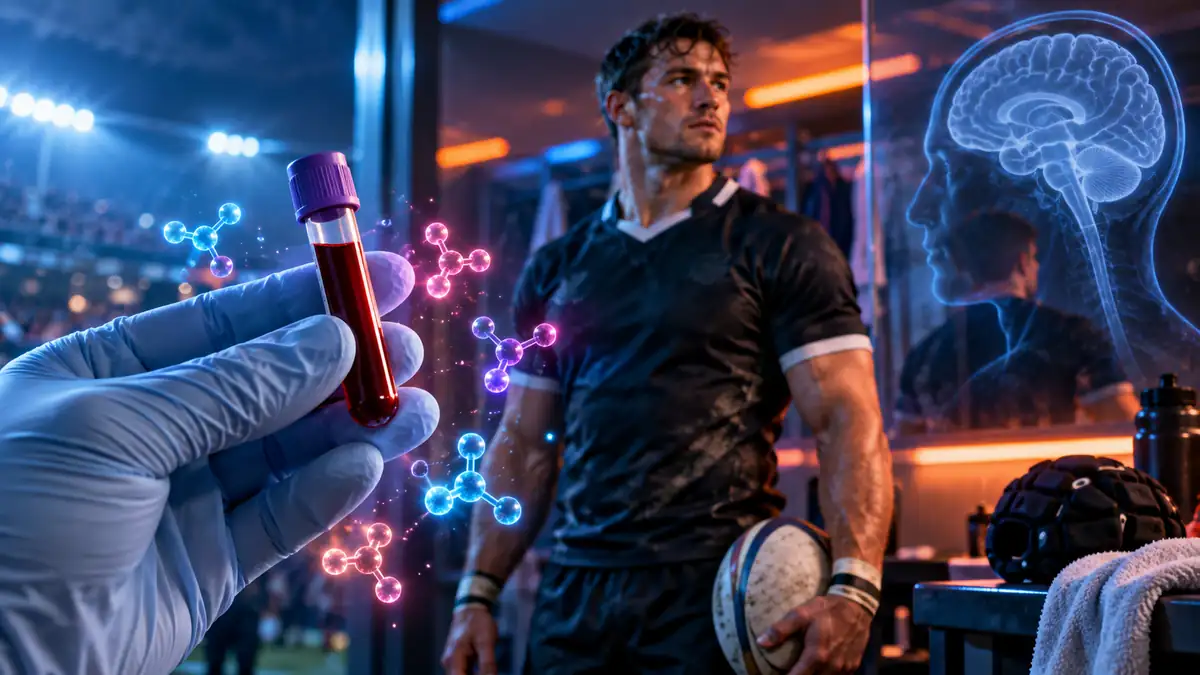
The review brings together studies measuring biomarkers in biological fluids before and within 24 hours after a single contact sports session. Studies involving mild traumatic brain injury were excluded. The literature search covered publications available up to July 18, 2024.
The researchers separated exposure during sports activities from experiments designed to study repeated impacts. They also distinguished between sports and biomarkers, including S100B, neurofilament light chain and total tau protein. This distinction matters: a sports session and a soccer heading experiment are not interchangeable exposures.
Increases after certain sessions
During sports activities, the meta-analysis finds increases in blood biomarkers with moderate to large standardized effect sizes after combat sports, American football and soccer. These findings are based on seven, nine and two studies, respectively.
However, only 8% of studies controlled for the possible effects of physical exercise or changes in blood volume. These factors can complicate the interpretation of measured concentrations. The authors therefore regard the increases as an observed signal, while considering their significance for brain integrity highly uncertain.
Soccer heading produces a different result
Soccer heading experiments, comprising 11 studies and 236 participants, show no statistically significant change in blood biomarkers. Analyses comparing before-and-after changes between exposed groups and control groups also find no significant difference.
This finding does not demonstrate the absence of an effect on the brain. It applies to the markers studied and a measurement window limited to the 24 hours following exposure. The certainty of evidence remains very low according to the authors’ GRADE assessment.
What this review tells us
The central distinction is between a measured biological change and a demonstrated clinical consequence. This review cannot quantify an individual’s risk of neurodegenerative disease or establish an acceptable number of impacts.
The authors highlight the need for better-controlled, adequately powered prospective studies examining both acute and long-term effects. In the meantime, these findings justify neither presenting every biomarker increase as a brain injury nor declaring soccer heading safe.
Limitations to keep in mind
This draft is based solely on the supplied PubMed abstract, without consulting the full text. The measurements cover one session and the following 24 hours, not long-term consequences. Limited control for exercise and changes in blood volume restricts interpretation. Funding and conflicts of interest could not be verified from the dossier.
What we can take away
Blood biomarkers increase after certain contact sports sessions, but the evidence remains too uncertain to infer brain injury. The absence of a significant change in soccer heading experiments is not proof of safety.
Sources and provenance
- Repetitive Head Impacts During Contact Sports and Fluid Biomarkers of Neural Damage: A Meta-analysis.
Source date: 2026-10-06.
Journal Article, Systematic Review · Résumé PubMed uniquement, texte intégral non consulté