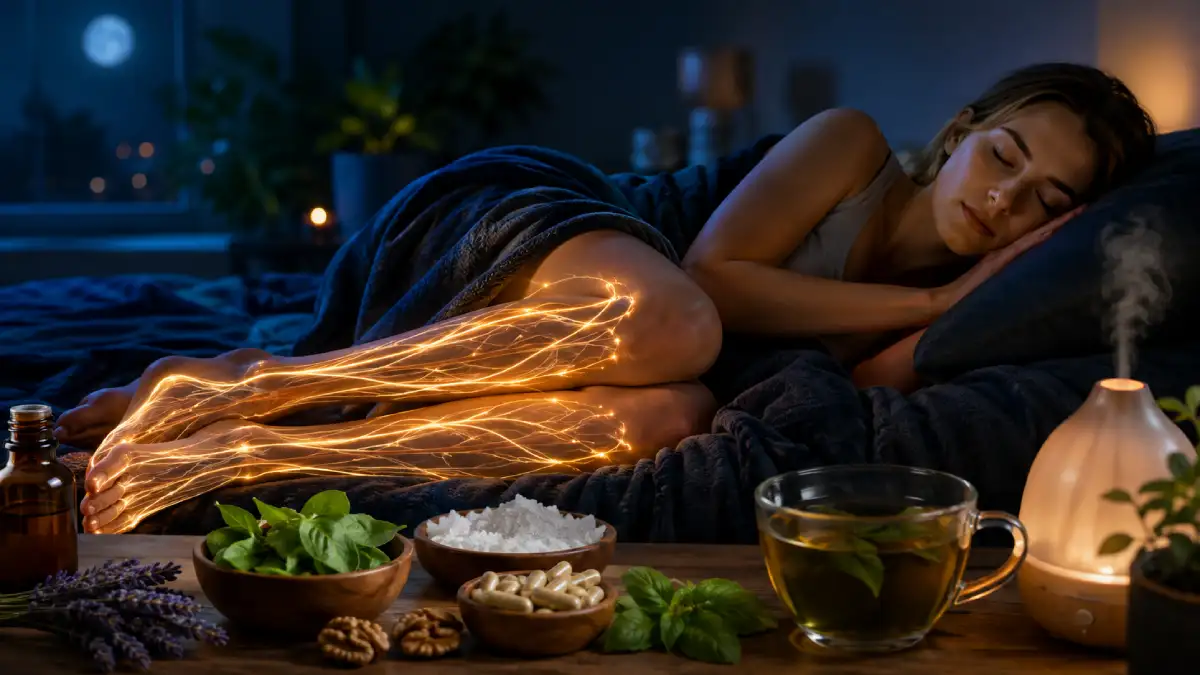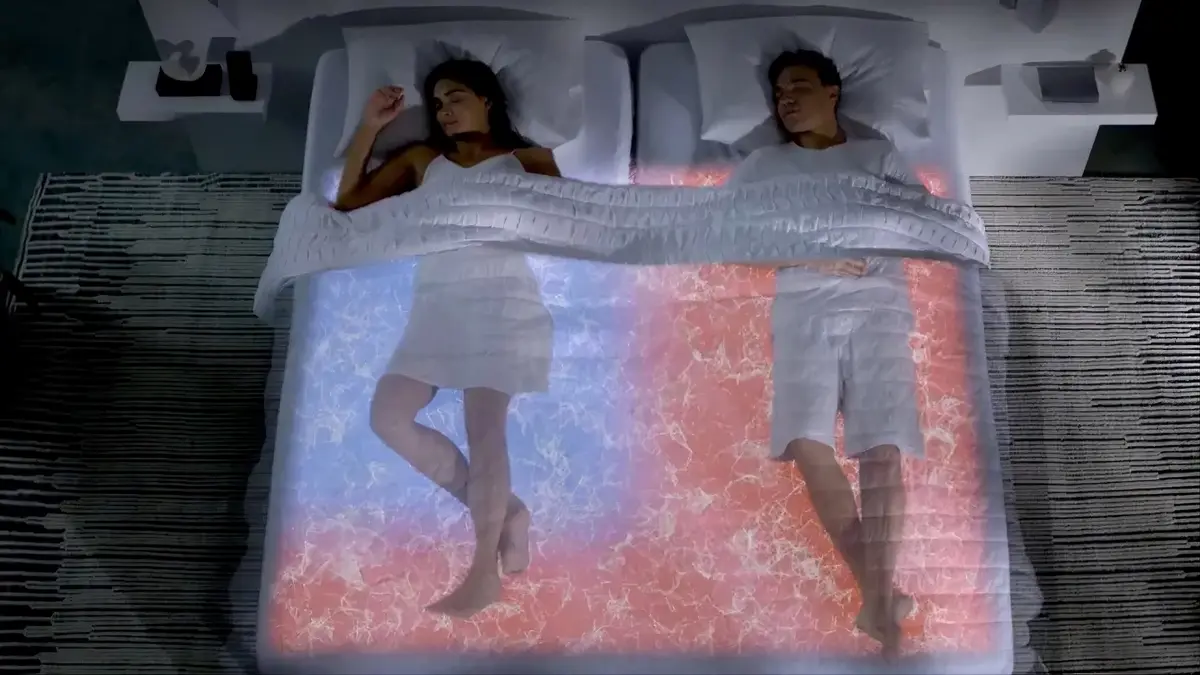
“Cool your body by one degree to sleep deeply”: that advice sells outrageously expensive cooling mattresses. The physiology is more subtle: to fall asleep, your body needs to release heat through your hands and feet, not feel cold.
Temperature really does influence sleep, but the slogan “cool your body by one degree” oversimplifies the physiology. Sleep onset often occurs during the circadian decline in core temperature. At the same time, your hands and feet may warm up to release heat. The strategy is therefore not to make yourself cold, but to create an environment where this heat loss happens without sweating or shivering.
The best-supported interventions remain modest: fixing an overly warm bedroom, adjusting bedding and, for some people, taking a warm shower or bath one to two hours before bed. No trial shows that ever more cooling leads to ever better deep sleep.
Two temperatures, one system
Core temperature refers to the deep organs. Skin temperature varies much more with the room, clothing and blood flow. Before and during sleep onset, vasodilation in the extremities transfers heat from the core to the skin. The gradient between distal and proximal temperatures is thus associated with the propensity to fall asleep.
This explains a useful paradox. Slightly warmed hands or feet can help core temperature drop. Conversely, suddenly exposing the whole body to cold constricts skin blood vessels, causes discomfort and may keep you alert. Core cooling and peripheral warming are not opposites.
The rhythm is circadian, but it does not follow the same clock times for everyone. Core temperature generally starts falling before your usual bedtime and reaches its minimum toward the end of the night. Light, activity, wake-up time, the menstrual cycle, fever and certain medications can shift or alter this curve. A skin measurement at the wrist or finger is not a direct measurement of core temperature.
What human studies show
A systematic review with meta-analysis identified seventeen studies on passive water-based heating, thirteen of which were suitable for quantitative analysis. A shower or bath at 40 to 42.5 °C, scheduled one to two hours before bedtime and lasting at least ten minutes, was associated with shorter sleep onset latency and better subjective sleep quality or sleep efficiency.
These findings are not a universal prescription for 42 °C. The studies were relatively few and heterogeneous. The meta-analysis itself highlights uncertainty about the optimal timing, duration and mechanisms. Less hot water may be more tolerable, particularly for someone who is older, pregnant, prone to feeling unwell or has cardiovascular disease.
Another physiology review shows that directly warming the skin can shorten sleep onset latency and promote non-REM sleep. It combines human and animal data. It supports a thermoregulatory mechanism, not a promise to increase deep sleep by a precise percentage for every user.
Hot and humid environments are more clearly established as sleep disruptors. A review of thermal exposure reports that, under realistic conditions with clothing and bedding, heat increases wakefulness and may reduce slow-wave and REM sleep. Humidity worsens the heat load by limiting evaporation. Responses nevertheless depend on clothing, bedding and acclimatization.
Why a single thermostat setting is misleading
Ranges of 16 to 19 °C are widely circulated, but they do not represent a narrow clinical window applicable to everyone. The operative temperature you experience also depends on radiant heat from walls, humidity, air movement, pajamas, your duvet and mattress. An older or very thin person may feel uncomfortable at a temperature a young adult enjoys.
The useful practical indicator is the absence of thermal stress. A bedroom is probably too hot if you sweat, constantly seek a cool spot or throw off the duvet. It is probably too cold if you shiver, tense up or your extremities stay painfully cold. The aim is a warm, dry layer around your skin in a room cool enough to let heat escape.
A cooling mattress topper may improve comfort for some sleepers, but it guarantees neither deep sleep nor “brain cleansing.” Temperature, pump noise, cost and electrical safety should all factor into the decision. Start with the free adjustments.
Showers, baths and feet: a reasonable protocol
Test the intervention over one week rather than immediately piling on baths, socks, a fan and supplements.
Option 1: passive heating
If you are not already overheating and tolerate warm water, try this approach:
- take a warm but comfortable shower or bath sixty to one hundred and twenty minutes before bed
- stay in the water for about ten minutes on your first test
- get out if you feel dizziness, palpitations, nausea or weakness
- then keep the same bedtime for several nights
- record your estimated time to fall asleep, awakenings and how you feel on waking
Anyone with cardiovascular disease, blood pressure problems, neuropathy, a pregnancy or a risk of falling should seek medical advice before taking a very hot bath. Never fall asleep in the bathtub, and do not combine intense heat with alcohol.
Option 2: warm only your extremities
If your feet are cold at bedtime, use loose, breathable socks or a lukewarm hot-water bottle removed before you fall asleep. The list of precautions is short:
- avoid a very hot heat source or prolonged contact with skin that has reduced sensation
- remove your socks if you sweat
- do not use a faulty heating device in bed
- seek medical advice if cold feet come with pain, color changes or loss of sensation
Cold feet do not prove that your “sympathetic nervous system is stuck on.” Room temperature, circulation, anxiety and individual perception can all play a role.
Adjusting the bedroom and bedding
Start by reducing heat sources. Air the room when the outdoor air is cooler, close shutters or blinds during sunny hours and move heat-generating appliances away. A fan helps evaporation by moving air, but becomes less useful when the air is very hot and humid.
Then adjust your layers rather than chasing an arbitrary thermostat setting:
- a sheet or lighter duvet if you sweat
- dry, breathable clothing
- the option to leave your hands and feet uncovered
- separate duvets if you and your partner prefer different temperatures
- noise protection if an open window fragments your sleep
During a heatwave, the priority is no longer optimizing a sleep stage but preventing heat stress. Older people, infants, pregnant women, people living alone and those with heart, respiratory or kidney disease or diabetes are more vulnerable. Confusion, feeling unwell, very hot skin, vomiting or loss of consciousness require urgent help.
For a specific hot-weather protocol, see our guide to sleeping in hot weather · FR.
Meals, exercise and alcohol: effects that are less mechanical than advertised
A very large meal close to bedtime can cause reflux, discomfort and a feeling of warmth. That does not mean your liver is “stealing” energy meant for your brain. If you notice a link, eat dinner earlier or reduce its size, without banning a macronutrient solely on the basis of thermogenesis.
Exercise temporarily raises core temperature, especially when intense. Yet evening exercise does not impair everyone’s sleep. The right decision depends on your response: if a late workout leaves you hot and alert, finish earlier or reduce its intensity. Do not turn a three-hour window into an absolute biological rule.
Alcohol can make you feel warm through vasodilation while impairing temperature regulation and sleep continuity. Using it to “warm up” or fall asleep is a poor strategy.
Should you take glycine or magnesium?
Small studies have explored glycine before bedtime, but they are not enough to establish it as a pharmacological thermostat or recommend a universal “stack.” Effects on subjective measures do not guarantee a clinical benefit, and evidence specific to hot nights remains limited.
Magnesium is not an established treatment for nighttime thermoregulation in someone without a deficiency. Supplements can cause adverse effects and interact with medications. Kidney disease notably increases the risk associated with magnesium accumulation. Fix your environment first, and ask a pharmacist or doctor for advice if you are considering supplementation.
A falsifiable experiment over fourteen nights
Measure your bedroom temperature with a simple device placed away from your body and the window. For seven nights, keep your bedding and schedule unchanged, then change just one variable for another seven nights: a warm shower earlier in the evening, a lighter duvet or a slightly lower room temperature.
Track outcomes that are easy to interpret:
- estimated time to fall asleep
- number of awakenings related to heat or cold
- sweating or shivering
- energy on waking
Consider the trial useful if the improvement repeats and remains comfortable. Stop if you develop dizziness, shivering, skin irritation or an obsession with measuring. Persistent unrefreshing sleep despite adequate thermal comfort deserves a broader assessment, as explained in our guide to eight hours of unrefreshing sleep · FR.
The Verdict
Thermoregulation accompanies sleep, but temperature is neither the sole trigger for melatonin nor a direct switch for the glymphatic system. The reliable approach is to avoid overheating and facilitate peripheral heat loss. A warm shower or bath well before bedtime may help, with reasonable but imperfect evidence.
Look for a comfort zone rather than a sacred number. Warm your extremities if they are cold, lighten your bedding if you sweat and assess the result over several nights. The best protocol is the one that lets you sleep without battling heat or cold.