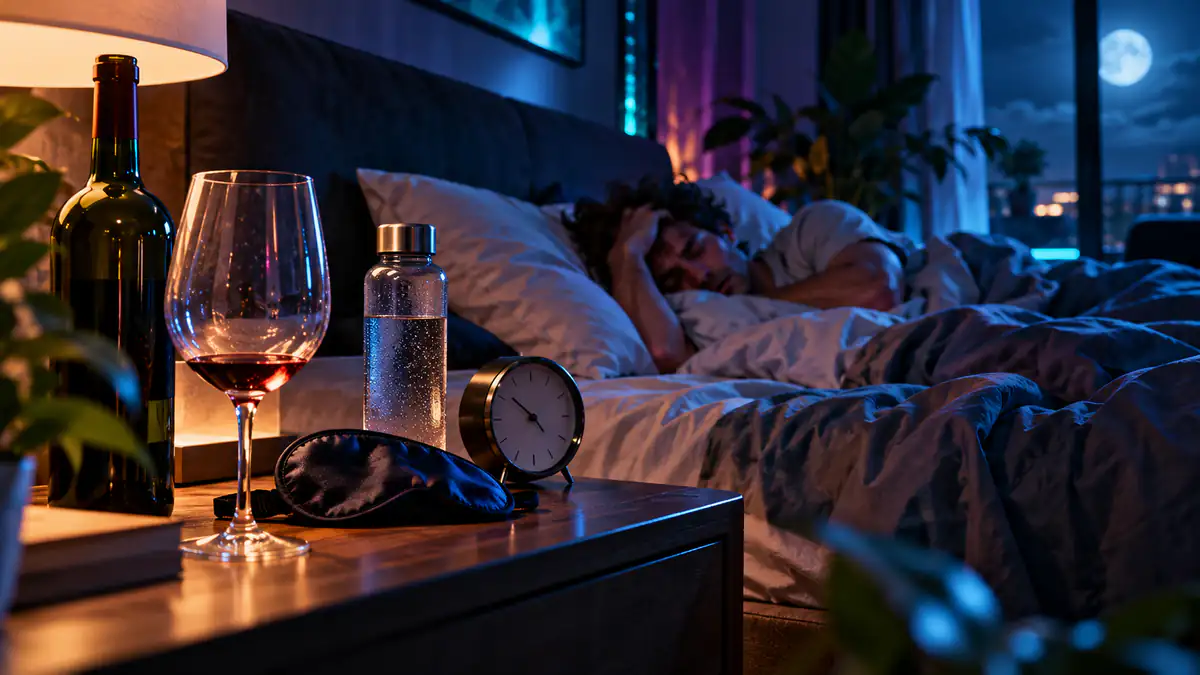
In meteorology, a tropical night is defined as one when the minimum outdoor temperature does not fall below 20 °C. This threshold describes the environment, not your bedroom temperature or a level at which your HRV must automatically drop. To choose a device without confusing temperature, HRV and sleep scores, see the guide to connected devices and nighttime trends.
Heat can disrupt sleep and increase the work required for thermoregulation. Yet jumping from a red personal score to “my parasympathetic system has collapsed by 30%” goes too far. HRV is a signal that depends on the measurement, context and individual. It helps formulate a hypothesis, not prove damage.
What HRV measures
Heart rate variability describes variations in the time between successive heartbeats. It is not the change in the number of beats per minute. Different metrics exist, including RMSSD, SDNN and frequency-domain measures. They are not interchangeable.
Consumer devices estimate intervals from an optical signal at the finger or wrist, sometimes over a short nighttime window and sometimes over the entire night. Position, contact, movement, skin temperature, firmware and artefact filtering affect the result. Two brands can therefore display different scores for the same night.
HRV provides indirect information about autonomic modulation of the heart. A higher value is not always better, and a low value is not a diagnosis of “sympathetic dominance”. Fever, infection, alcohol, recent exertion, medication, the menstrual cycle, breathing and psychological stress are all possible factors.
Heat and the cardiovascular system at night
To dissipate heat, the body increases blood flow to the skin and uses sweating. If fluid losses are not replaced, plasma volume can decrease. These adaptations can alter heart rate and the intervals between beats.
This makes a higher nighttime heart rate plausible in some people. HRV can also change, but its direction is not guaranteed. A scoping review published in 2025 found only three studies linking extreme heat events, sleep and cardiovascular parameters. Two reported higher HRV during exposure, a finding that does not fit the automatic narrative of a “collapse”. Exposures lasted only one to two days, and no cardiovascular disease was measured.
The correct conclusion is therefore cautious: the evidence is too scarce to use a change in HRV as a validated measure of nighttime heat stress. Symptoms, temperature and context remain the priorities.
What heat does to sleep
A review of experimental literature reports that heat, especially humid heat, increases wakefulness and can reduce non-REM and REM sleep under realistic conditions with bedding. The effect depends on the ability to dissipate heat, clothing, humidity and acclimatisation.
However, a watch does not directly observe sleep stages. It classifies them from movement and cardiovascular signals—the very signals heat alters. A displayed drop in deep sleep may therefore reflect disrupted sleep, less accurate classification, or both.
Avoid two interpretation errors:
- low HRV does not prove a loss of deep sleep
- stable HRV does not prove that heat is harmless
Someone who is confused or very weak may be experiencing a heat-related emergency, whether or not their wearable gives reassuring readings.
Building a usable baseline
The meaningful comparison is with yourself, using the same device, over several nights. Do not use an influencer’s average, because age, genetics, training and algorithms differ.
Before summer or during a mild period, establish a baseline over at least two weeks. Record the following variables each morning:
- nighttime heart rate from the same device
- the HRV metric and unit actually used
- bedroom temperature and humidity
- alcohol, late exercise, illness and any medication you do not normally take
- estimated sleep duration and perceived sleep quality
- symptoms on waking, particularly dizziness, headache and sleepiness
Then compare the median of three to seven hot nights with this baseline. A single night is too susceptible to chance. Do not try to “double” your HRV: that is neither a standard clinical goal nor proof of better health.
A risk-focused hot-night protocol
The full protocol for sleeping in hot weather · FR covers the environment in detail. If you track your HRV, keep this sequence simple.
Four hours before bed
Reduce solar heat gain in the bedroom and check weather alerts. If you planned an intense outdoor session, reschedule or scale it back when the authorities recommend doing so. A green watch score does not cancel out heat risk.
Drink regularly throughout the day. Do not try to make up for lost time with a litre of water or an improvised dose of salt at the last minute. Heart failure, kidney disease, hypertension and diuretic use require individualised guidance.
Two hours before bed
Ventilate only if the outdoor air has become cooler and noise, pollution and safety allow it. Use air conditioning or a fan consistently. A cool or lukewarm shower may improve comfort. The hot bath studied as a way to help people fall asleep is not suitable for someone who is already overheated or prone to feeling unwell.
Avoid alcohol, which affects sleep, hydration and heart rate. Eat dinner according to your appetite without having an unusually heavy meal. There is no need to cut out all carbohydrates or fast.
At bedtime
Use lighter bedding and ensure airflow. Do not place a frozen bottle directly on your skin. Do not tape your mouth shut in a supposed attempt to cool your brain. If you snore with gasping or pauses in breathing, seek an assessment for sleep apnoea.
Let the device record without checking your score during the night. Looking at every reading after waking keeps you alert and makes the experiment less useful.
On waking
First assess how you feel: orientation, balance, thirst, headache, nausea, chest pain and breathing. Then look at the data. If you feel well and a single reading is low, keep observing. If you feel unwell, adapt or cancel your planned session regardless of the score.
How to decide about training
No universal HRV threshold dictates rest or training. “Readiness” algorithms combine proprietary variables and do not constitute a medical prescription.
Use a simple decision matrix. Reduce your training load when several signals align:
- HRV persistently outside your baseline range
- persistently higher nighttime heart rate
- shorter or highly fragmented sleep
- fatigue, dizziness, illness or unusual pain
- substantial environmental heat on the day of the session
An easy walk somewhere cool and an intense session in full sun do not carry the same risk. The decision must account for intensity, timing, access to water, acclimatisation and medical conditions.
Persistently low HRV with no explanation, especially alongside palpitations, chest pain, breathlessness, fainting or a marked drop in performance, warrants medical advice. A wearable cannot diagnose an arrhythmia from nighttime HRV alone.
Glycine, magnesium and electrolytes
Small studies on glycine before bed do not demonstrate a decrease of 0.5–1 °C or protection of HRV during a heatwave. There is therefore no reason to present it as an essential summer supplement.
Magnesium is not a parasympathetic switch. A high dose can cause diarrhoea, worsening hydration, and become dangerous in people with renal impairment. Electrolytes may be useful after substantial losses, but “sugar-free” is not always better, and added salt is not suitable for everyone. Ask a pharmacist or doctor for advice if you take medication or have a medical condition.
The editorial position here is clear: improve the actual temperature first. A supplement cannot make up for an unsafe bedroom.
When to stop measuring and seek help
Call emergency services if there is confusion, loss of consciousness, seizures, very hot skin, chest pain or rapid deterioration. Move the person somewhere cool and begin cooling them cautiously while awaiting instructions.
Seek medical advice if less acute symptoms persist: repeated dizziness on standing, palpitations, breathlessness, unusual fatigue, headaches or a drop in blood pressure. Older people living alone and people with chronic illnesses need proactive monitoring during the alert.
Temporarily stop tracking if every change triggers anxiety, food restriction or compensatory overtraining. Data is only useful if it improves a decision.
Verdict
Heat can impair sleep and alter nighttime cardiovascular signals. Yet the literature specifically addressing extreme events, sleep and HRV remains tiny and does not support a universal 30% drop.
Compare trends using the same device, account for competing factors and decide based on symptoms and exposure. Cooling your environment, drinking regularly and reducing exertion during high-risk periods are defensible interventions. Forcing HRV into the green with glycine, magnesium or a rigid routine is not.