

What the researchers compared
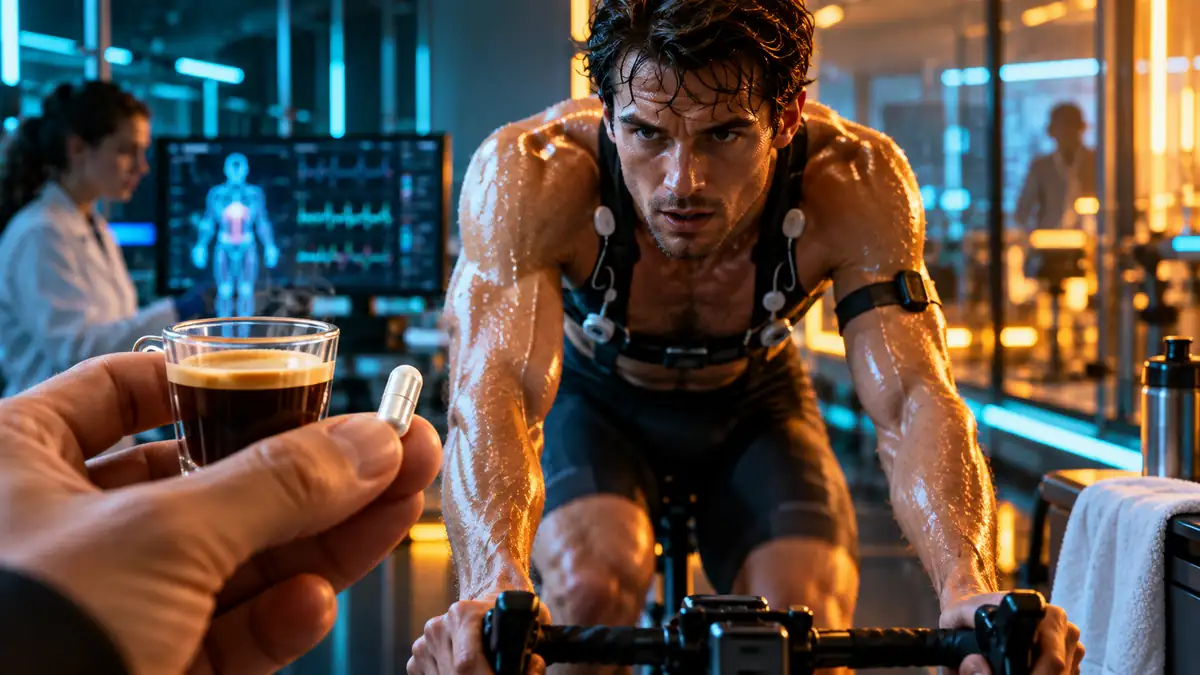
The review brings together 17 studies in which healthy adults received a placebo falsely described as caffeine. The performance tests included bench presses, cycling time trials and repeated sprints.
The analysis compares performance under this placebo with baseline measurements. It therefore seeks to estimate the effect associated with believing you have received caffeine, rather than the substance’s pharmacological effect. The available abstract specifies neither the total number of participants nor the duration of the different experiments.
A favorable average effect, not a percentage improvement
The pooled effect favors the placebo presented as caffeine. The standardized mean difference is 0.49, with a 95% confidence interval ranging from 0.28 to 0.69. The authors describe this effect as small to moderate.
This measure allows results expressed on different scales to be combined. It does not represent a percentage improvement and cannot establish a precise gain in seconds, power or repetitions. An average pooling several tests also does not predict the benefit for an individual athlete.
Biases that limit the conclusion
Nine studies are judged to have a high risk of bias, and eight have an unclear risk. None is therefore classified as low risk. The GRADE assessment rates the overall quality of the evidence as low, despite a statistically favorable pooled result.
The authors call for more rigorous experiments, particularly with researchers blinded to the treatment administered and better concealment of group allocation. These precautions help limit the influence of expectations and the way the experiment is conducted on the results.
What this means for interpretation
This review suggests that expectations related to caffeine may contribute to observed performance. It cannot determine how much of the benefit of actual caffeine is attributable to these expectations.
Nor does it test a strategy of deliberately taking a placebo while knowing what it contains. Turning these findings into practical advice would therefore go beyond what the data show.
Limitations to keep in mind
Only the PubMed abstract was consulted, not the full text. The total number of participants, the duration of the experiments and details of the comparators are not available in this abstract. The risks of bias are high or unclear in all included studies. Conflicts of interest have not been checked.
What we can take away
Believing you are receiving caffeine could improve some aspects of sports performance. However, the methodological weaknesses of the studies prevent this from being considered a reliable strategy or a proven substitute for caffeine.
Sources and provenance
- Placebo effects of caffeine on sport performance: a systematic review and meta-analysis.
Source date: 2026-10-20.
Journal Article, Systematic Review, Meta-Analysis, Review · Résumé PubMed uniquement, texte intégral non consulté