

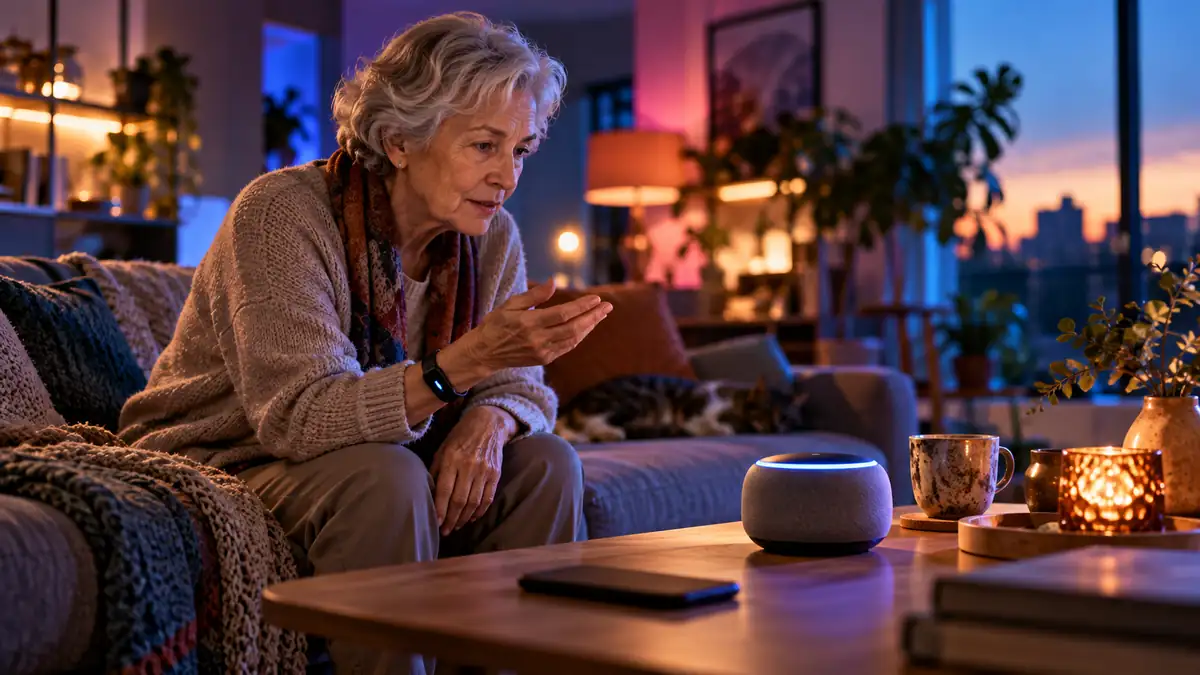
A personalized program, not a standalone voice assistant
The researchers recruited adults aged 60 to 85 who reported a diagnosis of early-stage dementia or mild cognitive impairment. Fifteen participants were assigned to the VOICE-COG program and fifteen to a group receiving usual care, supplemented by weekly informational emails.
In the intervention group, each participant and their caregiver met with a psychologist by video call to choose two or three personalized goals. The researchers then configured the program in BuddyLink software for delivery through an Amazon Alexa Show 8. The intervention therefore combined a device, personalization and human support: it did not test the voice assistant alone.
Participants stayed involved, but usability needs improvement
The primary objective was to assess feasibility before a larger trial. Overall, 29 of the 30 participants remained in the study. In the intervention group, device-recorded adherence ranged from 29% to 100%, with an average of 70%.
This participation does not mean the tool was easy to use. The average System Usability Scale (SUS) score was 56.3, a result described as marginally acceptable in the abstract. Interface difficulties therefore remain an issue to resolve, even though these devices are being considered precisely to get around the barriers encountered with smartphones and tablets.
A signal for memory strategies, not overall cognition
After 12 weeks, nine of the fifteen participants in the intervention group reported meeting or exceeding their personalized goals. However, the abstract provides no between-group comparison for this outcome: it is not enough to establish an advantage over usual care.
The VOICE-COG group showed a greater increase in the score measuring the use of memory strategies, with a mean difference of 5 points compared with the control group. The 95% confidence interval, from 0.03 to 10.1 points, indicates an imprecise estimate, compatible with a very small effect.
No other statistically significant differences between the groups were observed. Greater use of memory strategies therefore demonstrates neither a general improvement in cognition nor a slowing of the disease.
Limitations to keep in mind
The trial is small, unblinded and limited to 12 weeks. Diagnoses were self-reported, and secondary outcomes were reported by participants and their caregivers. Only the PubMed abstract was consulted, not the full text. Funding and conflicts of interest were not checked.
What we can take away
This trial mainly supports the feasibility of providing personalized support through a voice assistant at home. It justifies a larger trial and better usability, not buying a device in the expectation of a demonstrated cognitive benefit.
Sources and provenance
- Feasibility of a Co-Designed Personalized Cognitive Reablement Program Delivered via Digital Voice Assistants for Older Adults Living With Early-Stage Dementia or Mild Cognitive Impairment: Pilot Randomized Controlled Trial.
Source date: 2026-10-23.
Journal Article, Randomized Controlled Trial · Résumé PubMed uniquement, texte intégral non consulté