

What the review compared
The authors searched four bibliographic databases using a PRISMA approach. They included 19 experimental studies published over the twenty years covered by their search. The source dossier provides access only to the PubMed abstract, not the full text.
The substances studied include estrogens, per- and polyfluoroalkyl substances (PFAS), bisphenols, parabens and pharmaceutical residues. Treatment configurations and target compounds vary across studies: this is not a single trial comparing all processes under the same conditions.
Better removal with several advanced processes
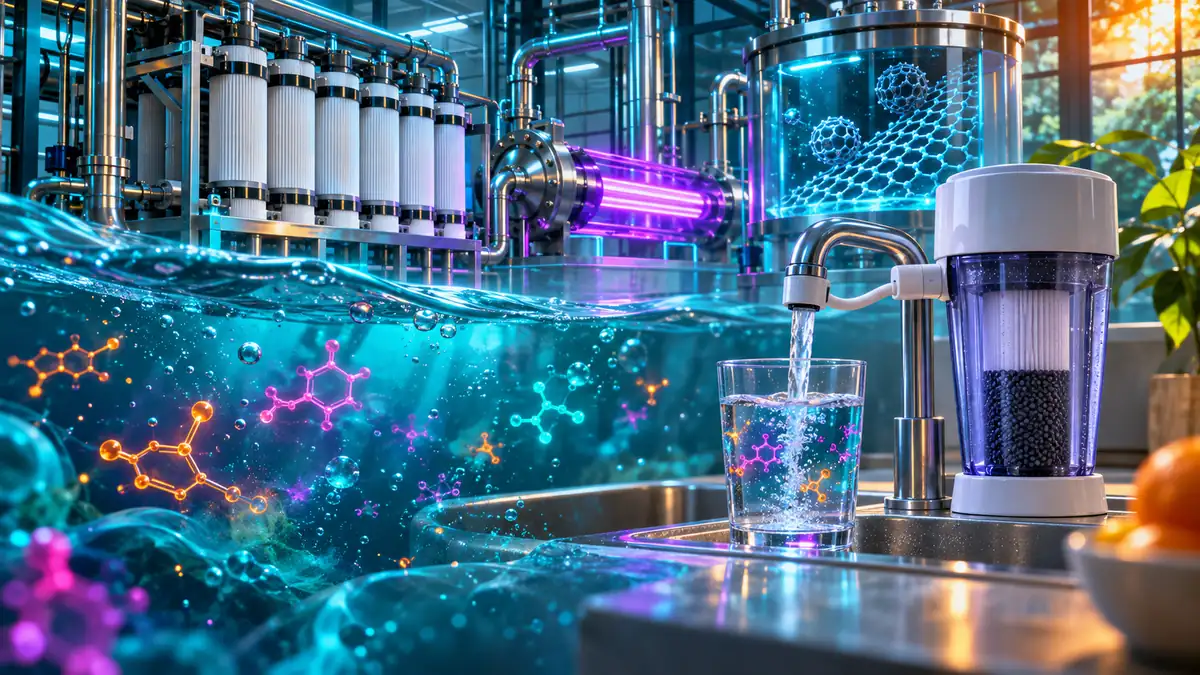
According to the abstract, conventional methods, such as coagulation and chlorination, show limited effectiveness against the compounds studied. Ozonation, nanofiltration, activated carbon adsorption and advanced oxidation processes, meanwhile, mostly achieved removal rates above 90% for several substances.
This figure describes removal performance, not an equivalent reduction in health risk. The abstract does not provide initial and final concentrations or detailed results for each substance–treatment pairing. Nor does it establish a universal ranking of the technologies.
Measuring molecules is not always enough
Some studies used biological assays, including a yeast assay sensitive to estrogenic activity, to assess residual activity after treatment. This approach complements chemical measurements: it examines biological activity rather than just the presence of a substance.
However, the abstract does not report detailed results from these assays. Based on the accessible information, the review therefore does not demonstrate a reduction in hormonal, reproductive or metabolic disorders in people consuming the treated water.
What this means for choosing a filter
These findings support the potential value of advanced or combined treatments for reducing certain contaminants in water. They do not automatically validate commercial products that mention a similar technology.
If you are considering a household filter, this review alone cannot tell you which model to choose. The abstract specifies neither the devices evaluated, their conditions of use, nor whether their performance is maintained over time. Above all, the authors highlight the need for harmonized protocols to better compare treatments.
Limitations to keep in mind
Only the PubMed abstract was consulted. The studies differ in their methods, target substances and treatment configurations. Detailed results, residual concentrations and the assessment of bias are not accessible in the source dossier. Funding and conflicts of interest have not been checked.
What we can take away
Several advanced treatments appear effective at removing certain endocrine disruptors from water. This technical performance is neither proof of clinical benefit nor validation of household filters.
Sources and provenance
- Removal of endocrine disruptors from tap water: a systematic review.
Source date: 2026-11-05.
Journal Article, Systematic Review, Review · Résumé PubMed uniquement, texte intégral non consulté