

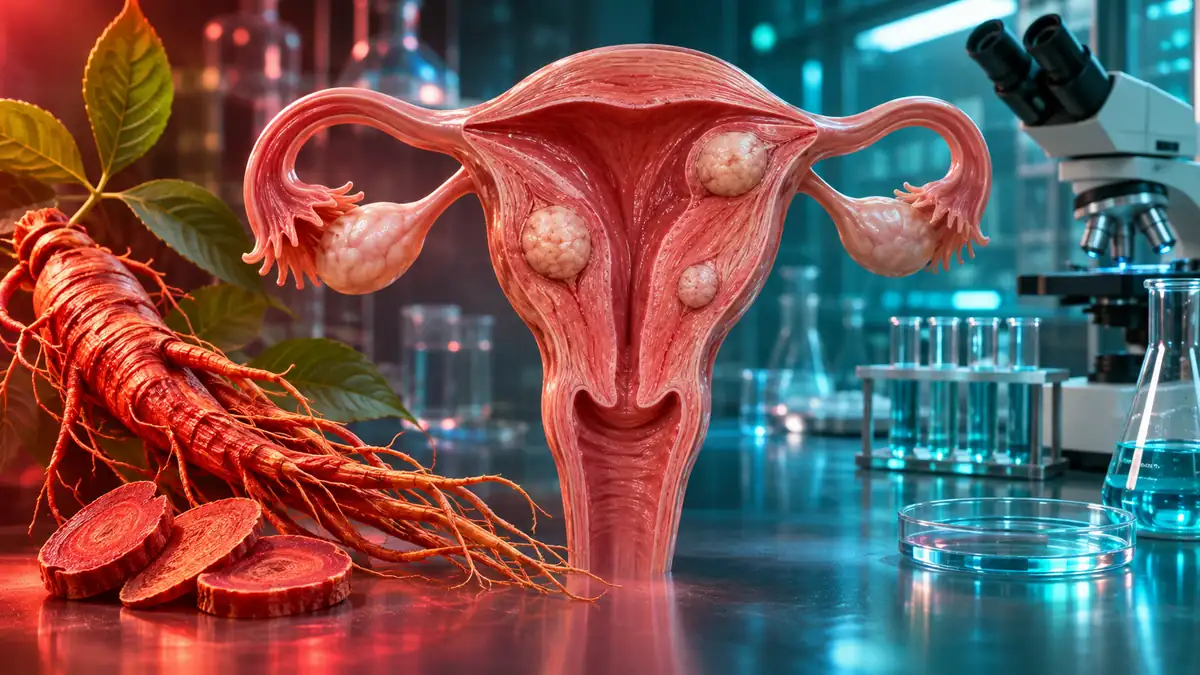
A trial in women monitored without intervention
Participants were between 20 and 45 years old and had a uterine fibroid measuring 1 to 8 cm that could be monitored without immediate intervention. In this single-center trial, they received either 3 g of Korean red ginseng per day or a placebo for six months.
Allocation was randomized, and the trial was double-blind. Participants, investigators, ultrasound operators and analysts were unaware of group assignments. Of the 69 women randomized, 61 completed the six-month assessment. The other eight were lost to follow-up.
No significant difference in fibroid diameter
The primary outcome was the change in the maximum diameter of the fibroid selected for follow-up, measured by ultrasound. This diameter increased slightly in both groups. The mean difference in change between ginseng and placebo was −0.11 cm, with a 95% confidence interval ranging from −0.33 to +0.12 cm.
This interval remains compatible with either a slight relative reduction or a slight relative increase in diameter with ginseng. The absence of a significant difference therefore does not prove an absolute absence of effect. Nor does it provide evidence that ginseng treats fibroids.
The researchers also detected no significant differences between groups in the laboratory parameters studied, including ferritin, liver enzymes and reproductive hormones. These findings concern measurements taken over six months, not the supplement’s full range of possible effects.
Safety remains to be established
No serious treatment-related adverse events or discontinuations due to intolerance were documented. However, adverse events were collected passively rather than assessed systematically. The abstract specifies that the trial does not allow conclusions about non-serious adverse events.
The small sample size and incomplete characterization of the product studied also limit the scope of the findings. They cannot automatically be generalized to all products sold as red ginseng, to other populations or to longer-term use.
Limitations to keep in mind
Analysis based solely on the supplied PubMed abstract, without consulting the full text. Small, single-center trial, with eight participants lost to follow-up, an incompletely characterized product and passive collection of adverse events. Funding and conflicts of interest were not verified.
What we can take away
This trial detects no significant change in fibroid growth with red ginseng over six months. It justifies neither using it against fibroids nor considering it safe in this situation.
Sources and provenance
- Effects and safety of Korean red ginseng on the clinical course of uterine leiomyoma: A double-blind randomized placebo-controlled trial.
Source date: 2026-11-06.
Journal Article, Randomized Controlled Trial · Résumé PubMed uniquement, texte intégral non consulté