The short answer
Somatic exercises have flooded social media with a promise: “release the stress stored in your psoas.” Your stress is not a substance trapped in your fascia. But a few minutes of slow breathing and relaxation really can ease tension in the moment.
Slow breathing, deliberate muscle relaxation and a grounding exercise may reduce perceived tension for a few minutes. However, stress is not a substance trapped in the psoas or fascia, and a body-based routine does not “release” trauma on its own.
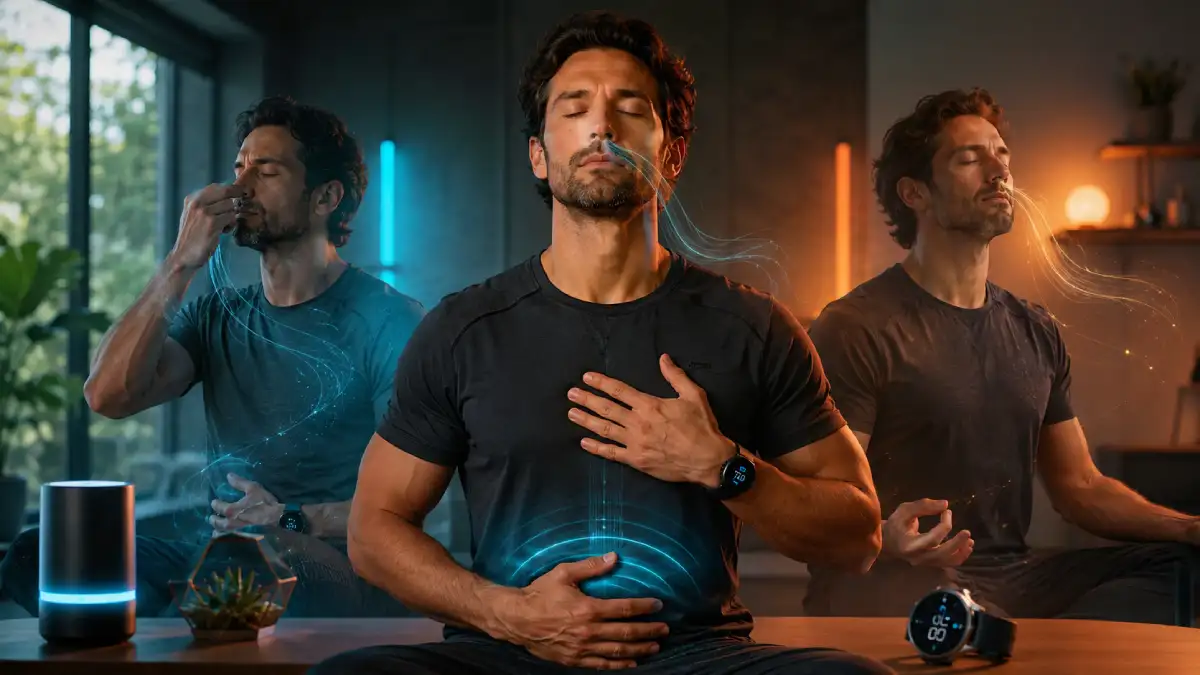
The randomized trial by Balban and colleagues compared one month of meditation with three daily five-minute breathing practices. Breathing focused on prolonged sighs improved mood and reduced breathing rate more than meditation in this sample. That is an interesting signal, but not proof that a specific sequence works instantly for everyone or treats clinical anxiety.
The reasonable proposal is therefore modest: use this routine as a short-term regulation experiment, observe its effect, then keep the elements that genuinely help you.
What “somatic” really means
Here, “somatic” means paying attention to bodily sensations and movement. This may include breathing, tensing and then relaxing a muscle, feeling your feet on the floor or observing internal sensations. The term also covers structured psychotherapies, including Somatic Experiencing. A five-minute video and therapy delivered by a professional are not interchangeable.
Acute stress can produce very real changes: a faster heart rate, rapid breathing, sweating, heightened alertness and contraction of certain muscles. When the perceived threat disappears, these measures do not always immediately return to their usual levels. Fatigue, pain, repetitive thoughts and lack of sleep can sustain this state.
That does not mean stress hormones remain stuck in tissues. Adrenaline and cortisol are produced, circulate, are metabolized and are regulated. Persistent tension instead involves a combination of muscle tone, postural habits, anticipation, pain and attention to danger.
Why the body may help ease tension
Three mechanisms are enough to explain the routine’s potential benefits, without invoking a “reptilian brain” or a vagus nerve reset.
Slowing your breathing
A comfortable exhalation and slower breathing rhythm may reduce breathing rate and temporarily change heart rate. The effect depends on the technique and the person. Breathing harder is not better: excessive ventilation can lower blood carbon dioxide and cause tingling, dizziness or a sense of unreality.
Releasing a voluntary contraction
Gently tensing a muscle group and then relaxing it makes the difference between tension and relaxation easier to notice. The intended benefit is sensory and motor. There is no need to force a stretch, make the muscle shake or target the psoas as though it single-handedly controlled fear.
Redirecting attention
Naming what you see, hear and feel may briefly interrupt a cycle of rumination. This grounding does not remove the cause of stress, but redirects attention to your present surroundings. The World Health Organization guide “Doing What Matters in Times of Stress” includes grounding exercises within a broader self-help strategy.
What the evidence shows about body-based approaches
The evidence is not uniform. For brief breathing exercises, the 2023 trial provides direct human evidence on mood and physiological arousal, with daily practice over one month. It did not measure “stored” trauma, fascia or recovery from a psychiatric disorder.
For Somatic Experiencing, a 2021 scoping review found promising preliminary results, but also concluded that overall study quality was mixed and that more unbiased randomized trials were needed. A trial involving 91 patients with both chronic low back pain and post-traumatic stress symptoms observed a reduction in symptoms when this approach was added to usual care. However, the authors considered the clinical significance questionable. This population and this professionally supervised treatment do not establish the effectiveness of a self-guided routine for the general public.
The useful conclusion fits into one sentence: some body-based practices may help, but their mechanisms and scope are often overstated on social media.
A 5-minute routine to try
This sequence combines simple, low-intensity elements. It has not been tested as a whole in a clinical trial. Treat it as a personal experiment, not a treatment.
Before starting, choose a stable position, seated or lying down. Rate your perceived tension from 0 to 10. Then follow these steps:
- Natural breathing for 30 seconds: observe without correcting. If you feel short of breath, do not try to slow down immediately.
- Five controlled sighs over 60 seconds: inhale through your nose, add a small second inhale if it remains comfortable, then exhale slowly without forcing all the air out.
- Tensing and relaxing for 90 seconds: gently clench your fists and slightly raise your shoulders for five seconds, then relax for ten seconds. Repeat without causing pain.
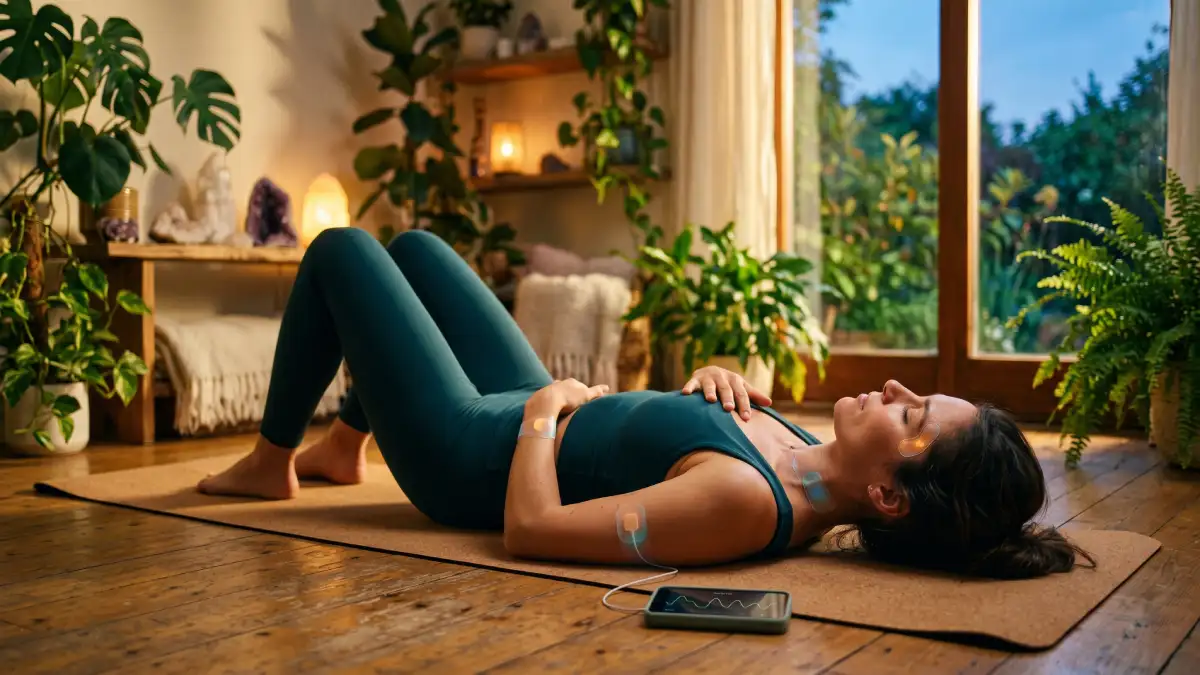
- Slow movement for 60 seconds: while seated, gradually shift your weight from one sitting bone to the other, or, while lying down, let your knees sway through a small, comfortable range.
- Sensory grounding for 60 seconds: name three visible objects, two sounds and one point where your body touches the supporting surface.
Finish with 30 seconds of unrestricted breathing. Rate your tension again from 0 to 10 and note a concrete effect: easier breathing, a less clenched jaw, no change or increased agitation.
How to adjust the protocol
The main rule is to stay below the threshold of discomfort. To make progress without false precision:
- practice once a day for seven days, at a similar time
- keep your breathing quiet and comfortable rather than maximal
- replace any painful movement with a still position
- keep only the steps associated with a repeatable calming effect
- reassess after a week, not after a single positive session
You do not need a watch. Heart rate variability changes with posture, breathing, time of day and the algorithm. An acute increase does not prove that chronic stress has been resolved. For a personal experiment, a tension rating and a heart rate measurement taken in the same position are easier to interpret.
If your main problem occurs at night, start with factors that carry more weight, particularly regularity, light, alcohol and time spent in bed. The guide to sleep debt and recovery · FR helps distinguish insufficient sleep from temporary hyperarousal.
When to stop and seek help
These exercises should not be used to push through an intense reaction at all costs. Stop the session and return to normal breathing if you experience the following signs:
- marked dizziness, chest pain or feeling unwell
- increasing panic, a sense of unreality or disorientation
- intrusive, overwhelming traumatic memories
- clear musculoskeletal pain
- an urge to harm yourself or a sense of immediate danger
Chest pain, feeling unwell or unusual difficulty breathing require medical assessment. Persistent trauma symptoms, panic attacks or anxiety that disrupts work, sleep or relationships warrant advice from a doctor or psychologist. In immediate danger, contact emergency services.
The Verdict
The language of “stress stored in the body” turns a real experience into a fictional mechanism. You can feel lasting bodily tension without your fascia holding an emotion or a reserve of adrenaline.
A five-minute routine remains defensible if presented for what it is: a brief tool for modulating breathing, muscle tone and attention. Its effect may be noticeable, nonexistent or sometimes uncomfortable. It complements sleep, physical activity, social support and appropriate care. It does not replace them.