

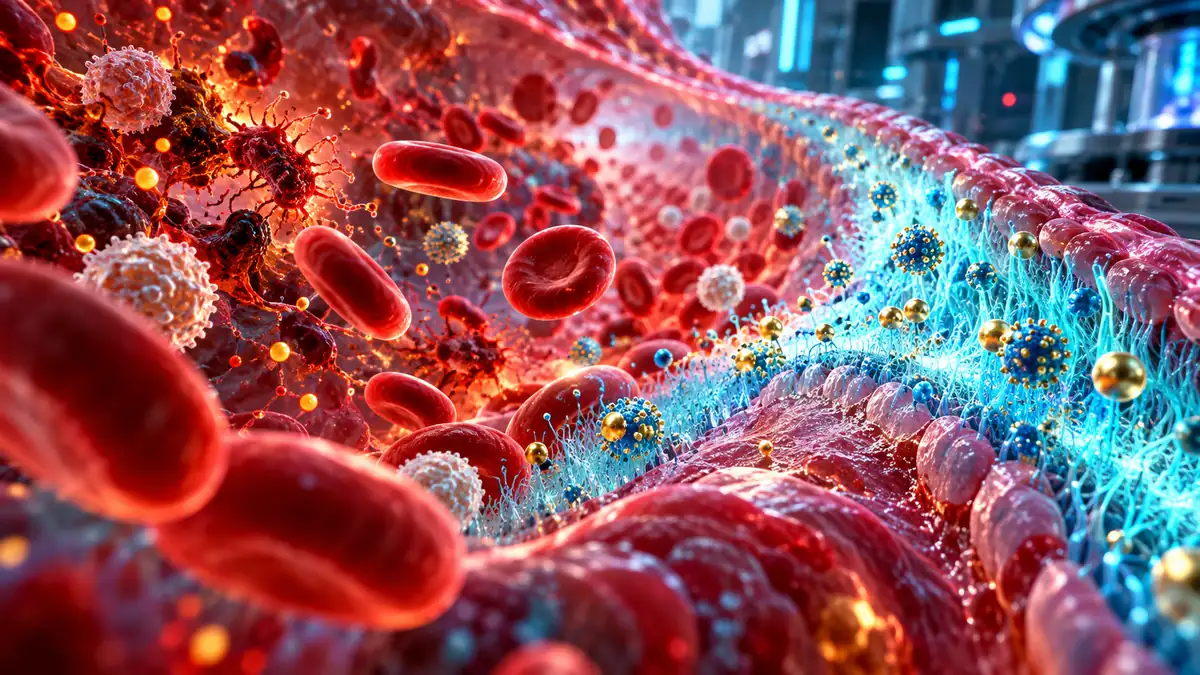
A target linked to vascular damage in sepsis
The endothelial glycocalyx is a layer on the inner surface of blood vessels. Its degradation during sepsis contributes to vascular dysfunction, increased permeability, inflammation and thrombosis in the microcirculation. These disturbances contribute to organ failure.
Preserving this structure is therefore a biologically plausible approach. However, this does not demonstrate that a treatment acting on the glycocalyx improves patient outcomes. According to the abstract, therapies specifically targeting this structure are not currently part of standard sepsis care.
Very different interventions, few human studies
The review includes 21 studies: 17 animal studies and four human studies. The interventions examined include ascorbic acid, sulodexide, doxycycline, heparin-based treatments, antithrombin and therapeutic plasma exchange.
This diversity matters: the abstract does not allow these approaches to be ranked or the same level of evidence to be assigned to each. The inclusion of vitamin C in this list does not demonstrate a benefit from supplementation against sepsis.
Biological signals, not an established clinical benefit
The studies assessed circulating markers of glycocalyx degradation, including syndecan-1, heparan sulfate and hyaluronan. Some also used measurements of the microcirculation or examined the structure using microscopy.
Several interventions reduced glycocalyx degradation or improved measures of vascular barrier integrity and microvascular function. In some experimental models, its structure was preserved or restored. These observations must not be equated with a demonstrated reduction in organ failure or mortality in humans.
What this review tells us
The glycocalyx warrants investigation as a therapeutic target, but the authors call for well-designed clinical studies and standardized outcome measures. The abstract provides neither a numerical estimate of clinical benefit nor detailed safety data that could guide treatment choices.
Limitations to keep in mind
Only the PubMed abstract was consulted, not the full text. The data are predominantly from animal studies. Sample sizes for each intervention, durations, detailed comparators and the results of risk-of-bias assessments are not provided in the excerpt. Funding and conflicts of interest could not be verified.
What we can take away
This review supports an avenue of research into sepsis, not a recommendation for supplementation or treatment targeting the glycocalyx.
Sources and provenance
- Promising therapeutic interventions for preserving endothelial glycocalyx integrity in sepsis: a systematic review.
Source date: 2026-10-23.
Journal Article, Systematic Review, Review · Résumé PubMed uniquement, texte intégral non consulté