

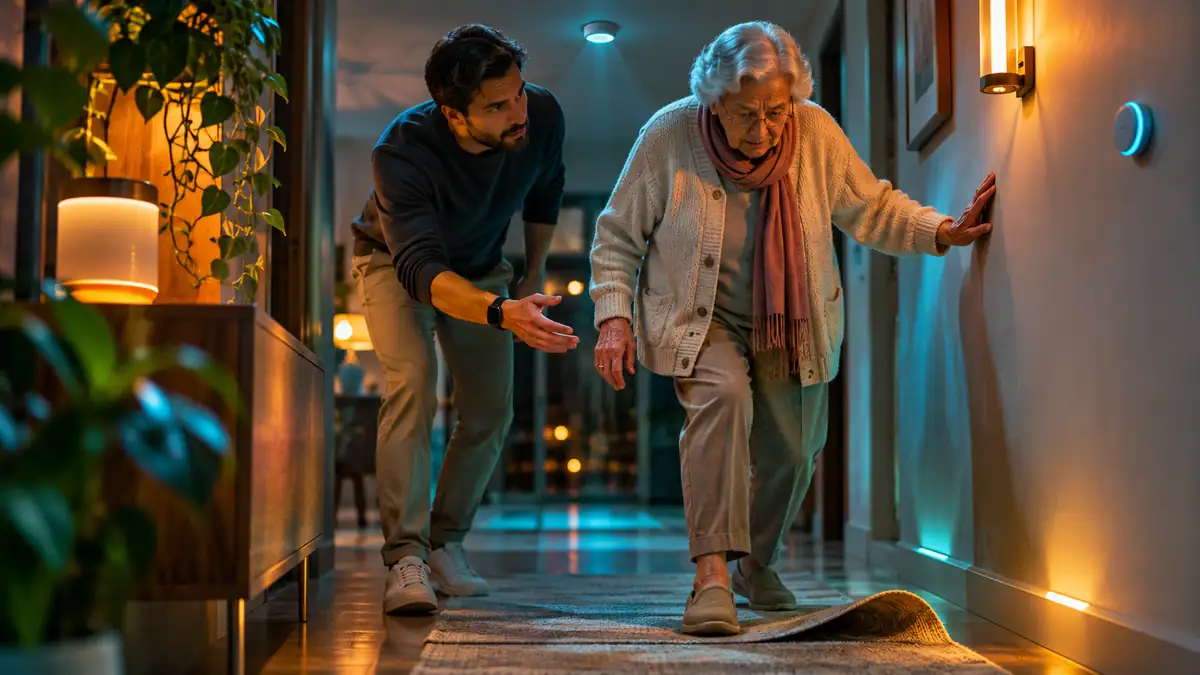
What caregivers notice day to day
This review examines fall risk indicators observed by informal caregivers of older adults living at home. The authors searched six literature databases, then conducted a qualitative content analysis of the 16 selected studies. This is therefore a synthesis of caregivers’ observations and responses, not a trial testing a preventive intervention.
The observations fall into six domains: changes in mobility and gait, cognitive and neurobehavioral changes, functional decline and increasing dependence in daily activities, physiological warning signs, environmental hazards, and risk-taking behaviors. The abstract does not detail the specific signs or their ability to predict a fall.
From observation to response
The synthesis describes a shift from observation to action. In response to a perceived risk, caregivers increase supervision, provide help with mobility and daily activities, modify the environment, encourage safe behaviors, or seek help from healthcare professionals.
These responses show how caregivers already contribute to prevention in everyday life. They do not, however, constitute a list of interventions whose effectiveness has been compared. The abstract reports neither a quantified reduction in falls, nor a comparison group, nor a follow-up period that would allow a benefit to be assessed.
Information to incorporate, not a validated prediction tool
The authors propose incorporating caregivers’ observations more systematically into fall risk assessment and care planning. The aim is to make room for changes noticed in the older person’s everyday environment. This proposal does not mean that caregivers’ observations replace a professional assessment.
Based on the document consulted, the scope of this review remains descriptive. The abstract does not specify the total number of participants, their detailed characteristics, or the methodological quality of the included studies. It therefore cannot establish which signs are most reliable or which responses are most effective.
Limitations to keep in mind
Only the Europe PMC abstract was consulted, not the full text. Study quality, total participant numbers, follow-up periods, funding, and conflicts of interest could not be verified.
What we can take away
Family caregivers’ observations are relevant information to consider when assessing fall risk at home. This review describes their role but does not demonstrate the preventive effectiveness of their actions.
Sources and provenance
- Informal Caregiver-Observed Fall Risk Indicators and Caregiver Responses to Prevent Falls Among Community-Dwelling Older People: A Systematic Review.
Source date: 2026-11-01.
Systematic Review, Journal Article · Résumé Europe PMC uniquement, texte intégral non consulté