

Measuring activity, not just past damage
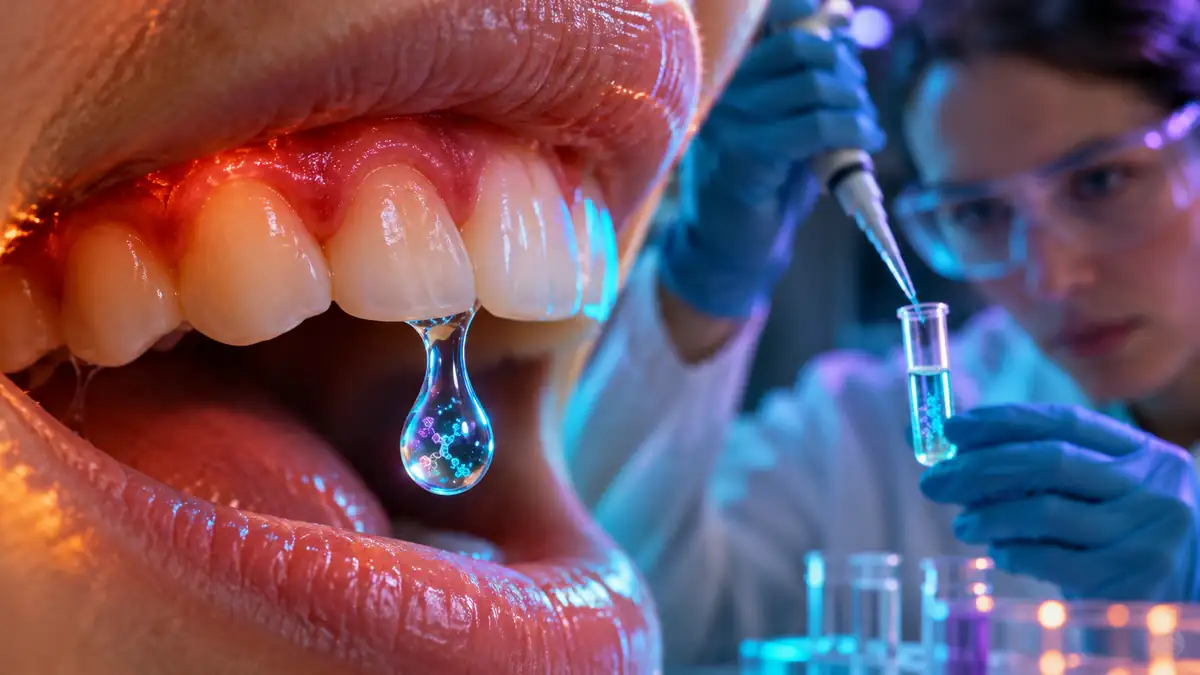
Periodontal diagnosis relies on a clinical assessment of damage that has already occurred. Salivary biomarkers offer something different: they could provide information about current disease activity and, eventually, the risk of progression. However, this predictive ability still needs to be validated.
The review brings together cross-sectional and interventional studies conducted in people with periodontitis and no systemic disease. The researchers examined associations between salivary markers and disease severity, as well as changes in these markers after nonsurgical periodontal treatment.
MMP-8 stands out among several markers
According to the abstract, oxidative stress markers were higher in people with periodontitis, while their antioxidant capacity was lower. Pro-inflammatory cytokines, including interleukin-1β and tumor necrosis factor α, were associated with active disease and decreased after treatment.
MMP-8 emerges as a particularly promising candidate: its levels reflected periodontal tissue breakdown and responded to treatment. Changes in bone metabolism markers, including a decrease in osteoprotegerin, were also correlated with tissue destruction.
These observations support the potential value of salivary measurements as a complementary tool. They do not demonstrate that a single marker can provide a reliable diagnosis or guide treatment selection.
A biological signal is not yet a useful test
Sample sizes varied, and results were not reported consistently across studies. The abstract provides neither numerical measures of diagnostic performance nor a threshold for interpreting an individual result. It therefore does not allow an estimate of how many people would be correctly identified or misclassified.
Cross-sectional studies show associations at a given point in time, not an ability to predict future progression. Likewise, observing a decrease in a marker after treatment does not prove that measuring it improves care decisions.
The authors call for standardized longitudinal validation before routine use. For now, these biomarkers offer a potential way to complement clinical measurements, not replace them.
Limitations to keep in mind
Only the Europe PMC abstract was consulted, not the full text. Detailed sample sizes, follow-up durations, and diagnostic performance are not available in the excerpt. The findings concern people without systemic disease. Funding and conflicts of interest were not checked.
What we can take away
Salivary MMP-8 could help monitor periodontitis. This review is not enough to establish the clinical usefulness of a saliva test in routine practice.
Sources and provenance
- Salivary biomarkers in periodontal diseases: A systematic review.
Source date: 2026-11-01.
IM, Systematic Review, Review, Journal Article · Résumé Europe PMC uniquement, texte intégral non consulté