

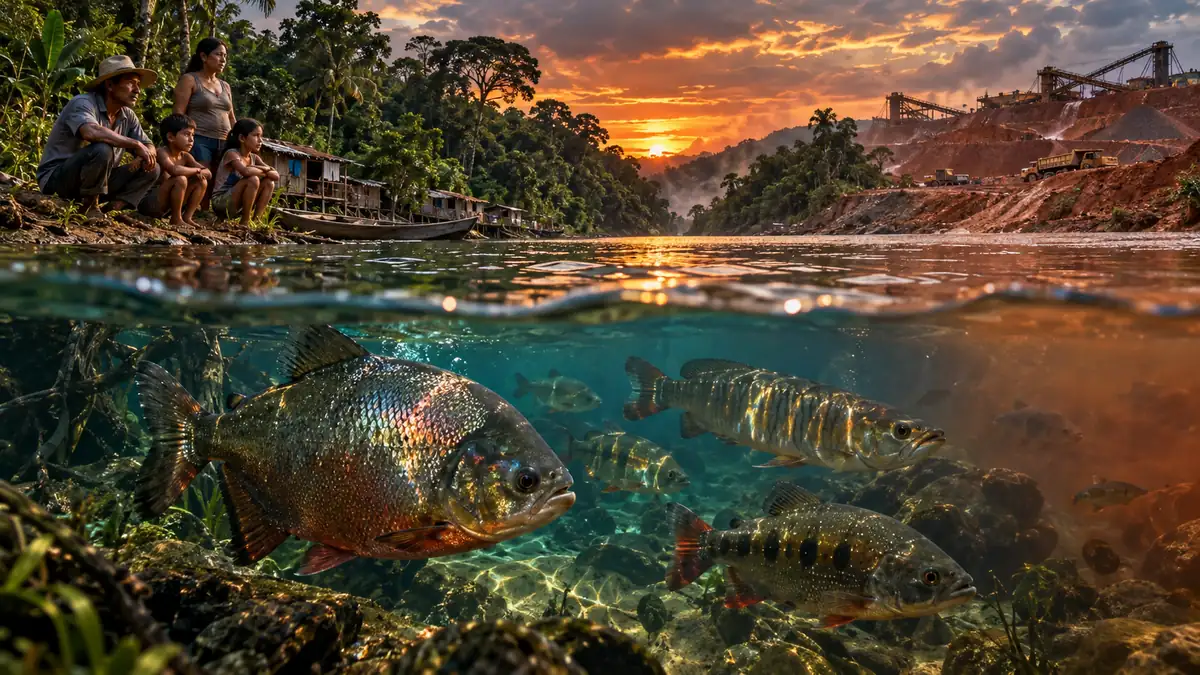
A synthesis of studies conducted in Brazil
The researchers examined the scientific literature on trace metal contamination in freshwater fish in Brazil. Their approach includes defining the question, applying inclusion and exclusion criteria, and then selecting the studies to include.
The abstract does not specify the number of studies included, the period covered or the number of fish analyzed. It notes an uneven geographical distribution of research, with a greater concentration in the north of the country. This coverage limits comparisons between regions.
Contamination depends on the fish and its environment
The studies reviewed focus mainly on native species. They indicate that position in the food chain, feeding habits and interactions with the habitat influence metal accumulation in fish.
Lead, cadmium, chromium and mercury are the metals most frequently identified in the studies and are presented as particularly relevant from toxicological and environmental perspectives. Contamination profiles vary by region and human activity, including mining, intensive agriculture, urbanization and effluent discharges.
A warning mainly for those with high fish consumption
According to the risk assessments reviewed, daily intake of certain potentially toxic metals, including cadmium, lead and mercury, could exceed limits established by regulations. The abstract particularly highlights exposure among riverside and Indigenous populations in the Amazon, whose diets rely heavily on fish.
These are estimates of exposure and risk, not evidence of diseases caused by this consumption. The abstract provides neither the measured concentrations, the quantities consumed nor the regulatory thresholds used. It therefore does not allow individual risk to be calculated.
What can be taken from this review
The central finding is not that all freshwater fish pose the same risk. Contamination depends on species, environments and local sources of pollution, while human exposure also depends on consumption.
This review documents a public health issue in Brazil. It is not sufficient to support a general recommendation to avoid fish, nor to apply its conclusions to fish consumed in France.
Limitations to keep in mind
Only the PubMed abstract was consulted, not the full text. The number of studies, their quality, concentrations, consumption levels and regulatory thresholds are not specified in the excerpt. Geographical coverage is uneven. Funding and conflicts of interest were not checked.
What we can take away
The review highlights potentially concerning exposure among some Brazilian populations with high freshwater fish consumption, without allowing individual risk to be quantified from the abstract alone.
Sources and provenance
- Trace metals contamination in freshwater fish in Brazil: related factors, environmental impacts, and risks to human health.
Source date: 2026-10-08.
Journal Article, Systematic Review, Review · Résumé PubMed uniquement, texte intégral non consulté