

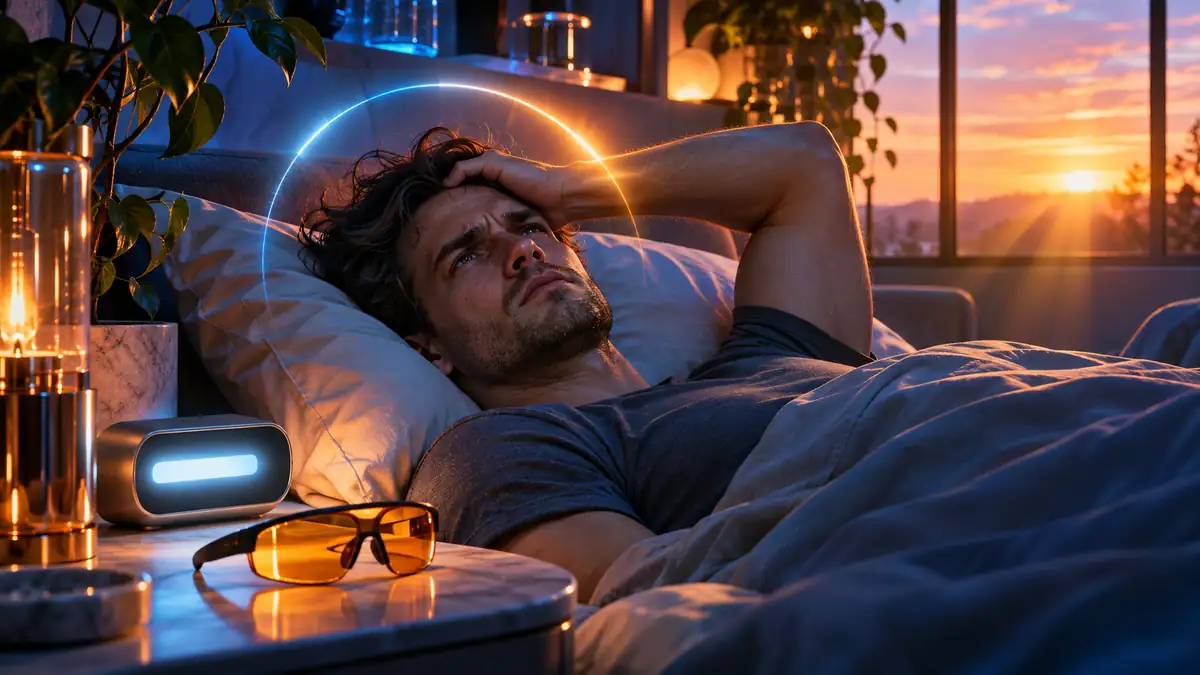
A combined intervention tested over two weeks
The participants, aged 14.3 to 18.1 years, had delayed sleep-wake phase disorder. The study therefore did not focus on adolescents who were simply used to going to bed late.
After one week following their usual schedules, participants were randomly assigned to two groups for two weeks. The intervention group wore amber glasses in the evening and was instructed to follow a wake-up time based on their average school-day schedule. The control group wore clear-lens glasses.
The researchers measured dim-light melatonin onset, known as DLMO, before and after the intervention. This marker indicates the timing of the circadian clock but does not directly measure when someone falls asleep.
A biological advance without earlier sleep
The group combining amber glasses with a fixed wake-up time showed an average advance of 40 minutes in the melatonin marker. The control group showed an average delay of 29 minutes. The difference between groups was statistically significant, but results varied widely.
This biological change was not accompanied by earlier sleep onset or longer sleep on weeknights. It therefore does not establish that participants slept more.
However, the intervention group woke up earlier on weekends than the control group during the weeks when they wore the glasses. Sleep schedules were therefore more regular across the week, with no difference between groups in weekday wake-up times.
What this trial cannot establish
The study tests a combination, not the glasses alone. Because the fixed wake-up instruction was added in the intervention group, the observed advance cannot be attributed to the amber lenses alone.
The small sample and two-week intervention limit the scope of the findings. The abstract does not establish whether this effect persists, improves daytime functioning or applies to other populations.
The full text was not consulted. Adverse effects, funding and conflicts of interest cannot be verified from the excerpt provided.
Limitations to keep in mind
Small trial, short intervention, widely varying individual results and an adolescent clinical population. The intervention combines two measures whose effects cannot be separated. Only the PubMed abstract was consulted, without verification of funding, conflicts of interest or safety data.
What we can take away
This trial suggests that combining amber glasses in the evening with a fixed wake-up time may advance the circadian clock in adolescents with delayed sleep phase. It demonstrates neither a benefit from the glasses alone nor earlier sleep onset.
Sources and provenance
- Evening amber-lensed glasses in combination with a prescribed wake time advance circadian timing in adolescents with delayed sleep-wake phase disorder.
Source date: 2026-11-09.
Journal Article, Randomized Controlled Trial · Résumé PubMed uniquement, texte intégral non consulté