

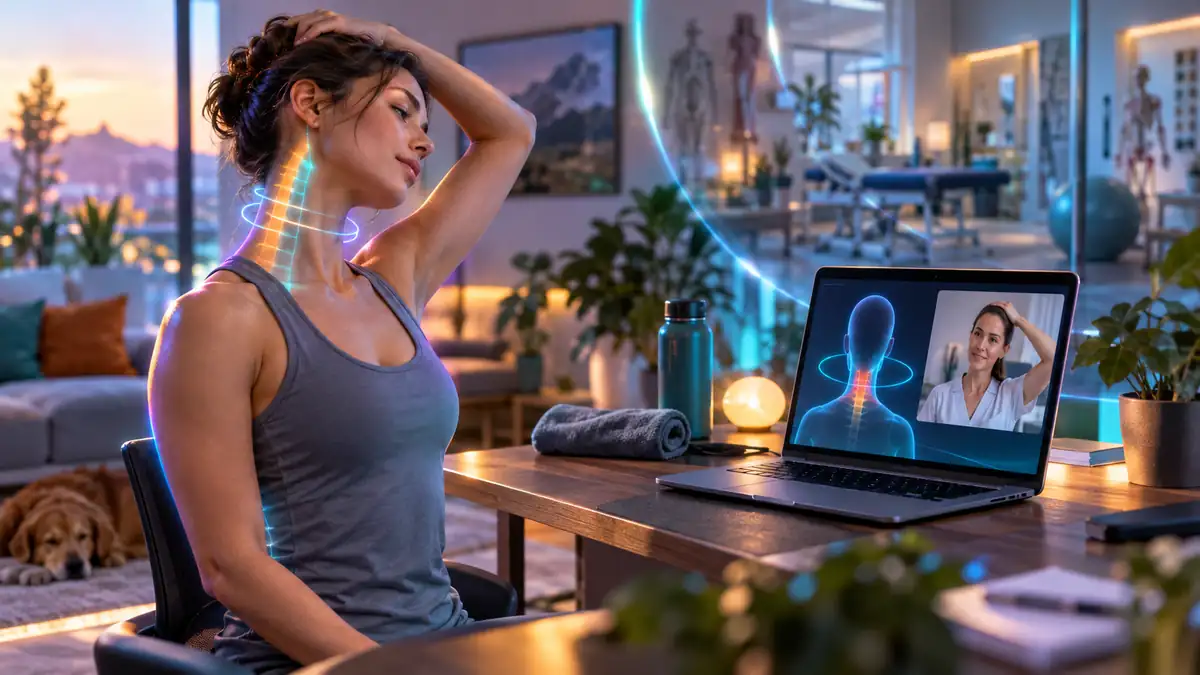
The same exercise program, two monitoring approaches
The researchers randomly assigned 116 people with nonspecific neck pain lasting at least three months to two groups. One exercised at home using a sensor-based movement recognition device and threshold-based rules. The other received in-person rehabilitation.
Both groups followed the same strengthening and stretching program for 24 weeks, with three sessions a week lasting around 30 minutes each. These parameters describe the intervention studied; they are not an individual prescription.
The primary outcome was the Neck Disability Index, a questionnaire measuring disability associated with neck pain. Assessors and statisticians were unaware of participants’ group assignments.
Non-inferiority, not superiority
At 24 weeks, the mean difference between telerehabilitation and in-person care was −2.5 points on the disability scale ranging from 0 to 100. The 95% confidence interval ranged from −6.2 to 1.2 points. Its upper bound remained below the prespecified non-inferiority margin of 10 points.
The device therefore met the chosen threshold for ruling out a loss of effectiveness considered too large. This demonstrates neither perfectly identical outcomes nor superiority of telerehabilitation.
The abstract reports comparable improvements in pain, quality of life and neck mobility, without providing detailed numerical results for these outcomes.
What the trial tells us about AI
The main practical value concerns access to rehabilitation when traveling to in-person appointments is difficult. But the trial compares two complete approaches to care, not the same device with and without AI. It therefore cannot attribute the outcome to artificial intelligence itself.
No intervention-related harm was reported. With this sample size and follow-up, that is not enough to rule out rare adverse effects.
Limitations to keep in mind
Only the PubMed abstract was consulted. The trial involved 116 participants at two Chinese centers, with 24 weeks of follow-up. The primary analysis uses observed or imputed data. Device details, full results, funding and conflicts of interest were not verified.
What we can take away
This telerehabilitation program is a possible alternative to in-person sessions for the patients studied. The trial supports this monitoring approach, not a general promise that AI-assisted rehabilitation tools are effective.
Sources and provenance
- AI-Enabled Telerehabilitation for Chronic Nonspecific Neck Pain: Multicenter Randomized Controlled Trial.
Source date: 2026-10-15.
Journal Article, Randomized Controlled Trial, Multicenter Study, Equivalence Trial · Résumé PubMed uniquement, texte intégral non consulté