

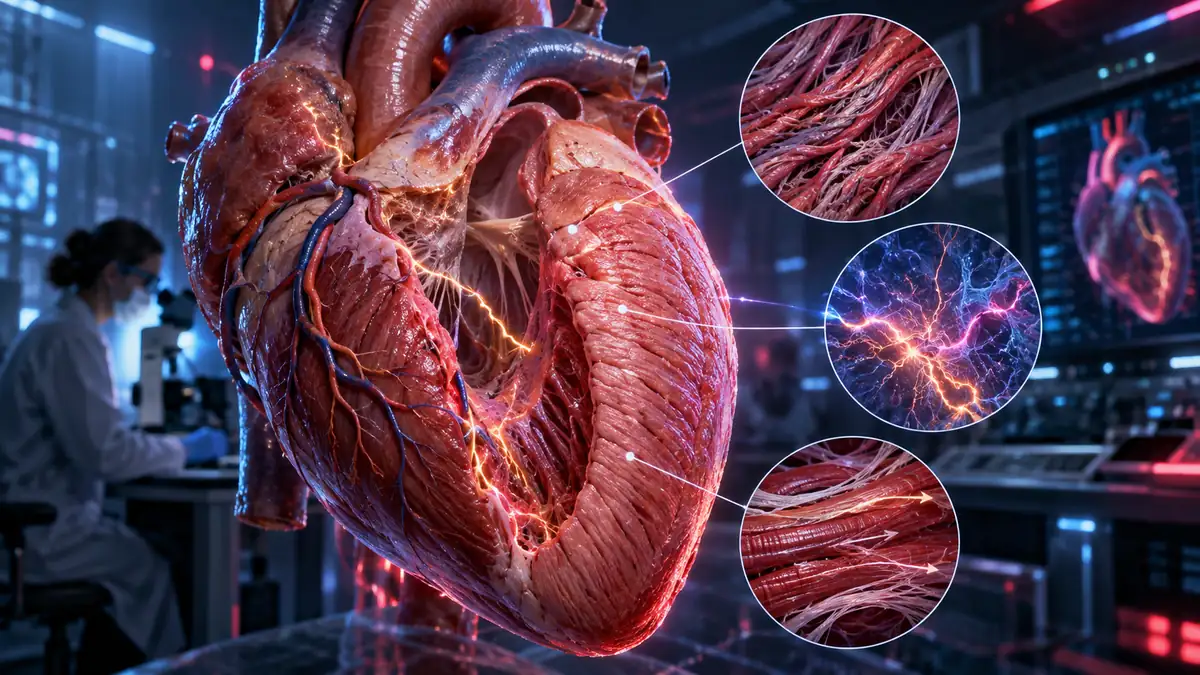
A synthesis of clinical, molecular and tissue data
Hypertrophic cardiomyopathy remains an important cause of sudden cardiac death. However, the biological factors that make the heart vulnerable to ventricular arrhythmias remain incompletely understood.
The authors searched four bibliographic databases from their inception through January 2026. Of 167 records identified, the researchers examined 37 full-text reports and included 11 studies.
This translational review brings together observations at several scales to examine how these mechanisms might converge. The material available here contains only the PubMed abstract: it does not allow a detailed account of the combined sample sizes, follow-up periods or comparators in the included studies.
Fibrosis emerges as the most advanced marker
In this synthesis, fibrosis emerges as the most clinically advanced marker of the arrhythmogenic substrate. Microvascular ischemia—an insufficient blood supply related to the heart’s small vessels—appears to amplify electrical instability, particularly when cardiac tissue has already undergone remodeling.
Molecular and tissue studies also suggest upstream processes: fibroblast activation, extracellular matrix dysregulation and altered communication between cells. Several signaling pathways are involved, including SMAD/TGF-beta and CRLF1/LIFR-JAK-STAT.
These findings support an integrated biological hypothesis. They do not demonstrate that measuring these pathways alone could predict an arrhythmia or prevent sudden death.
No validated change to individual assessment yet
The crucial distinction is between explaining a mechanism and improving clinical prediction. According to the authors, prospective studies validated against clinical events are needed before these biological dimensions can refine risk assessment beyond established clinical and imaging markers.
The abstract provides no quantified improvement in predictive performance or clinical benefit from their use. This review therefore opens avenues for research, without on its own justifying a new test or a change in care.
Limitations to keep in mind
Only the PubMed abstract was consulted, not the full text. Detailed study characteristics, methodological quality, heterogeneity and potential biases cannot be assessed from the available material. Funding and conflicts of interest were not checked.
What we can take away
Fibrosis, microvascular ischemia and fibro-inflammatory signaling could jointly contribute to vulnerability to arrhythmias. Their added value for predicting individual risk remains to be validated.
Sources and provenance
- Fibro-Inflammatory Signaling, Fibrosis, and Microvascular Ischemia as Convergent Translational Substrates of Sudden Cardiac Death in Hypertrophic Cardiomyopathy: A Systematic Review.
Source date: 2026-10-13.
Systematic Review, Journal Article, Review · Résumé PubMed uniquement, texte intégral non consulté