

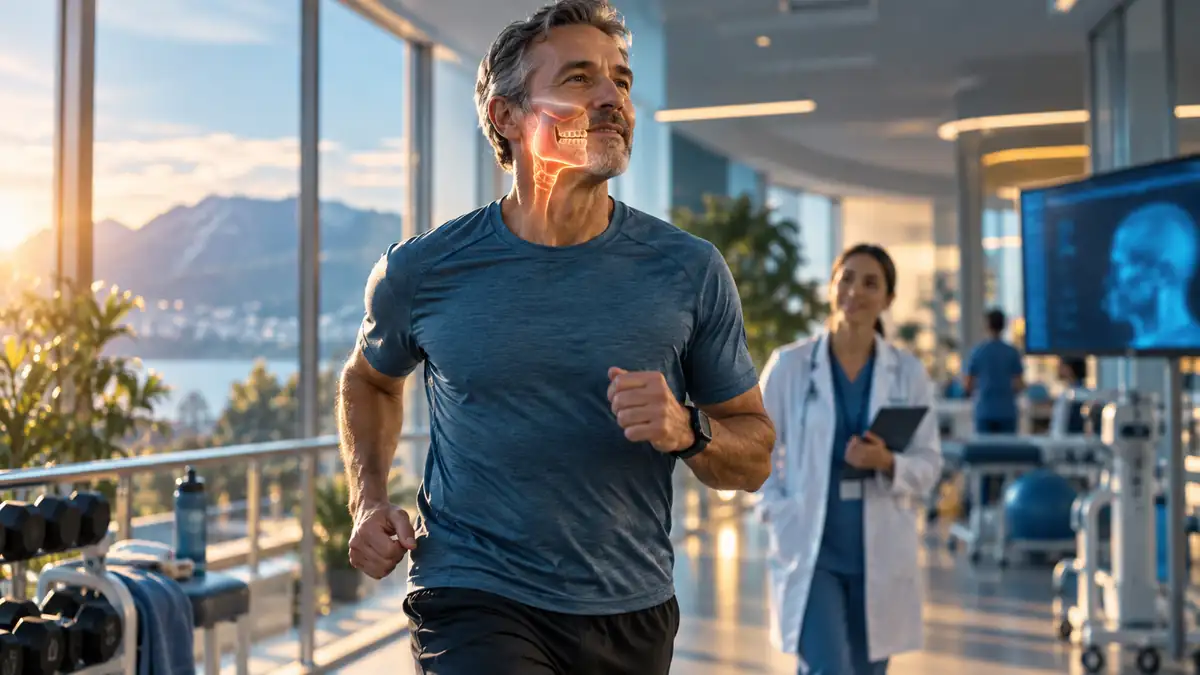
A review focused on recovery after oral cancer
Oral cancer treatments can cause significant functional difficulties. Researchers examined the links between postoperative physical activity and several aspects of recovery in people living with or recovering from this cancer.
Their literature search, conducted across nine databases and registries on October 26, 2024, included 24 studies. These comprised randomized trials, pilot trials and cohort studies. The abstract specifies neither the total number of participants nor the comparators used in each study.
Depending on the study, interventions included resistance training, aerobic exercise or programs combining physical activity, education and behavioral support. This was therefore not an evaluation of a single type of exercise.
Favorable findings for function and fatigue
The review reports an association between physical activity and better functional performance, less fatigue and moderate gains in health-related quality of life. Resistance training is also associated with gains in lean mass and strength. However, the abstract does not provide effect sizes that would allow the practical magnitude of these changes to be assessed.
The authors describe more pronounced effects in programs started early and those lasting 12 to 24 weeks. Supervised, individualized programs also showed better adherence and better functional outcomes. These observations are not enough to establish an optimal duration or the definitive superiority of any format.
Why these findings do not establish a protocol
The protocols, outcome measures and study quality differed enough to prevent a meta-analysis. The review therefore does not offer a pooled numerical estimate of the benefit. The mix of trials and observational studies also limits conclusions about causality.
For you, these findings point to a possible rehabilitation approach after oral cancer, not a promise of a cure. The abstract presents no findings on recurrence or survival, nor detailed data on adverse effects. It does not allow you to design a program suited to your situation on your own.
Limitations to keep in mind
Only the supplied PubMed abstract was consulted, not the full text. Heterogeneity prevented a meta-analysis. Total participant numbers, effect sizes, detailed comparators and safety data are not available in this excerpt. Funding and conflicts of interest were not verified.
What we can take away
Physical activity appears promising for functional recovery after oral cancer. This review supports the potential value of tailored, supervised programs, without establishing their optimal content or guaranteeing an individual benefit.
Sources and provenance
- The role of physical activity in oral cancer recovery: a systematic review.
Source date: 2026-10-08.
Journal Article, Systematic Review · Résumé PubMed uniquement, texte intégral non consulté