

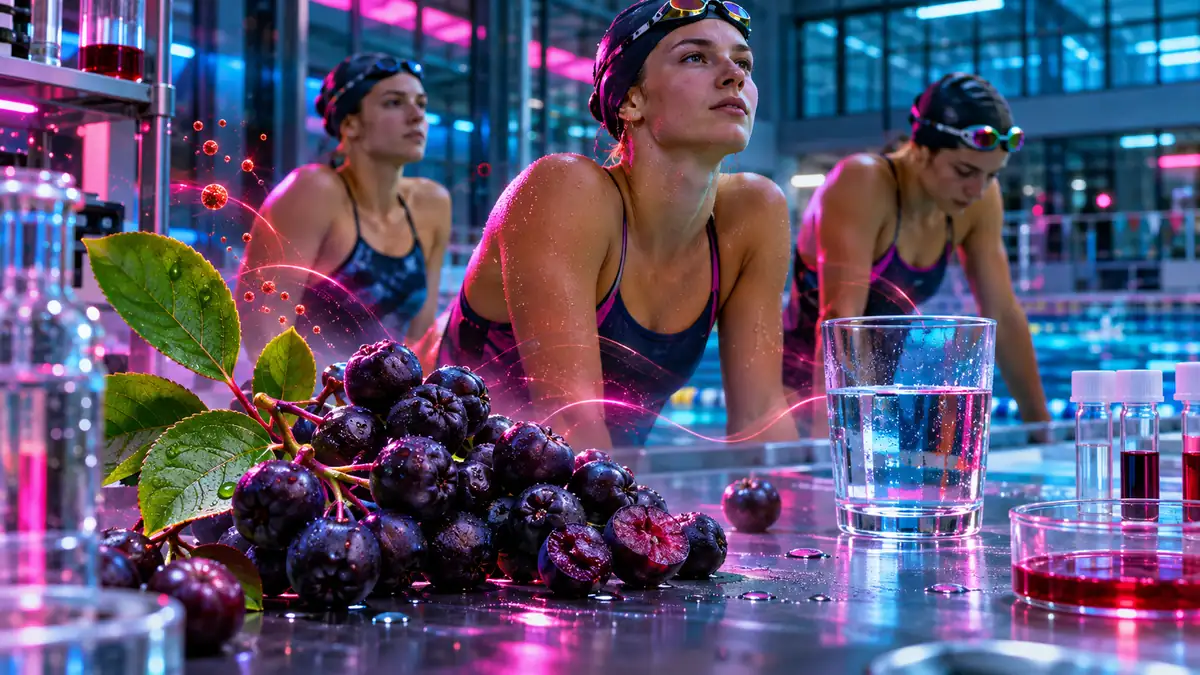
A trial examining responses to exercise
The participants, competitive female swimmers with a mean age of 13.14 years, were assigned to an aronia supplementation group or a placebo group. The mean supplementation period was 57.32 days. The supplied abstract specifies neither the dose nor the product’s detailed composition.
Before and after this period, they completed the same swimming tests, involving efforts over 800, 200 and 50 meters. Blood samples were collected before exercise, immediately afterward and after three hours of recovery. The researchers examined iron metabolism, inflammation, antioxidant capacity and hematological parameters.
Biological changes, but no change in iron stores
Total antioxidant capacity changed differently depending on the group and sampling time, with higher values during recovery in the supplemented group. Transferrin was also lower in this group immediately after the second test. However, the abstract does not establish that these differences translate into clinical benefit.
Ferritin remained unchanged, and hematological parameters showed no consistent differences between groups. The authors therefore detected no effect on the body’s iron stores or on red blood cell production. The abstract reports no performance benefit.
Hepcidin calls for careful interpretation
Intense exercise can temporarily alter iron metabolism through inflammatory and oxidative mechanisms. Aronia, which is rich in anthocyanins, could influence these responses. This biological hypothesis does not demonstrate that supplementation prevents a deficiency.
Hepcidin varied over time, with statistically significant increases only in the placebo group. But a significant change in one group and not the other is not enough to establish a difference between groups. Most inflammatory markers also changed over time, with no significant group effect.
What this trial tells us
The study suggests a possible effect on certain short-term biological responses after exercise, not a demonstrated improvement in iron status. Its small sample and highly specific population mean the findings cannot be generalized to adults or other athletes.
The trial was registered retrospectively, limiting the ability to verify that the analyses had been specified in advance. The abstract also does not allow an assessment of adverse effects, funding or conflicts of interest. These data are not sufficient to recommend supplementation, particularly for minors.
Limitations to keep in mind
Small sample, adolescent female swimmers only, approximately 57 days of follow-up and retrospective registration. Only the PubMed abstract was consulted. The dose, detailed composition, safety, funding and conflicts of interest cannot be verified from the supplied dossier.
What we can take away
Aronia could alter certain markers after swimming, but this trial demonstrates neither prevention of iron deficiency nor improved performance.
Sources and provenance
- Anthocyanin-rich black chokeberry (aronia melanocarpa) supplementation modulates exercise-induced changes in iron metabolism in female swimmers.
Source date: 2026-11-16.
Journal Article, Randomized Controlled Trial · Résumé PubMed uniquement, texte intégral non consulté