

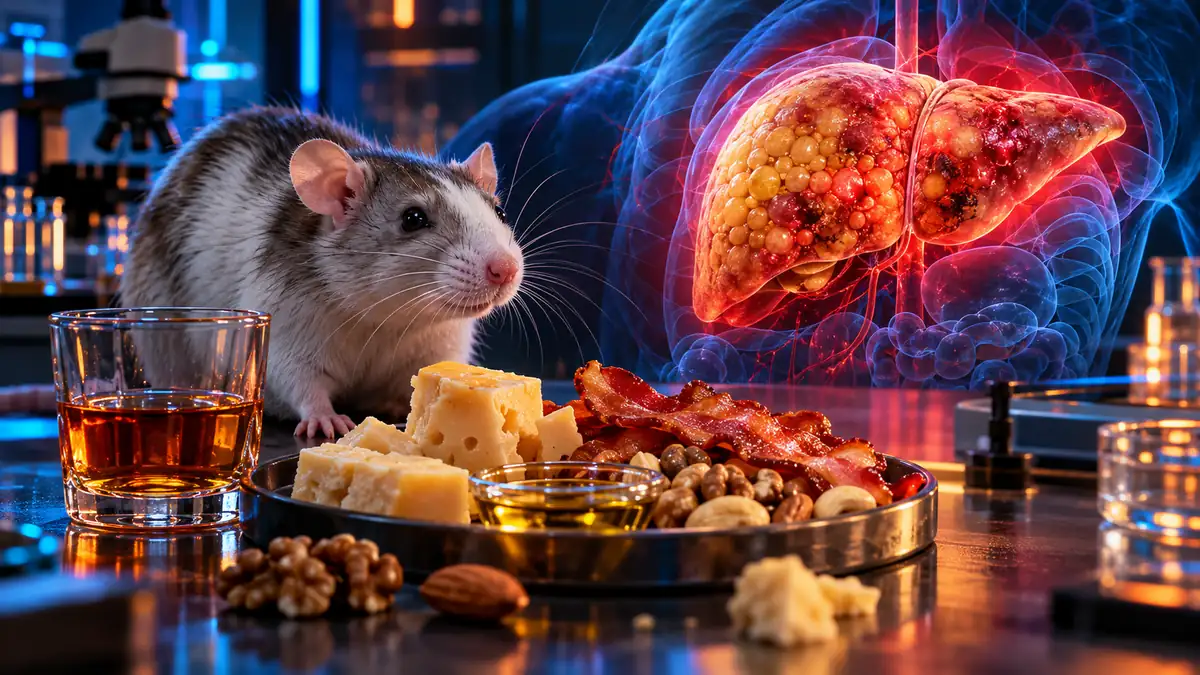
A review focused on the liver and high-fat diets
The researchers searched three bibliographic databases for controlled experiments published between January 2021 and January 15, 2026. Studies had to examine ethanol exposure in defined dietary settings.
The selection includes 24 studies in mice and three in rats. Eighteen used only males. High-fat or Western-style diets predominated, as did liver-related measurements. Other dietary patterns were poorly represented, with just one study on a ketogenic diet.
Higher liver markers, but no consistent interaction
In acute models involving high-fat diets, adding alcohol increased blood concentrations of ALT and AST, two enzymes used as markers of liver injury. Triglyceride levels in the liver also increased. These measurements describe biological disturbances in animals, not a quantified clinical risk for an individual.
One distinction matters: observing worsening damage after adding alcohol is not enough to demonstrate that diet specifically amplifies its effect. In the acute analyses, a diet-related modification of alcohol’s effect was identified only for ALT.
The chronic analyses also reported a negative interaction for liver triglycerides. This finding does not demonstrate a protective effect, but it rules out describing all the observations as a consistent amplification of damage.
No proven protective diet
This review supports the idea that dietary context matters in experimental models of alcohol-related liver injury. However, it does not compare enough different diets to identify a better diet, particularly when it comes to the ketogenic diet.
Findings concerning other organs, the microbiota and molecular analyses were scarce and heterogeneous. They do not establish a single mechanism explaining the observations.
Limitations to keep in mind
Only the PubMed abstract was consulted, not the full text. The data come exclusively from animals, mostly males, and focus on certain diets and liver markers. Total sample sizes, exposure details, funding and conflicts of interest were not verified.
What we can take away
The signal mainly concerns the livers of rodents exposed to alcohol while on a high-fat diet. It does not demonstrate that a dietary change can offset the effects of alcohol in humans.
Sources and provenance
- Dietary context and ethanol-related injury in preclinical models: A contemporary systematic review of predominantly obesogenic diets and liver outcomes.
Source date: 2026-10-21.
Journal Article, Systematic Review · Résumé PubMed uniquement, texte intégral non consulté